West Asia crisis: Strong response, but challenges persist ahead in petrochem space
/ 3 min read
India has navigated the crisis well, but sustained efforts are needed to tackle emerging challenges.
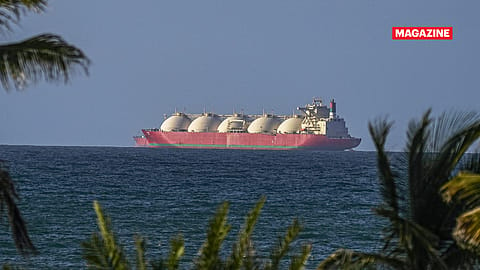
Around 20% of the world’s oil and LNG passes via the Strait of Hormuz. | Credits: Getty Images
This story belongs to the Fortune India Magazine may-2026-biocon-next issue.
AS THE WEST ASIA crisis enters its third month and the Strait of Hormuz — through which 20% of the world’s oil and LNG passes — remains shut, triggering an unprecedented hike in oil prices across the globe, India is one of the rare Asian countries that has braved the crisis well. However, elevated oil and gas prices, raw material supply chain issues, and high logistics costs since the beginning of the war are continuing to put strain on the petrochemical sector.
The government says all refineries are operating at high capacity with adequate crude inventories and sufficient stocks of petrol and diesel. India’s crude oil imports fell 13% to 4.5 million barrels per day (bpd) in March from pre-war levels. The Middle East cargo shortage was offset by imports from Russia, which doubled to 2.25 million bpd in March.
LPG supply position is returning to normalcy as well, with more sourcing from the U.S. and Australia. Commercial LPG allocation — a big disruption in the initial weeks of the conflict — has been increased to about 70% of pre-crisis levels. Natural gas supplies are also coming back to normalcy, with more cargoes being sourced from countries like the U.S. and Australia. Consumers have been prioritised with 100% supplies for domestic piped gas and CNG transport. Additionally, gas supply to other industrial and commercial sectors, including supplies through City Gas Distribution (CGD) networks, has been increased by up to 80%.
Gas allocation to fertiliser plants has also been enhanced to around 95% of their six-month average consumption. The government has said fertiliser production and stocks are not an issue for the kharif 2026 season — urea availability is 71.40 lakh metric tonnes (LMT) against a requirement of 20.54 LMT; diammonium phosphate or DAP (23.09 LMT vs 6.67 LMT); muriate of potash or MOP (8.38 LMT vs 1.96 LMT); Nitrogen (N), phosphorus (P), and potassium or NPK (53.40 LMT vs 8.43 LMT), and single sugar phosphate or SSP (25.78 LMT vs 3.73 LMT).
However, the petrochemical industry remains under strain, say experts. Rating agency ICRA estimates that raw material cost pressures as well as supply constraints will impact the profitability of key downstream sectors — oil marketing, fertiliser, chemical, and CGD — in FY27.
Elevated crude oil prices are impacting the profitability of oil marketing companies (OMC), despite the recent reduction in excise duty on petrol and diesel by ₹10 per litre, according to ICRA. “At crude prices of $120-125/barrel and long-term averages of crack spreads, the marketing margins on petrol and diesel are estimated to be negative at ₹14 per litre and ₹18 per litre, respectively,” says Prashant Vasisht, senior vice president and co-group head, ICRA. Under-recoveries on the sale of domestic LPG will also remain high for OMCs at ₹80,000 crore in FY27 if the current crisis continues for the full year, he adds.
Sources say the downstream chemical sector, which converts refined petroleum and basic chemicals into high-value products, including plastics, polymers, agrochemicals, pharmaceuticals, and specialty chemicals, is also experiencing a 30-40% increase in input prices.
More Stories from this Issue
Elevated input costs, along with secondary effects on transportation and raw material prices such as packaging, are likely to impact major production sectors. While manufacturers may switch to alternative fuels and diversify natural gas sourcing, costs will remain high. Sectors heavily reliant on LPG could also face prolonged constraints, according to a recent Crisil estimate on the Indian economy.
Follow Fortune India
Sign in to read full story
To access our exclusive magazine content, sign in to your Fortune India account.
Sign In NowNEXT STORY