The FAQs are AI-generated, and Fortune India is not responsible for its content or any associated copyright issues.
In search of suburbia
/ 10 min read
Swathes of the country are emerging from rustic isolation and reaching for urban life. Fortune India goes on a road trip, and finds that the process is transforming the business landscape.
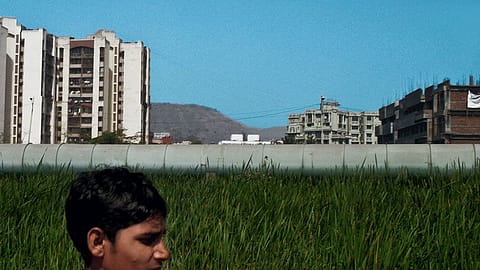
A SIMPLE QUESTION STARTED IT ALL: Where do I live, and where’s my daughter going to live? To my friends and family, I live in Mumbai, India’s largest city. But how true is that, really? Sure, I work in the heart of the city. But the address on my mobile bill says I live in a town 35 kilometres from Mumbai—another municipality, another district. My friend Sanjay’s location is more ambiguous. He owns a mobile store in Khopoli, some 80 kilometres from Mumbai on the highway to Pune. Does he belong to Mumbai, or Khopoli, or Pune? Or all of them at once?
We are among millions of Indians who are part of the economic ecosystem that’s evolving between Mumbai and Pune. In the new suburbs, city boundaries blur, making it hard to even define distances. School textbooks say Pune is 180 kilometres southeast of Mumbai, but the Mumbai-Pune expressway is only 90 kilometres long. What about the remaining 90 kilometres? They’re part of Greater Mumbai or Greater Pune.
Food outlets near Khopoli on the Mumbai-Pune expressway
Likewise, the distance between Delhi and Agra is 223 kilometres, but the Yamuna Expressway, which will connect Noida (just southeast of Delhi) and Agra, will be 165 kilometres. Project developer Jaypee Infratech plans five townships alongside, forming an urban corridor. It’s a similar story on National Highway No. 1 (NH1) between Delhi and Ambala in Haryana. A few years ago, Delhi ended at the Karnal bypass in the northern part of the city. But TDI, Ansal API, Omaxe, Parsvnath, and other developers are pushing the city’s limits to Sonepat, Haryana, 35 kilometres to the north.
Intrigued, I set out to explore the new suburbs, with their apartment blocks, malls, and smooth highways. I began with the Mumbai-Pune expressway. Opened in 2002, this road has cut travel time and catalysed growth between the cities.
This engulfing urbanisation is changing millions of lives. Take, for instance, Sachin Wadekar, who works in a food court off the expressway near Khopoli, and lives in Usroli village nearby. He sells 1,200 to 1,800 bottles of water daily, and takes home a monthly salary of Rs 3,000 plus tips. “I couldn’t have dreamt of this income before the expressway came up,” he says. Nearly 200 people work in the food court, for similar salaries. “Most are from Bihar, Jharkhand, and Nepal, but some are locals,” says Wadekar. Mayur, one of 30 employees at the petrol pump next door, says it sells nearly 200,000 litres of fuel daily. And this is one of five such stops along the expressway.
Jai Mavani, partner at PricewaterhouseCoopers, says suburban growth is a natural outcome of economic development. Besides rising incomes, he adds, demographics are an important factor. “A large chunk of India’s population is less than 25 years old,” he says. “Most of them want to move to cities for their livelihood. They’re driving urbanisation.”
He’s right. In 2000, an estimated 530 million—nearly 53%—of Indians were below 25. Mumbai has around 20 million people, so it would take a couple of dozen Mumbais to accommodate the aspirations of this generation. Existing cities can’t absorb the influx, so people are finding ways to participate in the big-city economy from outside.
Left: Flats in Kharghar, Navi Mumbai, 45 kilometres from central Mumbai. Below: Survey work to widen the highway between Belapur, Navi Mumbai, and Panvel.
The new opportunities aren’t just at highway stops. Vanita, who studied agricultural science at Amravati University, is one of three graduates working for a nursery near Pune. The 120,000 square foot Enchanted Gardens claims to be India’s largest nursery, offering everything from seasonal flowers to palms. Vanita works in Punavale village, just outside Pune, while her graduate colleagues work at the head nursery in Hadapsar, another Pune suburb. Her starting salary was Rs 10,000 a month. “It’s a great time to be in horticulture. The real estate boom and changing lifestyles are good for business. There’s demand from hotels and companies that spend lavishly on landscaping.”
The new suburbs are creating alternative careers. Meena quit her job at Idea Cellular to work for Enchanted Gardens. “I enjoy working here, surrounded by more than 3,000 varieties of plants,” she says. “At Rs 6,500 a month, the money’s not bad. And the garden is near Dehu Road, where I live. At Idea, in Pune, I rarely got home before 11 p.m. Now I’m home early.”
Clothes belonging to a worker on a road-widening project dry against the backdrop of a new residential complex in Wakad, a fast growing suburb of Pune.
I leave the gardens for the concrete jungle of Pune. Like many Indian cities, it’s never stopped growing: It has two municipal corporations, a municipal council, and dozens of gram panchayats. Pune and its satellite towns are industry, IT, and education hubs that attract migrants and fuel housing demand. Pune’s military establishments—the National Defence Academy, Armed Forces Medical College, ordnance factories, Indian Air Force station, and a large army cantonment—drastically reduce the amount of land available for civilian projects. “Because we’re surrounded by mountains, growth is confined to narrow valleys and plains such as Solapur Road,” says Gauri Patil, marketing manager at D.S. Kulkarni Developers, one of Pune’s biggest real estate firms. “The next frontier is the land by the expressway.”
The promise of urbanisation has prompted Pune native and former adman Ravi Karandeekar to switch careers. He quit advertising to work at a real estate developer, and eventually went solo. He now blogs on the Pune property market and advises buyers, mostly NRI investors. Business is good, he says.
Bus passengers take a break at a food court off the expressway between Mumbai and Pune.
I also meet Nitin Kulkarni, an engineer-turned-real estate developer. His company, Vastushodh Projects, is building apartments for people who make Rs 15,000 to Rs 20,000 a month. “About 85% of nearly 1.2 million households in Pune fall in this bracket,” says Kulkarni. “Most of these people currently live in old chawls, rented homes, slums, or government quarters. But they want a modern lifestyle.” Vastushodh is building 600 units on 10 acres off the Pune-Solapur Road, 60 kilometres from the centre of Pune. A two-bedroom flat here starts at Rs 6.3 lakh, and a room and kitchen, Rs 4.8 lakh. “Prices here are about one-third of the rates in Pune,” says Kulkarni. Sales are brisk. Typical buyers are a local fig farmer, the owner of a roadside dhaba, about 50 police constables, and workers in the nearby steel and sugar mills.
RANK
COMPANY NAME
REVENUE
(INR CR)
(INR CR)
{{#current-rank}} {{current-rank}} {{/current-rank}} {{^current-rank}} {{rank}} {{/current-rank}} {{name}} {{#revenue}} {{revenue}} {{/revenue}} {{^revenue}} {{noi}} {{/revenue}}
The next leg of my tour is up north: the Delhi-Ambala segment of NH1. The rapid development around Sonepat has whetted my curiosity, but the reality turns out to be underwhelming. There’s nothing here of the vibrant industries and public transport that I saw in the Mumbai-Pune corridor—no buses that run past midnight, no commuter trains connecting suburb and city. Growth along the Mumbai-Pune corridor seemed to be on autopilot, but it appears forced along the Delhi-Sonepat stretch, with little local impetus. Builders and financiers have bet huge sums on townships here, but there are few takers. For instance, at TDI’s 1,500 acre township at Kundli, on the Delhi-Haryana border, even apartments that have been sold are unoccupied. I wonder if high agricultural productivity in this home of the country’s green revolution is a contributing factor—the Mumbai-Pune corridor, by contrast, is rocky, with only patches of arable land.
Ankit Rana, proprietor of Shri Radhey Associates, a property dealership in Rasoi village, Sonepat, seems unperturbed by the unoccupied houses and vacant lots. He says apartment prices have nearly doubled in six years, to Rs 3,300 a square foot. The big bucks, though, are in residential plots—90% of the area under development locally. Developed plots that went for Rs 3,500 a square yard six years ago are now going for 14 times as much, says Rana. He even tries to sell me a plot.
The entrance to one of the many residential projects under development at TDI City near Kundli , Haryana, on the highway between Delhi and Amritsar.
Rana’s bullishness is based on the upcoming Kundli-Manesar-Palwal expressway, which would reduce travel time between Sonepat and Gurgaon (southwest of Delhi). But abruptly, his mood changes. “Six years on, I’ve yet to see occupancy in the sectors being developed by the Haryana Urban Development Authority and private firms. This includes Sector 9, said to be Sonepat’s most coveted address.”
I meet Sanjeev Bedi at TDI’s marketing office in the developer’s Sonepat mall. He says this is one of the biggest malls north of Delhi, and most shops have been sold, some to buyers as far afield as Bhopal. Then, quietly, he adds: “You can buy one of the few remaining shops in the back—they’re going for Rs 80 lakh for 800 square feet.” I point out that the shops out front are still unoccupied. “Don’t worry,” he says. “Interior work is about to start in many shops. They’ll open in a month or so.”
An elevated bypass of National Highway No. 1 cuts through Panipat city, Haryana.
Another uneasy silence greets me at Parsvnath City, which is being developed near Sonepat on NH1. All I see are barren plots. I mosey over to the site office, where a lone official sits at a desk in a hall meant for at least a dozen employees. “There’s some uncertainty about the apartment project,” he admits. “But all our plots are sold, and we’re handing over possession.” I wait, and sure enough, the man finally says: “If you want to buy a plot, I can arrange a resale.”
A business hotel under construction on NH1, near Kundli, Haryana.
In Panipat, Haryana (90 kilometres north of Delhi), I ask my hosts Gursharan Singh and Prithipal Singh whether the realty boom reflects actual urbanisation or just speculation. “Development has been targeted at Delhiwallas, but they’re not biting,” says Gursharan Singh. His brother says: “Firstly, there’s the transport issue—right now, the only option is to drive or take state buses. Secondly, there are no economic opportunities in the area.” However, he, like many others here, says the extension of the Delhi Metro to Sonepat could change the game. The brothers, sons of a Partition refugee from Pakistan, have a business that runs staff buses for local companies such as IndianOil. Besides, they have operations in Gujarat.
Palm Tree Residency, Karnal, one of the first multistoreyed apartment blocks to come up in Haryana, is surrounded by wheat fields.
Gursharan Singh blames financiers for sky-high land prices. “Nearly 90% of the projects are underwritten by Delhi-based financiers, who create artificial demand and dry up supply,” he says. He should know: He plans to get into real estate, and is scouting for a plot for a commercial complex.
Sonepat and Panipat are different kettles of fish, says Prithipal Singh. Scores of investors in Delhi may lose their shirts if property prices crash in Sonepat, he warns. And Panipat? “The city is set to become a plastics and petrochemicals hub. IndianOil is setting up a refinery, which will spur downstream industries,” he says. He’s less enthusiastic about residential property and allied projects such as malls. “The economics just don’t work out,” he says during our evening stroll at Panipat’s only mall (two others opened later, and shut down). “For a mall store to be viable, the sales volume should be several times that of a similar store outside. That rarely happens.” It’s Friday, but the mall isn’t crowded. The most popular haunt seems to be McDonald’s, followed by the kiddie rides.
A fast food outlet at a new food court and entertainment complex on NH1 near Karnal.
Next morning, I head for Ambala, about 100 kilometres to the north. The Panipat-Karnal stretch seems to be doing better than the Kundli-Panipat segment. Panipat is an industrial hub, and Karnal is an old administrative and education centre.
This is also an automotive hub, with a dozen showrooms crammed into a few kilometres. Neeraj Ghai, sales manager at Pearl Ford, Karnal, says the showrooms provide non-farm jobs to educated youths. “Salaries start at Rs 10,000 a month—more than enough for a family,” he says. He himself quit a pharmaceutical sales job to work here, and has no regrets.
A Toyota dealer on NH1, near Karnal, Haryana, one of the many car showrooms that have come up
Non-farm activities supplement the region’s thriving agriculture, and help urbanisation. I stop en route and meet Tanwar Singh and Ramesh, who are loading crates of tomatoes on a truck bound for Delhi. Tomatoes are lucrative, says Ramesh, who also grows rice, wheat, and oilseeds. He spends Rs 1 lakh a year on engineering school for his son, and splurged Rs 7 lakh on a daughter’s wedding last year. With this kind of money, Karnal’s realty boom seems local and more grounded.
A visit to the Palm Residency, developed by the Delhi-based Aerens Group, confirms this. The first completed building in the complex is 40% full, and people are still moving in. Most residents are government employees. Mukesh, the sales officer at the on-site office, says rentals are not uncommon. “The rent for a three-bedroom apartment is around Rs 8,000,” he says. Not bad for a city with 1.5% of Mumbai’s population.
So why, when agriculture is so lucrative here, are farmers selling land to builders? The answer comes from Jagpal and Yashvir Singh, Karnal lawyers with whom I strike up a conversation at an upcoming residential complex. Jagpal says builders pay as much as Rs 25 lakh per acre—more than three times the price of farmland there. The farmers then use the money to buy five times as much land in the interior, where it’s cheaper. “Many have moved from here to as far as Gujarat,” he says.
Back in Mumbai, I go over my notes and try to wrap my head around it all. It seems as if the country is seeing a process of land consolidation—a prerequisite for modern farming. Along the way, the Karnals get hotels, motels, food courts, highways, and entertainment. Not a bad deal.