The FAQs are AI-generated, and Fortune India is not responsible for its content or any associated copyright issues.
Equity market outlook: Shriram AMC’s Prateek Nigudkar on oil crisis, market correction fears, and top sectoral bets
/ 4 min read
In an interview with Fortune India, Prateek Nigudkar, Senior Fund Manager at Shriram AMC, cautions that sustained high oil prices could trigger sharper earnings downgrades, tighter monetary conditions, and lower market valuations over the next year.
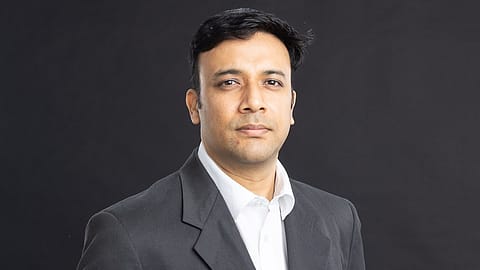
Prateek Nigudkar, Senior Fund Manager at Shriram AMC | Credits: Shriram AMC
Rising geopolitical tensions in West Asia, surging crude oil prices, persistent foreign institutional investor (FII) outflows, and concerns over inflation are keeping Indian equity markets on edge. While benchmark indices have shown resilience despite mounting global uncertainties, market expert believes investors may be underestimating the risks emerging from the prolonged energy crisis.
In an interview with Fortune India, Prateek Nigudkar, Senior Fund Manager at Shriram AMC, cautioned that sustained high oil prices could trigger sharper earnings downgrades, tighter monetary conditions, and lower market valuations over the next year.
He expects muted returns for equities, with the Nifty likely to remain in the 26,000-26,500 range over the next 12 months in the base-case scenario. The fund manager also shared his views on sectors likely to outperform amid the turmoil, the impact of rising fuel prices on the economy, and portfolio strategies retail investors should adopt during heightened market volatility.
Here are edited excerpts from Fortune India’s interaction with Prateek Nigudkar on markets, crude oil prices, geopolitical risks, and investment strategy amid rising global uncertainty:
Q: How do you see the current market situation evolving amid the West Asia crisis and rising crude oil prices?
Nigudkar: It’s very difficult to predict markets right now, but we believe markets globally are underpricing the risks emerging from the West Asia crisis and elevated crude oil prices. Even the US markets are trading above pre-crisis levels, which is surprising given the scale of disruption.
If the crisis does not ease soon, the disruption to oil and product flows could become severe enough to require meaningful demand destruction to balance the market. The scale of demand adjustment needed is comparable only to periods like the 2020 pandemic lockdowns, not even the 2008 global financial crisis.
We are surprised oil prices are not significantly higher already. Strategic and commercial reserves have been depleted, but prices have not fully reflected this reality. If the crisis drags on, we could see higher energy prices, deeper earnings downgrades for FY27 and FY28, and lower market valuations.
Q: How could elevated crude oil prices, inflation, FII outflows, and rupee depreciation impact markets?
Nigudkar: We remain cautious on equities. Higher oil prices directly feed inflation, especially as fuel price hikes continue. Oil marketing companies are already incurring losses on LPG sales, while the government’s fiscal room is shrinking due to excise duty cuts and subsidy burdens.
If inflation persists, the RBI may need to raise interest rates further, increasing borrowing costs across sectors like banking and real estate and slowing economic growth. There are also concerns around a weaker monsoon, which could worsen food inflation.
{{#most-powerful-women-snapshot-individual.slug}} {{/most-powerful-women-snapshot-individual.slug}} {{^most-powerful-women-snapshot-individual.slug}} {{/most-powerful-women-snapshot-individual.slug}} {{#showRanking}} {{current-rank}} {{/showRanking}} {{#photo.0.url}}
{{name}}
All these factors like higher energy costs, inflation, tighter fiscal and monetary conditions, and slower growth, ultimately hurt corporate earnings and market valuations.
Q: What strategy should retail investors adopt in this volatile environment?
Nigudkar: We continue to encourage SIP-based investing and rupee-cost averaging over a five- to ten-year horizon. SIPs help investors avoid overinvesting at market peaks and underinvesting during corrections.
At present, we prefer hybrid and large-cap-oriented funds because equities, especially mid- and small-caps, are not fully pricing in these macro risks and continue to trade at premium valuations.
If markets correct meaningfully toward the 20,000-21,000 range on the Nifty, investors may consider increasing SIP allocations through flexible SIP strategies that raise contributions during market declines.
Q: Which sectors do you see emerging as winners and losers in the current environment?
Nigudkar: Oil marketing companies are clear losers because they bear a large part of the subsidy burden.
On the other hand, we are constructive on upstream oil and gas companies because the government has avoided imposing windfall taxes this time and has instead encouraged investments by reducing royalties.
We also like sectors such as:
Telecom, which remains relatively insulated from West Asia-related disruptions
Power generation and transmission, driven by renewable energy and data centre capex
EPC companies linked to transmission infrastructure
Cable manufacturers benefiting from power and data infrastructure investments
Domestic pharma also remains relatively resilient, though valuations have become stretched.
We have turned cautious on autos due to rising input costs, fuel inflation, and the risk of weaker rural demand if monsoons remain subpar.
Q: How do you see sectors like aviation, travel, jewellery, and oil reacting to elevated crude prices?
Nigudkar: Aviation companies face pressure because fuel accounts for nearly 40% of operating costs. However, India’s long-term aviation growth story remains intact due to rising airport infrastructure, expanding capacity, and increasing domestic travel demand.
Jewellery demand may moderate temporarily following the Prime Minister’s appeal to reduce gold imports, but structurally, Indian demand for precious metals remains strong. Financialisation through gold ETFs and digital gold could continue supporting the sector over the long term.
Q: What should be the ideal portfolio strategy for long-term investors?
Nigudkar: We would strongly advocate a multi-asset portfolio approach. A diversified allocation across equities, bonds, and precious metals may help to reduce volatility.
During crises, diversified portfolios provide downside protection and help investors remain disciplined instead of exiting markets during sharp corrections.
Q: How do you view the structural rise in domestic institutional ownership amid sustained FII outflows?
Nigudkar: The rise in domestic institutional ownership is structural. Since Covid, Indian households have increasingly embraced equities through SIPs and mutual funds, and we expect this trend to continue.
FII outflows, however, are cyclical and driven by factors such as rupee weakness, high valuations, weak earnings growth, geopolitical risks, and the global AI investment theme, where India lacks direct beneficiaries compared with markets like Taiwan or Korea.
India also competes with commodity-exporting countries and cheaper markets like China. However, if valuations become more attractive and global themes evolve, FIIs could return. Domestic inflows, meanwhile, are likely to remain strong structurally.
Disclaimers:
Views expressed herein cannot be construed to be a decision to invest. The statements contained herein are based on current views and involve known and unknown risks and uncertainties. Any reliance on the accuracy or use of such information shall be done only after consultation to the financial consultant to understand the specific legal, tax or financial implications.
The Fund may or may not have any present or future positions in these sectors / securities / commodities. The Fund/ AMC is not indicating or guaranteeing returns on any investments. Readers should seek professional advice before taking any investment related decisions.
Mutual Fund investments are subject to market risks, read all scheme related documents carefully.
Follow Fortune India
Frequently Asked Questions
NEXT STORY