The FAQs are AI-generated, and Fortune India is not responsible for its content or any associated copyright issues.
Oil jumps over 6% as US-Iran tensions reignite Strait of Hormuz supply fears
/ 2 min read
Brent crude rose by $6.11, or 6.76%, to $96.49 a barrel while West Texas Intermediate gained $6.53, or 7.79%, to $90.38 a barrel in late trading.
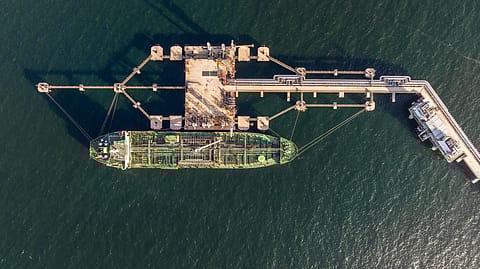
The rebound comes after both Washington and Tehran accused each other of breaching a recently agreed-upon ceasefire after reported attacks on ships over the weekend. | Credits: Shutterstock
Global oil prices surged on Monday, recovering sharply following a steep fall in the previous session, as fresh tensions between the US and Iran raised concerns over supply disruptions in the Strait of Hormuz.
Brent crude rose by $6.11, or 6.76%, to $96.49 a barrel while US West Texas Intermediate (WTI) gained $6.53, or 7.79%, to $90.38 a barrel in late trading.
The rebound comes after both Washington and Tehran accused each other of breaching a recently agreed-upon ceasefire after reported attacks on ships over the weekend. The situation has once again cast uncertainty over the Strait of Hormuz, a critical route that accounted for nearly 20% of global oil flows before the conflict escalated nearly two months ago.
US President Donald Trump said on Sunday that American forces had seized an Iranian vessel attempting to bypass its naval blockade. In response, Iran signalled it would not take part in further peace negotiations and warned of consequences after Trump threatened fresh airstrikes.
The US has continued its blockade of Iranian ports, while Iran has repeatedly imposed and lifted restrictions on movement through the strait, adding to volatility in the energy markets.
Shipping activity swings, market sentiment turns volatile
The latest price jump follows a sharp sell-off on Friday, when both benchmark contracts recorded their biggest single-day drop since April 18. That decline came after Iran indicated that commercial shipping would be allowed to pass through the strait during the ceasefire period, and Trump claimed Tehran had committed to keeping the passage open.
Shipping activity briefly picked up, with over 20 vessels—including those carrying oil, LPG, metals and fertilisers—moving through the strait on Saturday, according to data from Kpler. This marked the highest level of traffic through the route since early March.
However, the renewed uncertainty around the ceasefire and maritime security has quickly reversed market sentiment, pushing prices higher once again.
The Strait of Hormuz, which links the Persian Gulf to global markets, has long been a geopolitical flashpoint, with any disruption to traffic through the narrow waterway having an immediate impact on global energy prices and supply chains.
Follow Fortune India
Frequently Asked Questions
NEXT STORY