Building India’s health as economic infrastructure
/ 4 min read
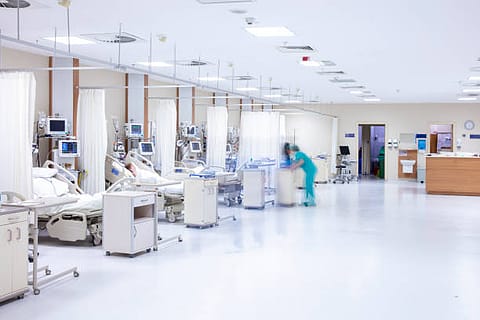
A reality underlined during the Covid-19 pandemic was that an economy cannot remain productive only if citizens are well and healthy
Building India’s health as economic infrastructure
The Union Budget 2026 emphasizes healthcare as a cornerstone of economic infrastructure, highlighting the importance of healthy citizens for a productive economy. Key measures include expanding primary care, enhancing mental health services, and promoting R&D. A voluntary micro-contribution model could further bolster healthcare funding, positioning health as a strategic national investment.
This summary is AI-generated, and Fortune India is not responsible for its content or any associated copyright issues.
Even as India’s recognition of the importance of health continues to grow, the responsibility for building a healthier nation cannot rest with the government alone
A reality underlined during the Covid-19 pandemic was that an economy cannot remain productive only if citizens are well and healthy
A Union Budget is never only about numbers; it’s more like a statement of national priorities, reflecting what a country considers urgent, what it considers strategic, and foundational to its future. Therefore, from this perspective, the role of healthcare stands as a cornerstone of economic strength and infrastructure as healthy citizens are the bedrock of an economy.
A reality underlined during the Covid-19 pandemic was that an economy cannot remain productive only if citizens are well and healthy. The demographic dividend cannot be sustained if chronic diseases rise unchecked, and no global ambition can be achieved if the health workforce is overstretched, under-supported, or under-prepared for the realities of tomorrow.
In light of these realities, it was encouraging that the Union Budget 2026 sent several encouraging signals for health and well-being. It reinforced India’s strength in digital public infrastructure, continued the momentum on social protection, and placed fresh emphasis on building capabilities that make care more affordable, more accessible, and more future-ready.
Importantly, the Budget’s health-linked announcements recognise that growth and well-being are not separate goals. A multitude of measures that widen access to medicines, expand district-level capacity, strengthen mental health services, and promote new-age R&D and manufacturing amongst many more transformative announcements will contribute to enhancing national productivity.
Health spending is economic strategy
Recently, Dr Soumya Swaminathan made a point that India must raise public investment in health with a clear focus on strengthening foundations, especially primary care. The most effective health systems do not depend only on advanced hospitals. They depend on strong community-level services that prevent illness, detect it early, and manage it close to home.
Bearing this in mind, the emphasis in Union Budget 2026, about upgrading district hospitals and expanding primary care capacity is a constructive step in this direction.
When districts have stronger emergency readiness, diagnostics, and referral pathways, families save time, money, and lives. The same logic applies to mental health. Scaling Tele MANAS and integrating it into the health system can convert awareness into accessible support, while normalising care-seeking and protecting productivity. In addition, affordability is key and the continued push to lower the cost of life-saving treatments, including customs duty relief for selected medicines, can reduce the burden on patients and improve continuity of care, especially for complex conditions.
Moreover, this Budget also signals intent to strengthen health as a growth engine. Proposed investments for biopharma R&D and manufacturing, expansion of accredited clinical trial capacity, and new institutions for pharmaceuticals and allied health education can accelerate innovation and job creation. The decision to treat medical value tourism as strategic infrastructure, alongside measures such as regional hubs and a digital single-window experience for international patients, can further strengthen “Heal in India” by combining clinical excellence with transparent information and smoother access.
A ₹1-a-day health corpus
Even as India’s recognition of the importance of health continues to grow, the responsibility for building a healthier nation cannot rest with the government alone. India already has something far more powerful than policy alone: the strength of participation and the spirit of collective action that has always defined our nation. This collective capacity is not theoretical. It is real, proven, and deeply embedded in our social fabric.
A voluntary micro-contribution model can become a national force multiplier. As a case in point, even a contribution as small as ₹1 a day can become meaningful when multiplied by scale and sustained by trust. India has the financial inclusion architecture to make such a model practical and scalable. As of March 31, 2025, India had 293.7 crore fully protected bank accounts, which is 97.6% of the total 301 crore accounts. If even a significant portion of these account holders contributed ₹1 a day, it could translate into a truly transformative national corpus. Even conservatively, ₹1 a day across this base can create an annual pool running into around ₹1.07 lakh crore.
A transparent and well-governed corpus such as this can complement budgetary allocations. It could strengthen primary healthcare so it becomes the true first point of care for every family. It can support large-scale screening programmes, allowing
{{#most-powerful-women-snapshot-individual.slug}} {{/most-powerful-women-snapshot-individual.slug}} {{^most-powerful-women-snapshot-individual.slug}} {{/most-powerful-women-snapshot-individual.slug}} {{#showRanking}} {{current-rank}} {{/showRanking}} {{#photo.0.url}}
{{name}}
intervention before complications set in, reducing long term costs for families, and preventing avoidable suffering. A corpus can also strengthen emergency readiness in districts and smaller towns, which is where lives are often won or lost.
Inspiring a new generation to choose healthcare
The Budget’s focus on R&D, manufacturing strength, and education capacity can also support a bigger imperative, which is building India’s health workforce. The world is staring at a major workforce gap of almost 10 million professionals by 2030. India can strengthen its own system and also emerge as a trusted provider of global health talent.
A Viksit Bharat will be a healthier India
The Union Budget’s health-positive steps, from strengthening district-level capacity to lowering the cost of select treatments and scaling mental health support, can be the base for the next phase which must be prevention-led delivery, empowered primary care, and workforce expansion. Taken together, these measures position health not as a sectoral expenditure, but as a long-term national investment. A healthier India will be more productive, more resilient, and more respected across the world. In treating health as economic infrastructure, India lays the foundation for sustainable growth, social stability, and global leadership in the decades ahead.
(The author is Executive Vice Chairperson, Apollo Hospitals Group. Views are personal.)
Follow Fortune India
NEXT STORY