The FAQs are AI-generated, and Fortune India is not responsible for its content or any associated copyright issues.
Rethinking redevelopment: Why vertical mobility must be at the heart of modern building design
/ 3 min read
As cities grow taller and denser, the consideration is about these new structures and how people move within them. In this evolving skyline, vertical mobility is a critical component of safe, efficient, and future-ready urban living.
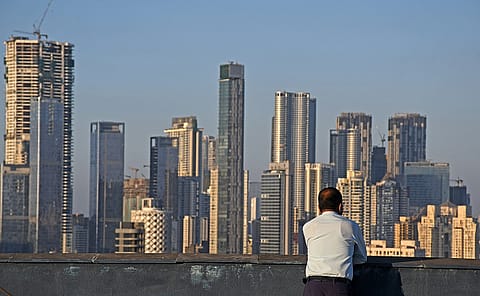
By 2036, nearly 230 million Indians are expected to be above the age of 60 and will account for roughly 15% of our country’s total population. (Representational image) | Credits: Getty Images
India’s urban landscape is being reshaped at an unprecedented pace. Across major cities, ageing buildings are being modernised or giving way completely to new ones, making urban redevelopment a defining feature of the country’s infrastructure transformation.
Reports say that by 2030, Mumbai’s redevelopment activity will add more than 40,000 new homes, worth over $14 billion. Redevelopment has also shown an upsurge in the South Delhi luxury residential market segment. Cities that saw significant vertical expansion in the 1990s are all facing the same reality. As cities grow taller and denser, the consideration is about these new structures and how people move within them. In this evolving skyline, vertical mobility is a critical component of safe, efficient, and future-ready urban living.
Why early involvement of vertical mobility matters
In many projects, the elevator becomes part of the conversation closer to the later stages of planning. When elevators are thoughtfully integrated into the broader design process, they can effectively link architectural structure, movement of people, the customer experience, and the user experience: adopting a more strategic approach to elevator planning can significantly enhance both everyday usability and the long-term efficiency of the building.
When vertical mobility specialists are brought in alongside architects and structural engineers from the outset, the entire design journey benefits from the collaborative process. A well-positioned elevator shaft can meaningfully improve the building’s traffic circulation reduce dead space and increase the area available for other uses. In dense urban redevelopment projects, where every square foot carries significant value, this kind of spatial efficiency is a commercial advantage.
Early planning also has a direct bearing on project economics. Changes made at the design stage cost a fraction of what they would do mid-construction, and a collaborative approach between elevator specialists and project teams can eliminate costly course corrections later.
Considering India’s ageing population and their accessibility needs
Taking a new approach to elevator planning becomes especially important as cities also witness a consequential demographic shift. By 2036, nearly 230 million Indians are expected to be above the age of 60 and will account for roughly 15% of our country’s total population. Reduced mobility is a defining aspect for a rapidly growing portion of this population, and vertical transportation is an essential part of maintaining independence in their everyday life. Whether it is stepping out for errands, meeting neighbours, or accessing healthcare, for a senior citizen living in a high-rise building, an elevator is not
a convenience, but a necessity. This is why redevelopment today must be approached with a clear focus on dependable and inclusive vertical mobility for all users.
Integrating innovations that are future-ready
When the development is designed with modern vertical mobility in mind, advanced elevator safety features and intelligent monitoring systems can be integrated into the building's systems. Modern elevator systems today collect data, learn from it, and that is used to help stay ahead of potential issues before residents ever notice them. Predictive maintenance represents a substantial leap forward, and buildings that embrace it report fewer disruptions and consistently higher resident satisfaction.
Smart destination control systems take this further, intelligently coordinating elevator movement based on where people are going rather than simply responding to button presses. Wait time drops by almost 50%, energy consumption falls, and it helps deliver the best possible experience for everyone who uses the building. Features like these are increasingly becoming the benchmark for high-rise living.
Redevelopment is one of the most transformative undertakings of urban planning: what is built today will shape how people live for generations. India’s cities deserve both ambition and attention to detail in equal measure. The opportunity for developers, architects, and urban planners is clear: by planning vertical mobility early in a project, there is the opportunity to deliver buildings that are safer, smarter, more accessible, and better suited to the India that is taking shape.
(The author is President, Otis India. Views are personal)
Follow Fortune India
Frequently Asked Questions
NEXT STORY