Unpacking a ‘viksit’ Budget for Viksit Bharat
/ 4 min read
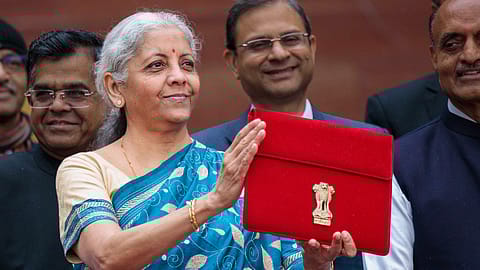
By providing a conducive ecosystem, the government aims to support the growth of MSMEs, which is expected to be a key driver of India's economic growth. | Credits: Narendra Bisht
Unpacking a ‘viksit’ Budget for Viksit Bharat
The Union Budget 2026-27 outlines a strategic plan for India's development, focusing on financial, infrastructure, and MSME sectors to achieve the vision of Viksit Bharat by 2047. Key initiatives include enhancing financial sector vibrancy, boosting infrastructure, and supporting MSMEs, with a strong emphasis on innovation, digital infrastructure, and global trade access.
This summary is AI-generated, and Fortune India is not responsible for its content or any associated copyright issues.
The Budget presents a comprehensive roadmap for India's growth story, with a clear focus on accelerating and sustaining economic growth.
By providing a conducive ecosystem, the government aims to support the growth of MSMEs, which is expected to be a key driver of India's economic growth. | Credits: Narendra Bisht
The Union Budget 2026-27 comes with promising prospects for the financial, infrastructure, and MSME sectors amid geopolitical headwinds. It emphasises the pivotal role these sectors play in paving the way towards the government’s vision of Viksit Bharat, or a developed India, by 2047—marking a century of India’s Independence.
The key measures of the Budget, which can be acronymed to VIKSIT—encompass an array of themes such as enhancing the ‘vibrancy’ of the financial sector, propelling the growth of the ‘infrastructure’ sector, development of ‘knowledge’, technology and innovation-focussed MSMEs, ensuring ‘sustainable’ growth of the services sector, boost to ‘innovation’ and digital public infrastructure and lastly, bolstering the ‘trade and technology’ ecosystem.
To start with, there is a triad of direct initiatives for enhancing the vibrancy of the financial sector. First of these is the proposition to set up a high-level committee on the banking sector that demonstrates the government’s commitment to fortifying the banking system, ensuring financial stability, and driving inclusive growth. This sector accounts for almost three-fourths of incremental credit to the commercial sector and will remain a strong enabler in India’s growth journey.
Secondly, the restructuring of public sector NBFCs—Power Finance Corporation (PFC) and REC (formerly Rural Electrification Corporation)—with the objective to achieve scale and improve efficiency, will diversify and broaden these nodal entities.
And thirdly, the proposed increase in securities transaction tax (STT) on derivatives trading is intended to curb excessive speculation. While the government’s bid to foster a balanced market may potentially affect market liquidity in the short term, it should encourage more sustainable long-term investing.
Additionally, the financial ecosystem will benefit from the introduction of a market-making framework for corporate bonds, total return swaps on corporate bonds, and an incentive of ₹100 crore for a single municipal bond issuance of more than ₹1,000 crore, which will deepen the corporate bond market and encourage the issuance of municipal bonds.
For the growth of the infrastructure sector—another key enabler for India’s growth story—₹12.2 lakh crore has been allocated for public capital expenditure in FY27, with a focus on developing infrastructure in cities with over 500,000 population. The proposed infrastructure risk guarantee fund will help lenders and investors manage construction-phase risks associated with infrastructure projects better and encourage private developers to more actively participate in projects.
This Budget also widens the funnel for credit flow to knowledge, technology, and innovation-focussed MSMEs through a three-tier stimulus, including an SME growth fund, enhancement of the Self-Reliant India Fund, and TReDS-related reforms that aim to enhance funding access, liquidity, and settlement of transactions for this segment.
These initiatives build upon previous measures announced in the last Budget and re-emphasise the pivotal role of MSMEs in India’s growth agenda as an employer to a significant share of the country’s working population and a contributor to around 30% of India’s overall GDP and over 45% to its overall exports.
By providing a conducive ecosystem, the government aims to support the growth of MSMEs, which is expected to be a key driver of India's economic growth. Crisil Ratings estimates that MSME advances by banks and NBFCs will grow by nearly 20% and over 25%, respectively, in FY27.
Further, the Budget proposes to set up a standing committee on ‘education to employment and enterprise’ for sustainable growth of the services sector to achieve a dominant 10% global share by 2047. Measures announced under this agenda aim to ease creation and upgradation of skills across segments, including design, hospitality and STEM, and increase employment prospects.
{{#most-powerful-women-snapshot-individual.slug}} {{/most-powerful-women-snapshot-individual.slug}} {{^most-powerful-women-snapshot-individual.slug}} {{/most-powerful-women-snapshot-individual.slug}} {{#showRanking}} {{current-rank}} {{/showRanking}} {{#photo.0.url}}
{{name}}
This Budget also proposes to increase incentives for enhancing innovation and strengthening digital infrastructure for higher data security, and support AI growth through measures to promote global investments in areas like data centres and cloud services—a clear acknowledgment of the role these segments play across various value chains in the economy.
As part of this, UPI-linked incentives stand at ₹2,196 crore, higher than ₹437 crore budgeted earlier, and the allocation for FY27 has been pegged at ₹2,000 crore.
This also leads to the expectation of deeper public-private collaboration for resilience in banking, fintech, and multilingual services.
Lastly, to bolster the trade and technology ecosystem and allow India’s small businesses, artisans, and start-ups to access global markets through e-commerce, the current value cap of ₹10 lakh per consignment on courier exports is proposed to be removed. This is in addition to the benefits from the proposed enhancement of the TReDS ecosystem referred to earlier.
All in all, the Budget presents a comprehensive roadmap for India's growth story, with a clear focus on accelerating and sustaining economic growth. It also exemplifies the pivotal theme of ‘long-termism’ running right through it.
Through the Budget, the government has conveyed that they are not too flustered by the short-term implications of their measures but are steadfastly focussed on their mission of Viksit Bharat and ensuring long-term stability and sustainability.
That said, the success of these measures will depend on effective execution, that is, timely implementation, clear coordination between various parties involved, and diligent monitoring.
(The author is Chief Ratings Officer, Crisil Ratings Limited. Views are personal.)
Follow Fortune India
NEXT STORY