Cash in circulation growing at double-digit pace despite digital payments: RBI Deputy Governor Murmu
/ 3 min read
India has 176 billion banknotes in circulation, with the RBI producing between 28 billion and 30 billion banknotes annually across six denominations in recent years, says Shirish Chandra Murmu.
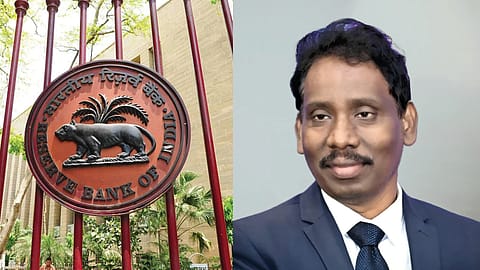
RBI Deputy Governor Shirish Chandra Murmu | Credits: Fortune India
Currency in circulation continues to grow at double-digit rates even as cash's share of individual transactions declines, thanks to growing digital payment adoption, RBI Deputy Governor Shirish Chandra Murmu said.
“Currency in circulation continues to grow at double-digit rates even as cash's share of individual transactions declines, thanks to growing digital payment adoption,” Murmu said in his keynote address at the Focus Group Discussion on Global Cash Management 2026, organised by Bank Indonesia in Jakarta on August 13.
He said this combination makes future currency demand harder to predict and complicates planning for production and distribution capacity.
Despite the growth in digital payments, cash in circulation has not declined, particularly in rural and semi-urban areas, among low-income groups, older populations and small businesses.
“In the previous decade, adoption of digital payments in India has been revolutionary to say the least, yet cash in circulation has not declined, especially in rural and semi-urban areas, among low-income groups, older populations, and small businesses,” Murmu said.
India has 176 bn banknotes in circulation
The RBI has produced between 28 billion and 30 billion banknotes annually across six denominations in recent years, while disposing of roughly 21 billion pieces a year. “As of today, 176 billion banknotes are in circulation in India,” Murmu said.
By comparison, roughly 56 billion US dollar bills and 30 billion euro banknotes were in circulation at the end of last year.
Murmu said India's higher number is partly due to its denomination mix, which is weighted towards lower-value notes.
“One caveat, in fairness to the comparison: our count is driven partly by a denomination mix weighted toward lower-value notes, which naturally means more pieces change hands for the same value of transactions. Even so, the volume gives you a sense of the scale of the logistics we manage every day,” he said.
RBI projects currency demand five years ahead
The RBI prepares a five-year forward projection of currency demand every year, based on transactional and replacement demand.
“Transactional demand is estimated from expected changes in currency in circulation, driven by GDP growth, interest rates, food inflation, and the pace of digital payment adoption, etc. Replacement demand is different: it reflects the need to retire older notes and keep the notes in people's hands fit for use,” Murmu said.
{{#most-powerful-women-snapshot-individual.slug}} {{/most-powerful-women-snapshot-individual.slug}} {{^most-powerful-women-snapshot-individual.slug}} {{/most-powerful-women-snapshot-individual.slug}} {{#showRanking}} {{current-rank}} {{/showRanking}} {{#photo.0.url}}
{{name}}
The replacement requirement is governed by the RBI's Clean Note Policy, in place since 1999.
The central bank also has domestic capacity across the currency production chain.
“On production, India has steadily built self-reliance into this chain. Our banknote paper mills, four currency printing presses, and ink production units are all owned and controlled by RBI and the Government of India,” Murmu said.
Explores longer-lasting banknotes
The RBI is exploring ways to extend the life of banknotes, including surface coatings and polymer notes for lower denominations.
“Second, note durability. We are exploring ways to extend the life of banknotes, including surface coatings on the substrate, and polymer notes for lower denominations,” Murmu said.
The central bank is also working to reduce the carbon footprint of the cash cycle. “We are working to reduce the carbon footprint of the cash cycle: optimising our distribution network for efficiency and moving up the value chain in how we dispose of banknote briquettes,” he said.
Murmu said cash remains important to India's economy despite the expansion of digital payments. “If there is one thing I want to leave you with, it is this: cash remains a significant mode of payment in the Indian economy, and preserving trust in it, through clean notes, secure logistics, and a currency ecosystem people can rely on, is central to preserving monetary sovereignty itself,” he said.
NEXT STORY