India franchise positioned for next phase of growth: Kaushik Shaparia, Deutsche Bank Group India CEO
/ 2 min read
Existing corporate and investment banking business accounts for over 85% of its India balance sheet; GCCs to gain more focus, says bank.
THIS STORY FEATURES
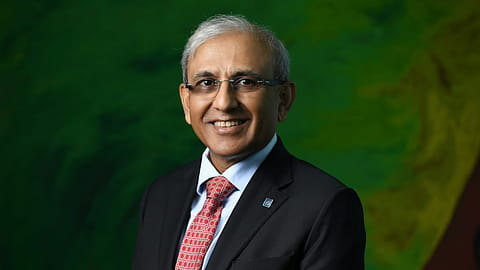
Kaushik Shaparia, CEO, Deutsche Bank Group India and Emerging Asia | Credits: Deutsche Bank
In late June 2026, after Kotak Mahindra Bank (KMB) announced that it had acquired Deutsche Bank's retail banking, affluent private banking and wealth management businesses in India, the next obvious question was about Deutsche Bank's future India strategy.
The deal, valued at ₹281.7 crore, was executed on a slump sale basis. Approximately 1,000 Deutsche Bank employees in India are expected to join Kotak Mahindra Bank as part of the transaction. The Deutsche Bank business comprises approximately ₹29,000 crore in loans, ₹16,000 crore in deposits, and ₹10,500 crore in assets under management.
Disclosing the bank's future plans to Fortune India, Kaushik Shaparia, CEO, Deutsche Bank Group India and Emerging Asia, said, "This transaction is not about stepping back from India; it is about positioning the franchise for our next phase of growth. By concentrating resources in areas where we have the greatest scale, connectivity and competitive advantage, we are strengthening our ability to create long-term value for clients, shareholders and the broader economy."
As part of this exercise, Shaparia said corporate banking, institutional banking and the bank's global capability centre (GCC) will be the key areas of focus.
He maintained that India remains one of Deutsche Bank's most important markets globally and a core pillar of its long-term strategy. "The transaction does not change that," Shaparia said. As of March 2026, corporate and investment banking accounted for more than 85% of its balance sheet of over ₹2 lakh crore.
More than a quarter of the Group's global workforce is based in India, serving 42% of its critical processes globally. The group has also maintained a sharp focus on asset management, where Shaparia said it sees "significant long-term opportunities."
DWS Group (approximately 80% owned by Deutsche Bank) has a strategic collaboration with Nippon Life India Asset Management (NAMI), along with its recent 40% investment in Nippon Life India AIF Management (NIAIF). NIAIF has raised commitments of about ₹8,500 crore since 2014 through 24 funds.
As of FY26, India had more than 1,700 registered AIFs, with investments of about ₹6.45 lakh crore, reflecting a compound annual growth rate (CAGR) of nearly 30% over the past five years, according to Securities and Exchange Board of India (SEBI) data.
Shaparia sees global capability centres (GCCs) as one of the most compelling structural growth opportunities in India. "The India platform has evolved from a traditional support centre into a strategic global capability network that supports businesses and infrastructure functions across 48 countries."
"As global firms establish or expand capability centres in India, they require sophisticated banking solutions spanning treasury, liquidity management, cross-border payments, foreign exchange, working capital, capital raising and strategic advisory," Shaparia said.


Follow Fortune India
NEXT STORY