From Covid experiment to classroom case: IIM Ahmedabad documents HoABL's digital-first land business
/ 2 min read
Management school's latest case study examines how the company built a branded land category through technology, customer trust and a fully digital sales model
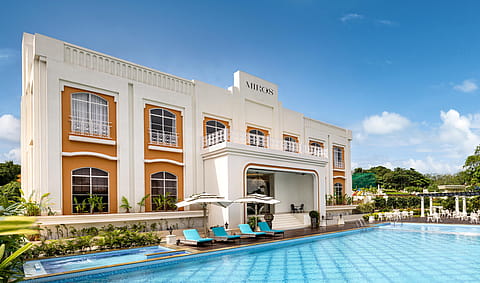
Rather than documenting a conventional real estate company, the study explores how HoABL attempted to create a new "branded land" category | Credits: HoABL
A business model born out of the disruptions of the Covid-19 pandemic has found its way into the classrooms of the Indian Institute of Management Ahmedabad (IIMA), with the country's premier management school publishing a case study on The House of Abhinandan Lodha (HoABL) and its digital-first approach to land sales.
Titled HoABL: Ready for Scaling Up, the case has been authored by IIMA associate professor of marketing Sourav Borah and IMT Ghaziabad's Dr. Aparna Kansal. Rather than documenting a conventional real estate company, the study explores how HoABL attempted to create a new "branded land" category by digitising one of India's most traditional asset classes and now faces strategic choices around its next phase of growth.
A pandemic-driven pivot
The case traces the company's origins to 2020, when nationwide lockdowns made physical property visits nearly impossible. Instead of waiting for restrictions to ease, HoABL shifted the entire customer journey—from discovery and virtual walkthroughs to documentation and booking—online. The company retained the model even after the pandemic, positioning technology as the foundation of its business rather than a temporary workaround.
According to the case, HoABL combines technology with legal due diligence, design-led development and digital marketing to simplify land ownership, an asset class traditionally associated with fragmented ownership, opaque documentation and lengthy transactions. The company also employs artificial intelligence to analyse customer interactions and identify potential instances of mis-selling, while drone-based surveys are used to monitor project execution.
"What Tanishq did with gold in retail, could HoABL do the same for land?" HoABL chief executive officer Samujjwal Ghosh says in the case study while explaining the company's founding vision of making land ownership more accessible to retail investors.
More than a company profile
Unlike a corporate profile, the case places students in a February 2026 leadership meeting where founder Abhinandan Lodha and his team debate four possible growth strategies: expanding into new geographies, moving further up the value chain with premium offerings, standardising products across markets, or pursuing blockchain-enabled land tokenisation through fractional ownership.
"HoABL presents an interesting example of category creation and business model innovation in an industry that has historically been fragmented and relationship driven," Borah said in a statement announcing the publication. "The case examines how the company combined digital capabilities, branding, operational design and customer-centric thinking to address longstanding inefficiencies in land ownership."
The company says it has sold more than 13 million sq. ft. of branded land across multiple locations since its launch in 2020, while the case study projects its customer base to reach around 9,000 by FY26 and shows average ticket sizes rising from ₹16.1 lakh in 2021 to ₹98.3 lakh in 2025.
The publication comes as organised developers increasingly expand into India's plotted development market, where branded players are seeking to differentiate themselves through technology, transparency and curated lifestyle offerings rather than competing solely on land prices.
NEXT STORY