Cash toll payments on national highways may end from April 1 this year ; FASTag, UPI to become mandatory
/ 2 min read
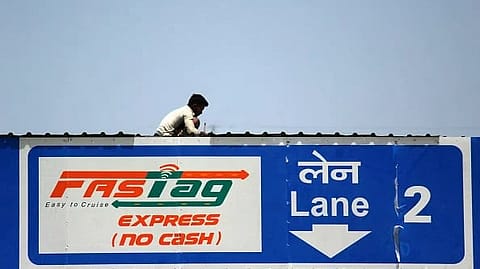
Representational Image | Credits: Getty
Cash toll payments on national highways may end from April 1 this year ; FASTag, UPI to become mandatory
India plans to eliminate cash toll payments on national highways by April 1, 2026, mandating FASTag and UPI as the only payment methods. This move aims to enhance traffic flow, reduce congestion, and improve transparency. With FASTag usage already at 98%, the transition seeks to standardize toll transactions and eliminate cash-related delays.
This summary is AI-generated, and Fortune India is not responsible for its content or any associated copyright issues.
With FASTag penetration crossing 98%, the government weighs a complete shift to digital toll payments to ease congestion and standardise highway transactions nationwide
Representational Image | Credits: Getty
India could move to a fully digital toll collection regime from April 1, 2026, with cash payments at National Highway fee plazas likely to be discontinued as part of a nationwide push to streamline traffic flow and improve operational efficiency.
The move, under consideration by the National Highways Authority of India (NHAI), would make electronic payments through FASTag and the Unified Payments Interface (UPI) the only accepted modes at more than 1,150 fee plazas across National Highways and Expressways.
Digital-only tolling regime in the works
According to an official statement issued by the Ministry of Road Transport and Highways, the transition is aimed at consolidating the gains made under the Electronic Toll Collection (ETC) programme and strengthening the reliability of toll plaza operations. Authorities believe eliminating cash lanes could significantly improve throughput, reduce congestion during peak hours and bring greater transparency to toll transactions.
India’s tolling ecosystem has already undergone a sharp digital shift. FASTag penetration has crossed 98%, with most transactions now processed electronically through RFID-enabled tags affixed to vehicles. UPI payment options are also operational at toll plazas, offering motorists an additional digital payment channel.
Higher charges for non-digital payments
Notably, current rules impose financial disincentives on non-digital payments. Vehicles entering a toll plaza without a valid FASTag and opting to pay in cash are charged double the applicable user fee. Those paying via UPI are required to pay 1.25 times the prescribed toll amount. The proposed phase-out of cash is expected to remove ambiguity in enforcement and standardise payment practices nationwide.
Plaza-level assessments indicate that cash transactions remain a key source of delays, disputes and longer waiting times, particularly during high-traffic periods.
From FASTag rollout to full cashless transition
The push to eliminate cash payments marks the next phase of India’s tolling reforms that began with the nationwide rollout of FASTag in 2019, when the NHAI mandated electronic toll collection to cut long queues and fuel wastage at plazas.
Over the past few years, digital tolling has become the default mode across the highway network, driven by policy nudges such as penalty charges for vehicles without valid FASTags and the integration of UPI as an alternative payment channel.
Follow Fortune India
NEXT STORY