Elon Musk’s Terafab plan aims to solve the AI chip shortage
/ 2 min read
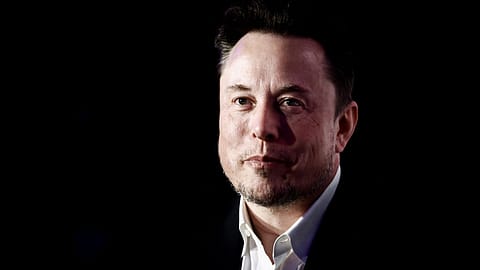
Credits: Getty Images
Elon Musk’s Terafab plan aims to solve the AI chip shortage
Elon Musk has announced Terafab, a semiconductor project by Tesla, SpaceX, and xAI, to address the AI chip shortage. The first facility in Austin, Texas, will integrate chip design, manufacturing, and testing. It aims to produce chips for Tesla vehicles and space-based computing, with plans to scale production significantly.
This summary is AI-generated, and Fortune India is not responsible for its content or any associated copyright issues.
Existing suppliers, including TSMC and Samsung, are expanding capacity, but Musk has argued that their pace is not enough.
Credits: Getty Images
Elon Musk has unveiled Terafab, a semiconductor manufacturing project that will be jointly developed by Tesla, SpaceX and xAI, with the first facility planned in Austin, Texas. Bloomberg reported that the project will begin with an “advanced technology fab” capable of handling chip design, manufacturing and testing in a single location.
The move comes as Musk’s companies face rising demand for computing power across AI models, autonomous driving and robotics. Existing suppliers, including TSMC and Samsung, are expanding capacity, but Musk has argued that their pace is not enough. “That rate is much less than we would like,” he said, adding, “we either build the Terafab or we don’t have the chips.”
What Terafab will build and how it works
Terafab is designed as a vertically integrated facility, combining multiple stages of semiconductor production that are usually spread across different locations. This includes chip design, lithography, fabrication, memory production, packaging and testing within one site.
The initial Austin facility will function as a prototype “advanced technology fab,” allowing rapid iteration by making and testing chips in-house without relying on external partners.
The project will produce two types of chips. One will be optimised for edge and inference workloads, aimed at Tesla’s vehicles, robotaxis and humanoid robots. The second will be a high-performance chip designed for space-based computing, to support SpaceX and xAI’s plans for AI data centres in orbit.
In terms of scale, Musk has said the facility could eventually support 100 to 200 gigawatts of computing capacity on Earth, with a longer-term goal of reaching one terawatt annually.
Scale, capacity and rollout plans
The Terafab project is expected to begin with a smaller, fast-iteration facility before expanding into a larger-scale manufacturing operation. The long-term plan includes producing tens of billions of chips annually and scaling output across multiple sites.
Reports indicate that Tesla has already begun early-stage hiring for the project, including roles focused on end-to-end fab construction, covering infrastructure, tooling and production ramp-up.
The chips produced are expected to support a wide range of applications, from Tesla’s Optimus robots to AI systems and satellite-based computing networks. Musk has also outlined plans for space-based AI infrastructure, including satellites powered by solar energy to run computing workloads beyond Earth.
Follow Fortune India
NEXT STORY