SpaceX reports 92% surge in revenue; shares fall 7.5% on AI spending concerns
/ 2 min read
Investors fret over $15.8 billion AI infrastructure splurge even as Starlink subscribers double and losses narrow
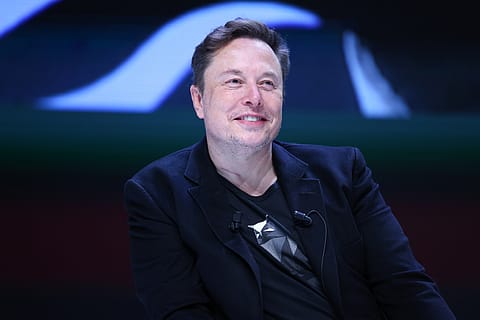
Tesla and SpaceX CEO Elon Musk | Credits: Getty Images
SpaceX reported strong second-quarter earnings in its first quarterly results since listing on the Nasdaq, with revenue nearly doubling on the back of growth in its Starlink satellite internet business and artificial intelligence (AI) segment. However, the company’s shares fell in after-hours trading as investors reacted to its high AI-related spending.
Revenue rose to $7.8 billion in the quarter ended June 30, up from $4.1 billion a year ago, marking a 92% increase. Adjusted EBITDA increased 191% to $3.5 billion, while the company’s net loss narrowed to $541 million from $1.01 billion last year.
The Connectivity business, which includes Starlink, remained SpaceX’s biggest business, generating $4.3 billion in revenue during the quarter. The satellite internet service more than doubled its subscriber base to 12 million, although average revenue per user declined as the company expanded into more international markets.
The AI business reported revenue of $2.6 billion, up about 250% from a year earlier, driven by demand for AI cloud services from customers including Google, Anthropic and Reflection AI.
Meanwhile, the rocket maker's capital expenditure rose to $18.4 billion during the quarter, with $15.8 billion directed towards AI infrastructure, underscoring SpaceX’s aggressive investment in expanding its AI business. The remainder was spent on its Starlink connectivity business, around $1.4 billion and space operations, around $1.2 billion.
Speaking during the earnings call, CEO Elon Musk said AI infrastructure remains constrained by the availability of memory. “The limiting factor in AI is memory. Memory output is increasing by around 20% a year, but demand is increasing by 200% a year, maybe higher,” he said, adding that higher memory prices were “Economics 101.”
Musk also said SpaceX expects to receive a “significant percentage” of Nvidia’s graphics processing units (GPUs) next year, which are widely used to train and run AI models.
The company said it expects to reach a $100 billion annualised revenue run rate by the end of 2026 and plans to deploy 1,000 next-generation V3 Starlink satellites over the next year.
SpaceX shares fall in after-hours trading
Despite the strong results, SpaceX shares fell about 7.5% in after-hours trading as investors focused on the company’s rising capital expenditure, which reached around $18 billion during the quarter, largely due to investments in AI infrastructure. Investors were also watching the upcoming expiry of the post-IPO lock-up period, which could allow early investors and company insiders to sell their shares.
Responding to concerns over the share price reaction, Musk said the company was focused on long-term growth. “We’re focused on building enduring value, not optimizing for quarter-to-quarter market reactions,” he said.
{{#most-powerful-women-snapshot-individual.slug}} {{/most-powerful-women-snapshot-individual.slug}} {{^most-powerful-women-snapshot-individual.slug}} {{/most-powerful-women-snapshot-individual.slug}} {{#showRanking}} {{current-rank}} {{/showRanking}} {{#photo.0.url}}
{{name}}
The stock, which was listed at $135, made history as the largest IPO to ever go public in June. The stock rose to hit an intraday high of $225, but all the gains were soon pared with as investors were ambiguous about the rising AI spends.
SpaceX shares were trading at $116 apiece in the after-trading hours.
NEXT STORY