The FAQs are AI-generated, and Fortune India is not responsible for its content or any associated copyright issues.
The changing face of the finance profession in an era of global turmoil
/ 5 min read
AI as a tool, whether used internally or externally, will undoubtedly enhance the accounting and finance function, says Mark Koziel.
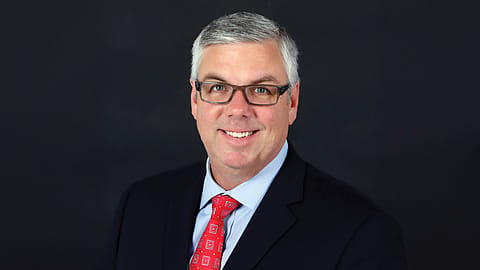
Mark Koziel, CEO, Association of International Certified Professional Accountants, President and CEO, American Institute of CPAs.
At a time when India is seeing rapid growth in Global Capability Centres (GCCs), the increasing penetration of AI across professions, and a major reshaping of global trade relations, Fortune India caught up with Mark Koziel, CEO, Association of International Certified Professional Accountants, President and CEO, American Institute of CPAs, to discuss how these macroeconomic shifts are transforming the finance profession. Edited excerpts:
Fortune India: Given the growing interest among Indian students in pursuing finance certifications, are you seeing a similar trend when it comes to CPA certifications as well?
Mark Koziel: For sure. There is significant interest in the CPA qualification, depending on the type of clients professionals work with and the nature of the organisation. If we look at the GCCs we support, many of them initially began with a US-centric practice before expanding globally. As a result, a large number of Indian professional accountants today work with US-based clients. Having a US CPA qualification therefore becomes highly valuable. We have seen similar trends in other countries over time. In the 1990s, for instance, there was strong demand in Germany, and we continue to see it in Japan as well. Historically, whenever there is a concentration of US businesses in a particular market, demand for the US CPA qualification tends to rise. Even though the US now allows foreign filers to use IFRS standards on American exchanges, many Indian professionals continue to work directly with US clients. In many cases, they interact closely with those clients, who want the assurance that they are dealing with qualified CPAs, regardless of whether they are based in India or the US.
Fortune India: Given the current changing global trade dynamics, what are the challenges that you see finance professionals having to deal with in this very dynamic global macro environment?
Mark Koziel: First and foremost, I think the greatest challenge is consistency in regulations and standards. There's a lot that you have to know and understand if we are not converged in the types of standards. We have this conversation in the US all the time. I met with the PCOB last week. They had a different quality control standard that they had adopted a year ago and they're now revisiting.
But you know that there is clearly a growing push towards global standardisation, even if accounting frameworks are not exactly the same everywhere. In the US, for example, we follow US GAAP, but it has converged pretty well with IFRS. In fact, I met with the Financial Stability Board last week, and international convergence was a big area of discussion.
Another aspect is consistency in technology adoption. The question is whether the same technologies are accessible across different parts of the world as businesses increasingly operate in a connected global environment. I think that becomes a challenge. But it is a global economy. When I go out on behalf of CIMA into various markets in APAC, Africa, and Latin America, I see a lot of the same company names that are involved with us, firms such as Oracle, Adobe, Shell, and BP.
Recommended Stories
It is pretty amazing to see the reach of these companies and how important globalisation has become. From that perspective, the CGMA qualification can serve as a consistent language of business in corporate finance, regardless of where professionals are practising in the world today.
Fortune India: Do you see AI, especially, with agentic AI threatening finance jobs? How is it changing the landscape when it comes to accounting and what does the future hold?
Mark Koziel: I see a lot of headlines that AI is going to replace accountants. And it's not the first time I've seen it. In my 30 years, I saw it when blockchain came into play, when Excel really kind of took off in the '90s. So, for whatever reason, everyone wants to say that these advances, these transformations, these new innovations are going to put the accountant out of business and yet has made us stronger to be able to serve the marketplace in a different way. I think we're going to see that once again, and with AI we already are seeing it. As long as we can continue to upskill our professionals and make them AI ready, I think that's going to be important. But we talk a lot about the human in the lead, and our members are incredibly optimistic. In fact, we have our RISE 2040 programme, we're finalising our report that'll go out in June this year. There is a sense of optimism around AI that it can make them even more effective as an accounting and finance professional; to do the things they need to do to serve their business, to serve the marketplace in a different way. So, it is our job to make sure that we continue to give them those tools.
Fortune India: Speaking about AI, could you elaborate on the impact it is having on auditing, particularly on audit quality, as well as on other finance functions? Where are you seeing the biggest value addition?
RANK
COMPANY NAME
REVENUE
(INR CR)
(INR CR)
{{#current-rank}} {{current-rank}} {{/current-rank}} {{^current-rank}} {{rank}} {{/current-rank}} {{name}} {{#revenue}} {{revenue}} {{/revenue}} {{^revenue}} {{noi}} {{/revenue}}
Mark Koziel: AI as a tool, whether used internally or externally, will undoubtedly enhance the accounting and finance function. But there are two aspects to this transformation. If we look at auditing in general, many audit procedures have already evolved significantly through automation. The work auditors do today is vastly different from what I did 30 years ago. Back then, we had to physically send confirmations, make copies, and stuff envelopes manually. All of that has become automated and AI can take a look at it in a very different way.
Now the finance function will increasingly depend on what we call the “human in the lead.” Finance professionals will play a critical role in helping businesses strategise and act as partners to business lines. They will need to guide business leaders in developing the right prompts for AI systems, ensure access to the appropriate data, and put the necessary guardrails around that data. Equally important is ensuring that the data being used is reliable enough for informed business decision-making. So, accounting and finance professionals will remain deeply entrenched in the entire AI-driven decision-making process.
Fortune India: What do you make of the preparedness of GCCs or finance practitioners in India when it comes to AI adoption, when compared to those operating in advanced markets?
Mark Koziel: First of all, the number of GCCs that are consistent with the US market as they're so intertwined with the market, because effectively function as extensions of US operations. They are not operating in isolation, but as part of the broader global business ecosystem supporting parent organisations in the US. We had a conversation about companies that came to the Indian market 20 to 25 years ago, primarily with a focus on transactional work. Today, however, a new wave of companies, many of which have entered over the last five years, is taking a very different approach. They are learning from the experience of earlier entrants, and in many cases, they are hiring professionals who previously worked with those older GCCs to help build and scale new operations. And, if they've been developed in the last five years, these newer GCCs are being designed with transformation in mind from the outset. They've already started talking about AI and AI integration into their programme. So, they are very well advanced in adopting AI-driven capabilities and they're being relied upon to be able to do that as well.
Fortune India: What is the path forward when it comes to upskilling finance professionals to stay on course in the AI era?
Mark Koziel: It is the biggest part of it, but it is not directly related to AI. We've been talking about upskilling for a period of time. I have travelled around the globe, met our industry members, members in public accounting, and I have consistently heard the same thing about upskilling the professionals. This is something that we take very seriously, and we see it as an incredible opportunity. In the US, we're doing a profession-ready initiative (for passing graduates) and we're actually looking at a tool that is going to help develop the professionals in a different way, upskilling through simulation, not through just training. We have been led by experiential training, almost like an apprenticeship model for years. We don't have that opportunity anymore because what we used to do, what I learned, and what we talked about, the debits and the credits, all have been automated already.
So, we need to provide them with that level of knowledge in a different way. We will do that through upskilling. AI will be no different in that regard, it is about equipping professionals with the right tool set to respond effectively. It is not just about learning how to use AI as part of upskilling; it is also about developing critical thinking, strategic capabilities, and the broader skill set required to become a highly successful CGMA or US CPA in the future. That is what we are hearing from our members today, and that is how we are planning to build these programmes. It will be a competency assessment framework that companies can use across markets, whether in India, Sri Lanka, Japan, the US or the UK. This is something that is absolutely needed, and we are responding to that demand.