‘Would help the least served in India’: Elon Musk pitches Starlink to bridge rural internet gap
/ 2 min read
Starlink, operated by Musk’s SpaceX, provides broadband internet through a constellation of low-Earth-orbit (LEO) satellites.
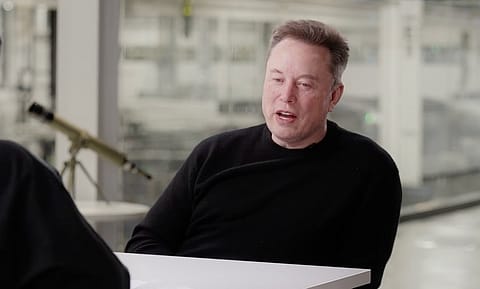
Elon Musk
Elon Musk has renewed his pitch for Starlink’s satellite internet services in India, saying the company could help expand connectivity in parts of the country that remain underserved, particularly rural and remote communities.
In a social media post on X on Friday, Musk wrote, “Starlink would help the least served in India, especially in rural areas.” He was responding to a post by an account called DogeDesigner, which urged the introduction of Starlink in India to improve internet access in remote villages.
Starlink, operated by Musk’s SpaceX, provides broadband internet through a constellation of low-Earth-orbit (LEO) satellites. Unlike conventional broadband networks that depend heavily on terrestrial infrastructure, satellite-based connectivity can potentially reach areas where fibre and mobile networks are difficult or expensive to deploy.
However, Starlink has yet to begin commercial operations in India as it continues to seek regulatory clearances. The company has been engaging with Indian authorities over the approvals required to offer satellite communication services in the country.
Starlink awaiting approval
Starlink has also submitted a fresh application related to its satellite network. An earlier application for its Gen 2 satellite network was rejected by the Indian National Space Promotion and Authorisation Centre (IN-SPACe) over concerns that certain features and proposed radio frequencies did not comply with Indian requirements. The Gen 2 system also includes direct-to-device connectivity capabilities.
The company has maintained that discussions with the Indian government are continuing. Starlink Business Operations Vice President Lauren Dreyer recently said the company remained in active discussions with the government regarding the launch of its commercial services.
The regulatory process comes as India works on the framework for allocating satellite spectrum and governing satellite communication services. The sector has attracted interest from several global and domestic players seeking to expand high-speed internet access beyond areas covered by traditional networks.
Increasing competition from China’s SpaceSail
Meanwhile, Starlink is also facing increasing competition from China’s satellite internet industry. Chinese startup SpaceSail, officially Shanghai Spacecom Satellite Technology, has raised around 7 billion yuan, or about $1 billion, in a Series B funding round to accelerate the development of its LEO satellite network.
SpaceSail operates China’s Qianfan constellation, which is being developed as a rival to Starlink. The funding round reportedly attracted 18 investors, including state-backed Shanghai Alliance Investment and venture fund CAS Star, highlighting the growing global competition in satellite-based internet services.
NEXT STORY