
Ford India plans mega EV facility in Chennai, eyes Asia-Pacific hub for affordable EVs
ADVERTISEMENT
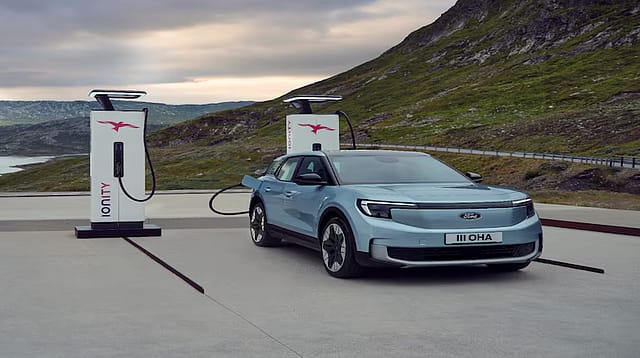
Ford Motor Company is looking to develop its Maraimalai Nagar facility near Chennai into a major electric-vehicle manufacturing hub, with plans for a brownfield expansion that could combine EV assembly with the manufacture of batteries, cells, electric motors and other critical components, according to sources familiar with the development.
It has also been learnt from well-informed sources that the proposed facility is also being positioned as an Asia-Pacific hub for affordable electric vehicles, with production expected to cater primarily to export markets. The plan could significantly expand Ford’s manufacturing footprint in India and provide the company with an integrated base to develop and produce lower-cost EVs for the region.
“Ford is looking at Chennai not just as a powertrain manufacturing base but as a larger EV manufacturing hub for the Asia-Pacific region. The focus is expected to be on affordable electric vehicles, with the facility potentially serving both the regional and global export markets,” a person familiar with the development said.
Ford, however, has not publicly confirmed an EV manufacturing programme at the Chennai facility. A Ford India spokesperson, when contacted by Fortune India, stated, “There is no change to what we announced last year. Our Chennai facility will manufacture powertrains for export only. We have not provided details of the type of powertrain or export markets at this point.”
It may be recalled that Ford had in October 2025 announced an investment of ₹3,250 crore to revive manufacturing operations at Maraimalai Nagar. The programme is focused on powertrains for export markets and is expected to have annual production capacity of around 2.35 lakh units.
Brownfield expansion could create integrated EV base
The proposed expansion would repurpose and expand Ford’s existing Chennai facility rather than involve a new greenfield plant. Besides EV assembly, the manufacturing ecosystem could include battery packs, battery cells, electric motors and other electric powertrain components, allowing Ford to localise a larger portion of the EV value chain and potentially improve cost competitiveness.
Industry estimates put the potential investment for an integrated EV and battery manufacturing operation at ₹15,000-20,000 crore, although Ford has not disclosed any investment figure for such a programme.
The scale would be comparable with some of the larger EV and battery projects under development in India. Tata Group’s Agratas is setting up a 20 GWh battery-cell manufacturing facility in Sanand, Gujarat, with an initial investment of ₹13,000 crore. VinFast has committed an initial $500 million investment to its Tamil Nadu manufacturing facility, with an option to increase its overall India investment to as much as $2 billion.
Affordable EVs could drive next phase
The potential project comes as India’s EV market expands rapidly. India recorded 15.41 lakh EV registrations in the first half of 2026, up 43% year-on-year, while EV penetration rose to 11.43% from 8% a year earlier, according to JMK Research, citing Vahan data.
Electric passenger-vehicle registrations grew 83% year-on-year in H1 2026, according to JMK Research, as automakers expanded their EV portfolios across price points.
Puneet Gupta, Director, India & ASEAN Automotive Market at S&P Global Mobility, said the next phase of EV adoption would depend on automakers making electric vehicles available at more accessible price points, along with greater localisation, broader product portfolios and improving charging infrastructure.
“For Ford, a potential EV manufacturing programme in Chennai could provide an opportunity to rebuild its manufacturing footprint in India while leveraging the country’s engineering and supplier ecosystem to develop and produce more affordable electric vehicles for the wider Asia-Pacific market,” he added.
Chennai’s second innings
It may be recalled that Ford stopped domestic vehicle production in India in 2021 after years of losses and low capacity utilisation, but retained its Chennai facility and subsequently decided to revive manufacturing operations.
Its return has so far centred on powertrain manufacturing for export markets. A potential EV programme could broaden that strategy by transforming the plant into an integrated electric-vehicle manufacturing base.
If realised, the project could give Ford a larger role in India’s EV ecosystem while establishing the country as a regional manufacturing base for affordable electric mobility.