
Global supply chains shifting; India must localise advanced auto tech: Maruti Suzuki MD Hisashi Takeuchi
ADVERTISEMENT
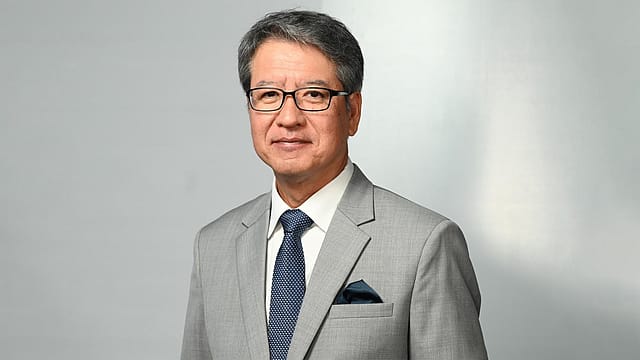
India has a significant opportunity to capture a larger share of global automotive supply chains as manufacturers increasingly weigh reliability and continuity alongside cost, Maruti Suzuki MD & CEO Hisashi Takeuchi said on Wednesday, urging the industry to use the changing global landscape to deepen localisation and build advanced technologies domestically.
Speaking at the 66th annual session of the Automotive Component Manufacturers Association of India (ACMA), Takeuchi stated that the automotive industry had learnt to withstand a series of disruptions, from semiconductor shortages and geopolitical conflicts to supply-chain uncertainties. The next challenge, he said, is to build an industry that emerges stronger from such disruptions.
“The last decade taught us how to withstand disruption. The next decade must help us become stronger because of disruption,” Takeuchi said, drawing a distinction between resilience and what he described as “antifragility” — the ability of a system to become stronger under stress.
Supply-chain reset creates opportunity for India
Takeuchi said global supply chains are being reconfigured, with companies increasingly looking beyond cost while making sourcing and manufacturing decisions. Reliability and continuity have emerged as equally important considerations, creating an opportunity for India to establish itself as a trusted manufacturing and supply-chain hub.
He said government initiatives such as the Production Linked Incentive (PLI) scheme and the India Semiconductor Mission are helping create domestic capabilities in strategically important areas and reduce dependence on external sources.
India's scale provides another favourable factor, Takeuchi said. Growth in the domestic automotive market following GST 2.0, combined with the country's expanding export potential, is creating the scale needed to justify investment in deeper localisation.
This could allow Indian manufacturers to take on technologies that were previously considered difficult to manufacture competitively in the country, he said.
But localisation alone will not be enough to make India globally competitive.
“To truly strengthen the industry's competitiveness, products made in India must be able to compete with the best in the world,” Takeuchi said, adding that quality needs to become a defining strength of Indian manufacturing.
Tier-2, Tier-3 suppliers need to move up the value chain
Takeuchi said competitiveness needs to be built across the entire automotive ecosystem rather than within individual companies.
“Unless our Tier-2 and Tier-3 suppliers are capable, we can’t produce world-class quality,” he said.
He called for greater support for smaller suppliers in areas such as technology, quality systems and engineering capabilities. Improving communication across the supply chain will also be critical, particularly during periods of disruption, when suppliers and manufacturers need to respond quickly and in coordination.
Takeuchi also cautioned companies against approaching capacity expansion without accounting for changing demand patterns. Advance planning and flexibility in manufacturing would be important to manage fluctuations while scaling up production, he said.
People, technology to determine competitiveness
The Maruti Suzuki chief identified people, collective learning and technology as the other three enablers that can help the industry move beyond resilience.
He argued that companies need to change the way they view their workforce, with people treated as assets rather than simply as a cost in the profit and loss account. Investment in capability development, he said, should be regarded as a long-term investment that can create competitive advantage and help companies attract and retain talent.
Takeuchi also called for greater sharing of knowledge across the automotive ecosystem. A disruption faced by one component manufacturer should become a learning opportunity for others, rather than remain an isolated experience.
At Maruti Suzuki, he said, the company has been developing platforms for suppliers to exchange experiences and best practices. Its Digital Library initiative, for instance, is creating a repository of case studies that can be accessed across the supplier ecosystem.
Technology can further help companies move from reacting to disruptions to anticipating them. Takeuchi said Maruti Suzuki uses geo-mapping of supplier locations along with localised weather intelligence to identify potential risks and provide advance alerts, giving suppliers and internal teams more time to prepare.
The objective, he said, is not to predict every disruption, but to identify risks early enough to take countermeasures.
Takeuchi also flagged cybersecurity as an increasingly important part of automotive resilience as companies become more digital. With cyber attackers becoming more sophisticated, businesses need to strengthen their security systems while also maintaining contingency plans that can help restore operations quickly in the event of an incident.
“While we may not be able to anticipate every risk, we can continuously improve our ability to prepare, adapt, and respond,” Takeuchi said.