
How is Renault attempting a reboot with the new Duster?
ADVERTISEMENT
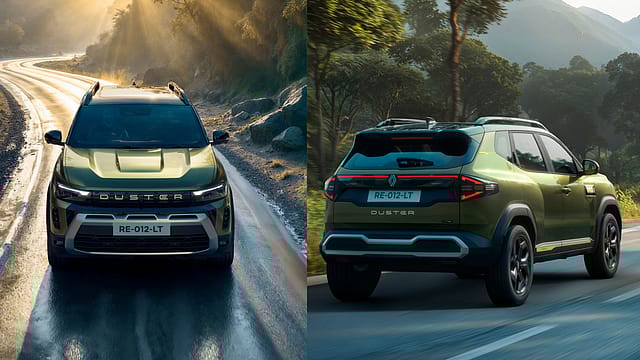
Last week, Renault re-launched its wildly popular Duster, a little over a decade after first introducing it in the country.
The Duster, in many ways, was instrumental in the country's SUV boom and earned many admirers. But somewhere along the way, Renault did not reinvent the Duster for the Indian market, and in the process, lost out in the country’s SUV boom. Today, the French automaker commands less than one percent of the domestic market.
With the new Duster, though, Renault is attempting a strategy reboot in India and hopes to capture market share, while also taking the fight to automakers with its hybrid proposition. In a conversation with Fortune India, Stéphane Deblaise, the India CEO of Renault Group India, discusses the company’s plans for India, including the Duster, and its renewed focus on the domestic market. Edited Excerpts:
Q: What’s the plan with the new Duster?
Duster is really an icon. It’s showing India that we are back and we believe in this country. The expectation is very simple. It is to capitalize on the past and to have a car for today’s customers. This car is excellent in both ride and handling. And I can tell you that I've driven this car several times (the new Duster), and compared to the competition, I think we are the best.
We have improved comfort and NVH (noise, vibration, and handling), which are very important in India because the roads are not all good, and you are more sensitive to NVH than in other countries. These are two areas for improvement that are consistent with the ride and handling.
Q: It is a crowded market. Isn't it? And you have been away for a long time.
In addition to this strong DNA, it is really competence-based in the automotive industry. We have had two disruptions with the Duster. One is a hybrid solution that is not on the market and is new, delivering 80% of the time in EV mode in the city and providing a very quiet cabin. Secondly, Google automotive services are embedded. And third, the two additional engines we have are truly impressive.
Q: But do you think the Indian consumer is ready to sort of welcome Renault back into that space today? What gives you hope about consumers today?
Everything is around the product. If you offer a good product, consumers will be interested, and we believe we do. Brand is a consequence of what you do. It's not the other way around. Brand is the result of what we do in the market.
Q: What exactly is Renault’s plan for India?
I cannot disclose that today. We will get back to you with a plan soon, in the first half of this year.
However, we are working in three directions. One is the engines and how to improve that. You have many solutions in India. Today, we addressed only part of these solutions (with the Duster). We want to address more. And this you will see in the next few years.
Secondly, connectivity is a key topic. How do you integrate voice recognition and up-to-date technologies? We will work on this. And finally, you have the body types. At Renault India, we now have two platforms. The platform we call CMFA, which is one of Triber and Kiger. We will continue to improve these types of cars, as well as the Duster platform, which is the new Renault global platform we announced.
Q: You have been here a little over four months. What have been some of the changes you have made?
Since I arrived, we have been a single company. I'm leading engineering, purchasing, manufacturing, sales, and marketing. It's better for addressing the Indian market. Because you can speak to everybody at the same time, and if sales and marketing need something, you can speak to engineering. This is helping address issues and has also increased the speed at which they are addressed.
Secondly, I am a car guy. I am a product and engine engineer. I know every detail of the car, every stitch. I know why there are stitches or why there are no stitches. And customers, they feel when you put love in the cars. And I can tell you that we are now putting a lot of love into our cars, and they will feel it.
Q: What’s the direction for India with electric and hybrid?
Today in India, you have diesel; we are maybe the last country with such high diesel cars. We have gasoline, CNG, hybrid, BEV, and a very high level of MT (manual transmission) at the same time as AT (automatic transmission). That it's the biggest diversity I've ever seen in the world.
In China, everything is automatic gearbox, and with either electric or hybrid. In Europe, there are hybrid and electric vehicles. But here you have everything. We think diesel will increasingly move toward hybrids. There is a discussion where these hybrid solutions are not supported in terms of incentives. This (Incentives) could help push hybrid. Hybrid is a very good CO2 solution and very good for customers, thanks to the torque and NVH it delivers.
And with BEV, there are constraints of plugging. There is less (charging) than in some other countries. But we've seen in the last few months that with a good product, it creates a buzz and the success.
Q: The EU deal has just been announced. What impact does it have on Renault?
It is very new. But, overall, it’s very good news. From my perspective, the most interesting would be to reduce the tariff on imports from India to Europe, because it would help create synergies and enable exports from here. We could import some cars.
Q: How confident are you about Renault's resurgence as a brand in India?
I am very confident. If not, I leave. It is a result of what you do every day and the love you put into your cars.
Q: So, do you have some targets for market share in India?
We want to put value before volume. Nevertheless, we should be between 3% and 5% of the market share in 2030.