
Hyundai India sees eightfold jump in EV share to 7-8% next fiscal: MD & CEO Tarun Garg
ADVERTISEMENT
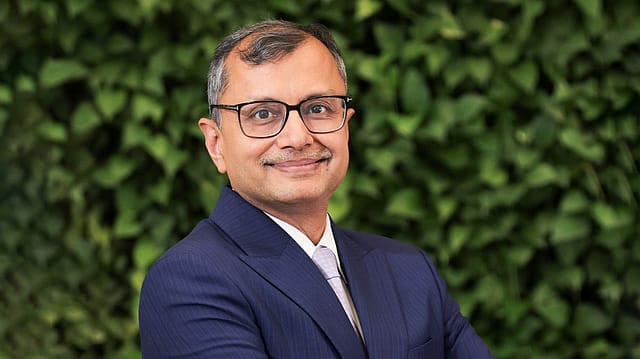
Hyundai Motor India Limited (HMIL)expects an eight-fold increase in its electric vehicle (EV) sales contribution to 7-8 per cent next fiscal, while betting on rural markets and new SUV launches to drive growth amid an expected moderation in the overall auto industry.
“Next fiscal year, we should be touching the industry contribution of about 7-8 percent EV,” Managing Director and CEO Tarun Garg said at a media roundtable on the sidelines of the Society of Indian Automobile Manufacturers' (SIAM) annual convention in New Delhi.
Rural markets emerge as key growth engine
Hyundai currently sells the Creta Electric and Ioniq 5 in India and will launch a compact electric SUV specifically designed and developed for the Indian market in the fourth quarter of 2026. Along with the new EV and Creta Electric, the company expects to take its EV penetration close to the industry level within the next 12 months.
“With the new EV, the Creta EV and the Ioniq put together, next year we could be very close to the industry penetration,” Garg said.
The company is also preparing a mid-size SUV to strengthen its presence in the segment, which already accounts for around 68 per cent of Hyundai's total sales. Garg said rural markets are emerging as a key growth engine, with their contribution reaching 25.9 per cent in the first quarter of this fiscal from 22.6 per cent in Q1FY26.
“I will not be surprised if in another three to four years we can reach about 30 per cent,” he said.
Rural sales grew 23 per cent in the first quarter, sharply ahead of 2.8 per cent growth in urban markets. Garg attributed the momentum partly to improving road infrastructure and wider access to information in smaller towns.
“There is still upside (for growth there) because if you see, the road infrastructure in India is continuously growing. There is hardly any difference now between the Tier 2 and Tier 3 road infrastructure and Tier 1 road infrastructure,” he said.
New India-specific EV to bolster Hyundai's electrification push
SUV penetration in rural markets stands at 69 per cent, slightly above Hyundai's overall SUV penetration. To deepen its reach, six out of every 10 new outlets being added by the company are in rural markets. Hyundai has over 1,510 sales outlets, more than 1,670 service centres and over 100 mobile service vans dedicated to rural areas.
HMIL's domestic sales rose 12.6 per cent to 2,47,980 units during April-August this fiscal from 2,20,233 units a year earlier.
Hyundai's EV penetration in India currently stands at around 1 per cent, while the company's electric market share was around 2 per cent in the first quarter of this fiscal. Garg said the Creta Electric has also started gaining traction, with monthly sales rising to around 1,000 units in August from 400-500 units earlier.
“People have really returned to Creta EV and we are seeing very good traction. The gap between the claimed range and the actual range is the minimum in Creta EV. The SDV has a great experience with the customer. It’s very responsive. The driveability is very good,” he said.
Petrol, CNG, diesel and hybrid to coexist as industry growth moderates
On powertrains, Garg said Hyundai would remain technology-agnostic, with petrol and CNG focused on vehicles priced up to around ₹15 lakh, while diesel would continue to cater to larger SUVs and long-distance users. Hybrids are also being evaluated as the market evolves.
“In future, hybrid could be the next diesel,” Garg said, adding that Hyundai would introduce technologies based on customer requirements, vehicle segments and price points.
The company aims to have 50 per cent of its sales from greener powertrains by 2030, including EVs, hybrids and CNG, backed by a committed investment of $5.07 billion.
Meanwhile, Garg expects industry growth to moderate to 5-6 per cent in the second half amid a high base and elevated raw material costs. “H2, our expectation is probably, one, because of the base impact, and second, because of some of those headwinds, maybe the industry growth could taper to about 5 to 6%,” he said.
On rising input costs, Garg said automakers were attempting to absorb part of the impact through cost reduction, but some increase would have to be passed on to consumers. “As I said, we try to really mitigate the impact by reducing costs. But yes, some part of the portion has to be passed on to the market,” he said.