
India–EU FTA outlines calibrated, quota-based auto liberalisation with scope for Make in India
ADVERTISEMENT
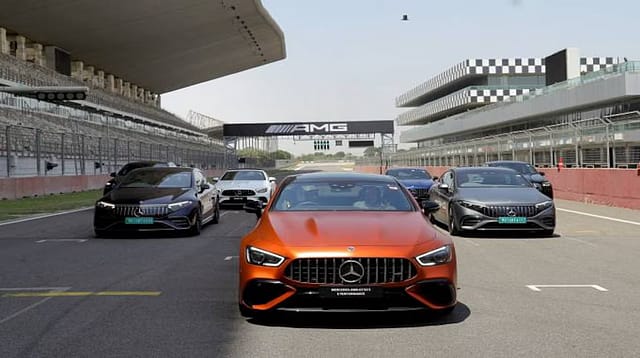
India and the European Union (EU) have concluded negotiations on a landmark Free Trade Agreement (FTA) that places automobiles at the centre of a carefully sequenced and quota-based liberalisation strategy, balancing market access with long-term domestic manufacturing interests.
Under the agreement, import tariffs on European-built cars will be gradually reduced from as high as 110% to as low as 10%, subject to an annual quota of 2,50,000 vehicles. The calibrated approach is intended to allow European automakers to introduce higher-priced models in India while opening possibilities for Make in India manufacturing, exports from India, and reciprocal access for India-made vehicles into the EU market.
SIAM President and Tata Motors Passenger Vehicles MD and CEO Shailesh Chandra said the FTA would play a key role as India progresses towards ‘Viksit Bharat,’ adding that a calibrated approach balancing market access and domestic manufacturing would create a win-win by encouraging greater global participation while supporting investments, employment, and growth in the domestic auto industry. He added that the agreement would also expand consumer choice in both regions.
Current duty structure and phased reductions
At present, completely built units (CBUs) imported into India attract a 70% Basic Customs Duty, with models priced above USD 40,000 also subject to an additional 40% Agriculture Infrastructure and Development Cess, taking the effective import tax to around 110%. In contrast, completely knocked down (CKD) kits imported for local assembly attract a significantly lower Basic Customs Duty of about 16.5%.
As part of the FTA, tariffs on automobile components will be fully abolished over five to ten years, according to the European Commission, potentially lowering input costs and encouraging deeper localisation.
Mahindra Group CEO and MD Anish Shah said the India–EU FTA would provide the "next wave of economic impetus" for India, building on the foundation laid by policy reforms. He said the agreement strikes a strong balance between opening markets and nurturing manufacturing in India, offering meaningful benefits across sectors.
TVS Motor Company Chairman and Managing Director Sudarshan Venu said, “The India–EU Free Trade Agreement represents a significant milestone for Indian industry, and we thank the Government of India for its strategic vision in deepening economic partnerships. Agreements of this scale don’t just reduce tariffs—they transform business environments, strengthen supply-chain resilience, and open pathways for innovation-led Indian manufacturers to compete on the global stage. As a global two-wheeler company, with the TVS and Norton brands, we’re focused on identifying and pursuing the opportunities it will create for Indian industry in Europe and beyond."
For the automotive industry, Shah said the FTA provides duty-free access to European markets and could attract further investments by European OEMs into India. He noted that the agreement is designed to lower in-quota duties only in higher-priced segments, enhancing scale in core segments aligned with Make in India for the world without altering competitive dynamics.
ACMA President Vikrampati Singhania said the FTA could unlock opportunities for exports, technology partnerships, and investment-led growth. He added that a calibrated approach on tariffs, regulatory standards, and sustainability-related issues, including CBAM, would be critical to fully realising the agreement’s potential.
EU automakers eye growing Indian luxury market
In 2024, EU exports of motor vehicles to India were valued at 1.6 billion euros (around Rs 17,400 crore). India’s luxury passenger vehicle market, dominated by German brands such as Mercedes-Benz and BMW, recorded sales of around 51,000–52,000 units in CY25, with nearly 90% locally assembled.
Mercedes-Benz, BMW, Audi, and Jaguar Land Rover operate assembly plants in Maharashtra and Tamil Nadu while importing select CBUs for niche demand.
Industry sees opportunities, awaits fineprint
Mercedes-Benz India MD and CEO Santosh Iyer said the FTA could have a positive cascading effect on the luxury car market.
“Mercedes-Benz welcomes the India-EU FTA as it will have a positive cascading effect on customer sentiments for the luxury segment, with a boost in overall economic growth. A gradual tariff reduction on vehicles and fully liberalized automotive parts are strategically important decisions in the FTA for the automotive industry,” Iyer said.
He added that the agreement “opens up new avenues for customers with improved vehicle allocations, better availability of top-end global models for the Indian market, faster access to the latest technology, and creating a stronger luxury car ecosystem,” while underlining that Mercedes-Benz would continue to add value through local production at its Indian facility.
Audi India Brand Director Balbir Singh Dhillon welcomed the agreement’s potential to deepen economic ties with the EU. “This constructive approach to trade could support the broader automotive ecosystem, including innovation, supply-chain efficiency, and technology collaboration,” he said, adding that pricing or market implications could only be assessed once the final terms and timelines are available.
BMW Group India President and CEO Hardeep Singh Brar described the agreement as a historic and ambitious milestone reflecting India’s growing global relevance. He said phased tariff reductions could boost consumer confidence, expand product choice, and foster technological innovation, particularly in future mobility. With over 95% of BMW Group India’s volumes locally manufactured, Brar said the FTA could create opportunities to introduce niche products and support deeper localisation over time, even as no immediate price changes are expected.
Škoda Auto Volkswagen India MD and CEO Piyush Arora called the agreement a win-win, highlighting that greater tariff certainty and a predictable trade framework could support long-term technology transfer and investment, while SAVWIPL’s near-term strategy remains unchanged.
Broader trade gains beyond automobiles
Beyond automobiles, the India–EU FTA eliminates tariffs of up to 10% on nearly US$33 billion of Indian exports across textiles, apparel, leather, gems and jewellery, and engineering goods. Overall, the agreement reduces trade barriers on 96.6% of EU goods exports to India, with annual tariff savings estimated at around 4 billion euros.
Provisions for small and medium-sized enterprises are also included, reinforcing confidence in India’s long-term growth trajectory and its integration into global value chains.