
India's EV penetration jumps over 11-fold to 8.26% in FY26 as ₹44,038-crore manufacturing push gathers pace: Govt
ADVERTISEMENT
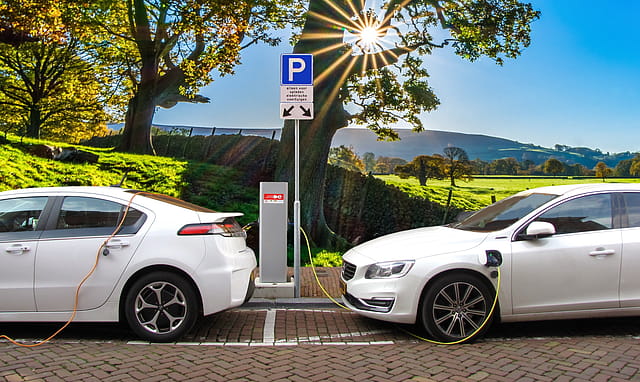
The government's electric mobility push continues to gather momentum, with Electric Vehicle (EV) penetration in India rising more than eleven-fold over the past six financial years even as the Centre ramps up investments in battery manufacturing, advanced automotive technologies and charging infrastructure to support future demand.
The latest data comes a day after the Centre said its flagship ₹10,900-crore PM Electric Drive Revolution in Innovative Vehicle Enhancement (PM E-DRIVE) scheme has supported the sale of more than 26.5 lakh electric vehicles across the country while accelerating investments in charging infrastructure and domestic manufacturing to speed up India's transition to cleaner mobility.
Replying to separate questions in the Rajya Sabha on Wednesday, Union Minister for Road Transport and Highways (MoRTH) Nitin Gadkari said EV penetration, based on VAHAN data, increased from 0.71% in FY2019-20 to 8.26% in FY2025-26, driven primarily by lower operating costs and zero tailpipe emissions compared with conventional internal combustion engine (ICE) vehicles.
Manufacturing push to support rising EV demand
The written reply came amid concerns over rising demand for electric vehicles, supply shortages, delivery delays and the impact of component shortages, supply-chain disruptions and labour constraints on production capacity.
While the government did not explicitly acknowledge a demand-supply gap or provide a formal assessment of production bottlenecks, Gadkari said the Centre is addressing the supply side by strengthening domestic manufacturing of batteries and advanced automotive technologies through large-scale Production-Linked Incentive (PLI) schemes. He also did not attribute higher EV adoption to rising petrol and diesel prices, instead highlighting EVs' lower operating costs and zero tailpipe emissions as the key factors driving their growing acceptance.
₹44,038-crore PLI outlay targets localisation
To reduce import dependence and build domestic capabilities, Gadkari highlighted the ₹18,100-crore Production Linked Incentive (PLI) Scheme for Advanced Chemistry Cell (ACC) Battery Storage, approved in May 2021.
The scheme aims to establish 50 GWh of domestic ACC manufacturing capacity, of which 40 GWh is end-use agnostic, enabling its use across multiple applications, including electric vehicles. The minister said the programme is intended to establish giga-scale battery manufacturing facilities and strengthen India's capabilities in advanced battery production.
He also referred to the ₹25,938-crore PLI Scheme for the Automobile and Auto Component Industry, approved in September 2021, which incentivises 19 categories of Advanced Automotive Technology (AAT) vehicles and 103 AAT components, including electric vehicles, to deepen localisation of next-generation automotive technologies.
Charging infrastructure expands nationwide
In another written reply tabled in the Rajya Sabha on Wednesday, Gadkari said the government is simultaneously expanding the country's charging infrastructure to support the accelerating adoption of electric vehicles.
According to the latest data available on the Bharat Heavy Electricals Ltd (BHEL) portal, 52,718 public EV charging stations were operational across India as of July 2026. The minister said the Centre has allocated ₹2,000 crore under the PM E-DRIVE scheme to establish public EV charging stations across the country, including in rural and semi-urban areas. He added that setting up EV charging stations has been classified as an unlicensed activity, allowing private players to install charging infrastructure in line with the Ministry of Power's guidelines.
The Centre has also introduced a series of regulatory measures to encourage EV adoption, including exemptions from permit requirements for battery-operated transport vehicles, waiver of registration fees for battery-operated vehicles, permit fee exemptions for battery-operated tourist vehicles, and provisions facilitating the retrofitting of hybrid and electric systems in existing vehicles.
Taken together, the government's responses indicate that while EV adoption in India is accelerating rapidly, its strategy to bridge any future demand-supply imbalance is centred on expanding domestic manufacturing capacity, deepening localisation, strengthening charging infrastructure and encouraging greater private sector participation across the EV value chain.