
India’s EV transition shifts gears as 31,500 chargers are added; 87% consumers more likely to consider EVs: Study
ADVERTISEMENT
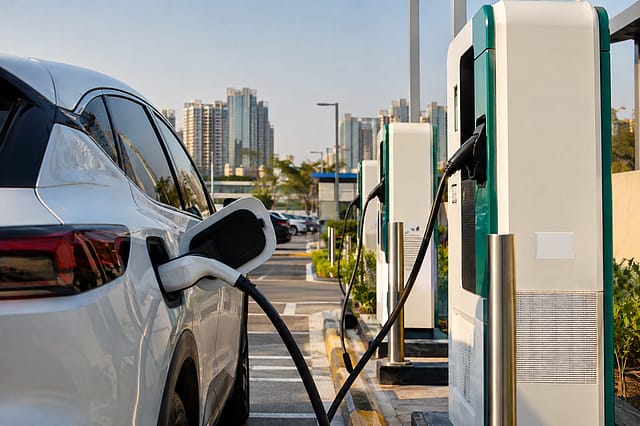
India’s electric vehicle transition is gathering momentum, with 87% of surveyed consumers saying they are more likely to consider an EV than they were a year ago, even as the country added more than 31,500 public charging points over the past year, according to the HERE-SBD EV Index 2026. The findings point to a market moving into a more mature phase, with consumer interest strengthening alongside a rapid expansion in charging infrastructure.
The latest edition of the index also found that the addition of 31,500-plus public chargers represents more than a fourfold increase in annual deployments compared with the previous cycle. Total charging power capacity increased by 1.65 GW, while average charger power rose from 32 kW to 45 kW, indicating growing investment in higher-powered charging infrastructure.
Fuel costs, range and charging speed drive EV interest
The consumer survey shows that rising fuel costs remain the biggest trigger for increased interest in EVs, cited by 46% of respondents. Improvements in EV range and charging speed were each cited by 36% of respondents.
The willingness to consider an EV also translates into a strong stated preference. Sixty-one per cent of respondents said they would choose an EV over an internal-combustion engine vehicle if vehicle price and specifications were the same. Meanwhile, 87% expressed confidence that India can build the charging infrastructure needed to support rising EV adoption.
Consumer perception of charging availability also improved, with 62% saying local charging availability had improved in 2026, compared with 57% in 2025.
Charging reliability remains a weak link
Despite the infrastructure expansion, charging remains the biggest barrier to wider EV adoption. Limited charging infrastructure was cited by 46% of respondents, followed by driving-range concerns at 36% and charging costs at 30%.
The experience of existing EV owners highlights the reliability challenge. Eighty-three per cent said they had avoided trips because of charging concerns, while 77% reported encountering faulty charging stations that prevented them from charging.
Abhijit Sengupta, General Manager for India and Southeast Asia at HERE Technologies, said the rapid addition of chargers shows the momentum behind India’s EV ecosystem, but the priority must now extend beyond infrastructure expansion.
“The focus must increasingly shift from simply expanding infrastructure to ensuring drivers can confidently discover, access and use charging infrastructure whenever they need it,” Sengupta said.
Telangana jumps to top of EV readiness ranking
The index also highlighted sharp changes in state-level EV readiness. Telangana jumped from 25th place in 2025 to rank first in 2026, while Andhra Pradesh climbed from 13th to second. Chandigarh, which topped last year's ranking, moved to third, while Haryana and Rajasthan jointly occupied fourth place.
Delhi recorded one of the biggest declines, slipping from fourth place to 17th, as other states made faster gains in infrastructure and EV adoption.
Robert Fisher, Senior Consulting Manager at SBD Automotive, said India remains one of the most optimistic EV markets globally, but the next phase will require balancing charging infrastructure scale with infrastructure quality.