
JK Tyre braces for FY27 margin squeeze as West Asia crisis pushes raw material costs up to 20%, says CMD Raghupati Singhania
ADVERTISEMENT
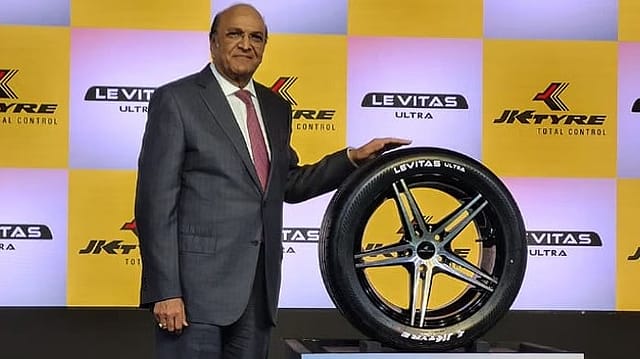
JK Tyre & Industries is heading into FY27 with a clear warning on profitability, as Chairman and Managing Director Dr. Raghupati Singhania said the company expects significant margin pressure in the first quarter due to a sharp rise in raw material costs triggered by the West Asia crisis.
Speaking to reporters during the company’s Q4 FY26 earnings call, Dr. Singhania said cost inflation is accelerating faster than pricing adjustments can fully absorb. “Even then, the EBITDA margin will be impacted because the price rise in raw materials is very sharp,” he said, adding that the company expects input costs to rise by 16–20% in Q1 FY27 alone.
He explained that the geopolitical disruption is feeding into the business through multiple channels. “The West Asia crisis has affected us on three fronts. Exports to the Middle East have been impacted, shipping channels have been disrupted, and there are delays in supplies along with higher container costs,” he said.
He also pointed to crude-linked volatility as a structural concern. “Oil price movement has a direct impact on most raw materials used in the tyre industry,” he added.
Pricing action underway, but full pass-through remains limited
JK Tyre has already taken a 4–5% price increase in the replacement segment during the March quarter and is planning another 5–6% hike in the coming months. However, Dr Singhania cautioned that these measures only partially offset inflation.
“We are trying to pass on the higher costs, but even after the price increases, EBITDA margins will remain under pressure in the near term,” he said, noting that OEM pricing cycles and competitive dynamics delay full recovery.
To mitigate volatility, JK Tyre is actively diversifying its sourcing base. “We are relying more on suppliers in Taiwan, Korea and China,” Dr Singhania said.
He added that execution efficiency has been strengthened through on-ground coordination. “Raw materials require technical approval before adoption. We deputed teams to supplier plants so approvals can happen quickly or even on the spot,” he said.
Despite near-term headwinds, JK Tyre delivered a strong FY26 performance. Consolidated revenue rose 11% year-on-year to Rs 16,384 crore, while EBITDA increased 25% to Rs 2,089 crore with margins improving to 12.8%. Profit after tax surged 52% to Rs 774 crore, reflecting strong domestic volume growth and operating leverage.
EV demand, exports and premiumisation support long-term mix
Dr. Singhania highlighted resilient demand trends across segments, with exports accounting for 12–13% of revenue and Mexico subsidiary JK Tornel contributing nearly 20% of consolidated turnover.
He said EV tyre volumes have nearly doubled between Q3 and Q4, supported by adoption in electric buses and passenger vehicles, along with growing penetration in electric small commercial vehicles. JK Tyre also continues to strengthen its premium SUV tyre portfolio, with rising focus on larger rim sizes and higher-value OEM programmes.
“We are seeing strong traction in EV and premium categories,” he said, underscoring that while near-term margins face pressure, structural demand drivers remain intact.