
Mahindra charts 2x SUV, EV capacity expansion by FY31, retains growth outlook despite commodity inflation
ADVERTISEMENT
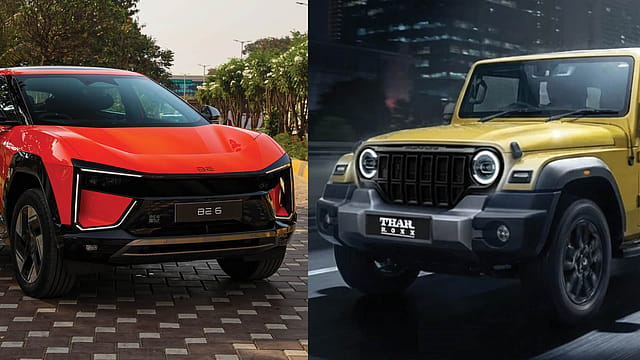
Mahindra & Mahindra (M&M) is accelerating its sport utility vehicle (SUV) and electric vehicle (EV) ambitions with plans to double production capacity by FY31, betting on sustained demand despite elevated commodity prices weighing on the automotive industry.
The expansion roadmap, unveiled during the company's Q1 FY27 media briefing, will see monthly production capacity increase through capacity additions at its Chakan plant and a new facility at Nagpur, strengthening the automaker's manufacturing footprint to meet rising domestic demand while supporting its export ambitions.
The strategy comes on the back of a strong June quarter, with M&M reporting a 28% year-on-year increase in consolidated revenue to ₹45,529 crore and a 34% rise in consolidated profit after tax to ₹5,455 crore. The performance was underpinned by healthy demand across the automotive and farm equipment businesses, although higher raw material costs continued to exert pressure on margins.
Despite inflationary pressures on key commodities, the company has retained its FY27 outlook. Executive Director and CEO (Auto and Farm Sector) Rajesh Jejurikar said M&M continues to expect mid-to-high-teen growth in SUVs, high single-digit growth in light commercial vehicles and mid-single-digit growth in tractors. "There are positives and negatives in the environment, but at this point our outlook remains unchanged," he said.
The homegrown automaker also retained its leadership in SUV revenue market share during the quarter, with SUV volumes rising 15% year-on-year. Electric SUVs accounted for 12% of the company's total SUV sales, ahead of the industry average, even as inflation in steel, aluminium, copper and rubber remained a key challenge.
Capacity expansion to support next phase of growth
M&M stated that monthly SUV production capacity will increase to 60,000 units by September this year, while electric SUV capacity will rise to 8,000 units, taking total installed capacity to 68,000 units a month. By March 2027, combined capacity is expected to reach 82,000 units before expanding further to 92,000 units through additional investments at Chakan. A phased ramp-up at the upcoming Nagpur facility will eventually help double overall production capacity by FY31. The company said the expansion will also support multiple new products based on its upcoming IQ platform, aimed at strengthening its presence in the sub-four-metre segment.
Jejurikar said Mahindra's SUV business continued to perform strongly despite temporary production disruptions caused by labour shortages at a few key suppliers during the quarter. "We were impacted by labour shortages at three or four key suppliers across April, May and June. We would certainly have produced more had those constraints not existed," he said.
Premium EVs and exports gather pace
Mahindra's electric vehicle business continued to gain traction, with cumulative sales crossing 77,000 units. According to Jejurikar, both the XEV 9S and 7XO continue to witness healthy customer demand, with waiting periods ranging from six to twelve weeks on select variants. He added that the XEV 9S has emerged as the country's highest-selling premium electric SUV despite its premium positioning, reflecting growing consumer acceptance of premium EVs.
Exports also remained a bright spot, aided by Scorpio pickup shipments to Indonesia and healthy demand for recently launched SUVs in markets such as South Africa, Australia and New Zealand. Jejurikar said the company is also evaluating opportunities to introduce its electric SUVs in select right-hand-drive developed markets over the medium term.
Commodity inflation remains a key watchpoint
While maintaining a positive demand outlook, M&M acknowledged that raw material costs continue to remain elevated. Group CFO Amarjyoti Barua said commodity inflation had a 400-450 basis-point impact on the automotive business during the quarter, although calibrated price increases and cost optimisation initiatives helped offset a significant part of the pressure. Steel, aluminium and rubber prices are expected to remain volatile in the near term.
Even so, the company believes favourable monsoon conditions, improving rural demand and sustained customer interest in its expanding SUV portfolio position it well for the rest of FY27, while keeping a close watch on commodity prices and global uncertainties.