
Maruti Suzuki sees fuel availability, pricing as key hurdles to flex-fuel adoption
ADVERTISEMENT
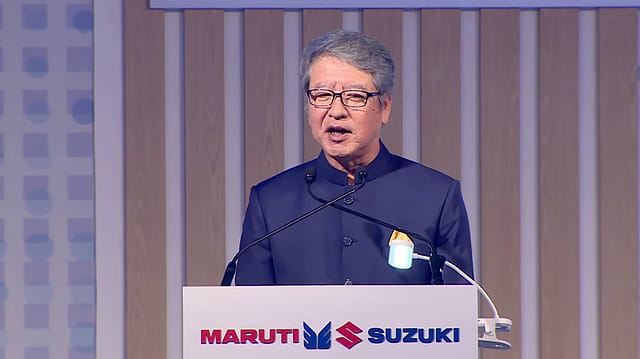
Maruti Suzuki India on Thursday flagged fuel availability, vehicle pricing and consumer awareness as key challenges to the large-scale adoption of flex-fuel vehicles in the country, even as it entered the segment with the launch of the WagonR Flex Fuel.
"Large-scale adoption of flex-fuel will take time and effort from all stakeholders. An entire ecosystem needs to be developed—from fuel availability to more model launches, from customer awareness to fuel and vehicle pricing," stated Maruti Suzuki India Managing Director and CEO Hisashi Takeuchi.
Takeuchi was speaking at the launch of Maruti Suzuki's WagonR Flex Fuel at the 'India Goes Flex' event in New Delhi.
The comments come as the government intensifies efforts to promote ethanol-based mobility as part of a broader strategy to reduce crude oil imports, strengthen energy security and lower carbon emissions.
Ecosystem development to determine adoption
Takeuchi said India is at a critical juncture where geopolitical uncertainties and the need to reduce dependence on imported energy have increased the urgency of developing alternative fuel pathways.
Recalling Prime Minister Narendra Modi's appeal to reduce fuel consumption and import dependence, he said the country must move steadily towards the goals of self-reliance and becoming a developed nation by 2047
"Long-term dependence on imported crude oil cannot be an option," he said, adding that India requires solutions that are "cleaner, affordable, scalable, and based on India's own strengths."
According to Takeuchi, flex-fuel technology aligns with two key national objectives—reducing dependence on imported crude oil and lowering carbon emissions. He added that the benefits of ethanol-based mobility extend beyond the automobile sector by supporting farmers, ethanol producers and the broader rural economy.
"Flex-fuel meets both. It is truly Atmanirbhar and clean," he said.
He added that the benefits of ethanol-based mobility extend beyond the automobile sector, creating opportunities for farmers, ethanol producers and the broader rural economy through additional demand across the agricultural value chain.
However, he cautioned that widespread adoption would depend on coordinated efforts by automakers, oil marketing companies, ethanol producers and policymakers to build a viable ecosystem.
"Maruti Suzuki is taking the first big step with the launch of India's first flex-fuel car. We invite the leaders of all stakeholders, including the oil marketing companies and ethanol producers, to join us in this nation-building journey," he said.
Multi-fuel strategy remains in focus
The executive reiterated Maruti Suzuki's multi-pathway approach to cleaner mobility, arguing that no single technology would be sufficient to address India's diverse transportation and energy requirements.
The company is pursuing a mix of electric vehicles, strong hybrids, compressed natural gas (CNG), compressed biogas (CBG), hydrogen and flex-fuel technologies as part of its long-term strategy.
Takeuchi described compressed biogas as a particularly promising alternative fuel, noting that biomass-based gas has the potential to deliver carbon-negative mobility benefits.
Takeuchi said Maruti Suzuki has announced investments in nine compressed biogas plants, of which two are already operational.
"We are also running research projects on Hydrogen. And today, with WagonR Flex-fuel, we add another flower in our bouquet," he said.
The launch underscores the growing interest among automakers in exploring multiple fuel technologies alongside battery electric vehicles as India seeks to balance decarbonisation goals with energy security and affordability considerations.