
21.3 Lakh EVs sold, ₹42,500 crore PLI investments drive India’s EV and advanced manufacturing growth in 2025
ADVERTISEMENT
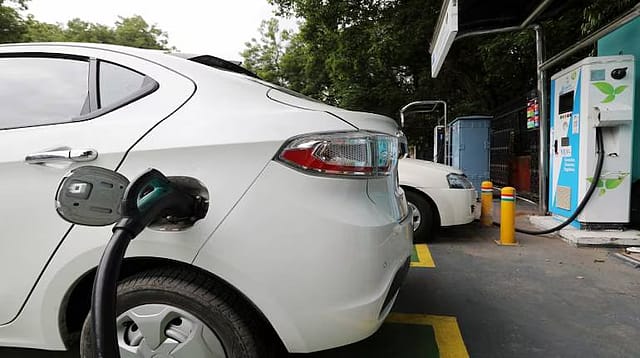
India’s electric vehicle (EV) and advanced manufacturing sector achieved record growth in 2025, with over 21.3 lakh EVs sold and ₹42,500 crore in committed investments under the Production Linked Incentive (PLI) schemes, according to a year-end review released by the Ministry of Heavy Industries (MHI).
The report highlights “measurable outcomes” across EV adoption, battery production, and capital goods manufacturing, reinforcing India’s clean mobility and “Make in India” objectives.
PLI scheme – auto and auto components
The PLI scheme for automobile and auto components, with a total outlay of ₹25,938 crore, has incentivized 82 applicants to invest an estimated ₹42,500 crore, expected to generate incremental sales of ₹ 2,31,500 crore and 1.48 lakh jobs over five years. As of December 31, 2025, cumulative investments of ₹35,657 crore and determined sales of ₹32,879 crore have been achieved, creating 48,974 jobs.
Incentives under the scheme supported production of 10.42 lakh electric two-wheelers, 2.38 lakh e-3Ws, 79,540 e-4Ws, and 1,391 e-buses, with Domestic Value Addition (DVA) certifications granted for 94 OEM variants and 37 component variants.
PM E-DRIVE scheme – EV adoption and infrastructure
Under the PM E-DRIVE initiative, launched with an outlay of ₹10,900 crore, more than 21.36 lakh electric vehicles were sold by December 2025. The scheme met L5 e-3W targets early and enabled deployment of 14,028 e-buses, establishment of EV public charging stations, and upgrading of testing facilities. Total claims disbursed under the scheme reached ₹1,703 crore.
Advanced Chemistry Cell (ACC) battery production
The PLI for ACC battery storage, aimed at building 50 GWh domestic capacity, awarded 40 GWh in rounds 1 and 2 to four firms including Ola Cell Technologies and Reliance New Energy. Investments have reached ₹2,878 crore, generating 1,118 jobs, with pilot production underway at Ola Cell’s Giga-scale facility.
Capital goods sector achievements
Phase II of the Capital Goods Scheme sanctioned 29 projects worth ₹891 crore, including Centres of Excellence, Common Engineering Facility Centres, testing labs, and skill development initiatives. Over 92,000 students, academia members, and industry professionals were engaged through Technology Innovation Platforms.
Outlook
The MHI review underscores 2025 as a transformative year for India’s clean mobility and manufacturing sectors, demonstrating significant measurable outcomes in production, employment, and technology adoption, strengthening the country’s EV and advanced manufacturing ecosystem.