
India a strategic hub for Schneider Electric’s global energy play: Manish Pant, EVP
ADVERTISEMENT
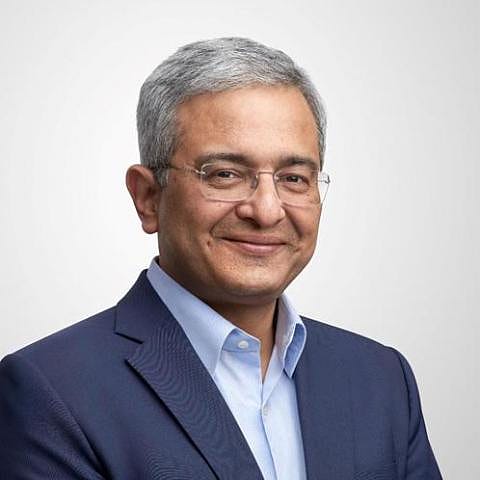
At a time when energy security, sustainability, and digital transformation are converging, French electrical equipment maker Schneider Electric is sharpening its focus on what it sees as the three defining pillars of the future - electrification, automation, and digitisation. The company believes the real opportunity lies not just in adopting new technologies, but in deploying them effectively at scale to meet rising global energy demand.
Central to Schneider Electric’s strategy is the need for rapid evolution of global energy systems to make them more sustainable and secure, said Manish Pant, Executive Vice President – International Operations, in an interview with Fortune India.
He believes electrification is central to that transition. “The best way to reduce carbon emissions is to electrify. At the same time, generating your own electricity is more secure than relying on imported energy,” he said, pointing to the growing importance of decentralised energy systems.
For Schneider Electric, India is not just a large market but also a strategic hub. It is the company’s third-largest market globally and its largest in terms of workforce, with around 38,000 employees. The country also plays a significant role in innovation and manufacturing for global operations, with 31 factories and exports to over 30 countries.
Pant sees India as a key growth engine, as the country is already pushing aggressively towards renewable energy, with solar, wind, hydro, and emerging technologies like hydrogen forming part of the mix. As electricity demand rises—driven by electric vehicles, industrial electrification, and urbanisation—India’s transition is expected to accelerate further, he said.
Earlier this month, Schneider Electric hosted its biggest-ever flagship Innovation Summit in Delhi, bringing together over 5,000 customers, partners, and more than 50 CEOs. The two-day event showcased over 30 new technology solutions tailored for the Indian market, highlighting how the convergence of artificial intelligence, electrification, and digitalisation is transforming energy and automation systems across sectors—from grids and data centres to buildings, industries, and critical infrastructure.
The company also unveiled its expansive Innovation Hub, spanning over 60,000 square feet, designed as a unified platform for advanced energy and industrial intelligence solutions. By integrating power distribution, automation, energy storage, and AI-enabled grid management into a single ecosystem, Schneider Electric aims to enhance grid reliability, secure critical infrastructure, and enable uninterrupted industrial operations, while reducing dependence on energy imports.
Speaking at the event, Olivier Blum said the convergence of the energy transition and the AI-led digital revolution comes at a time when geopolitical shifts are reshaping global energy flows. “As India moves towards becoming the world’s third-largest economy, smart, resilient, and efficient energy systems will be essential,” he said, reiterating the company’s commitment to supporting India’s journey towards long-term energy resilience and a low-carbon future.
Deepak Sharma, Zone President – Greater India and MD & CEO, Schneider Electric India, added that the summit reflects the company’s push to accelerate the adoption of energy-efficient technologies. With AI-driven infrastructure expanding rapidly, he said India needs intelligent and sustainable energy systems at scale. “Through our innovations and local manufacturing, we are driving ‘Make in India for India and the world,’ helping customers build digital, decarbonised, future-ready operations,” he said.
Among the key highlights was the introduction of the “Data Cube,” positioned as the engine behind what the company calls the world’s first energy and industrial foundational model. It integrates enterprise, operational, and field data with digital twin capabilities to deliver real-time, predictive, and prescriptive intelligence across the lifecycle of energy and industrial systems.
Looking ahead, the company is strengthening partnerships to stay aligned with emerging technology ecosystems. It has recently collaborated with NVIDIA to build AI-ready data centre infrastructure, enabling customers to seamlessly deploy next-generation computing systems, Pant added.