
Adani Ports and Special Economic Zone crosses 500 million tonnes cargo milestone
ADVERTISEMENT
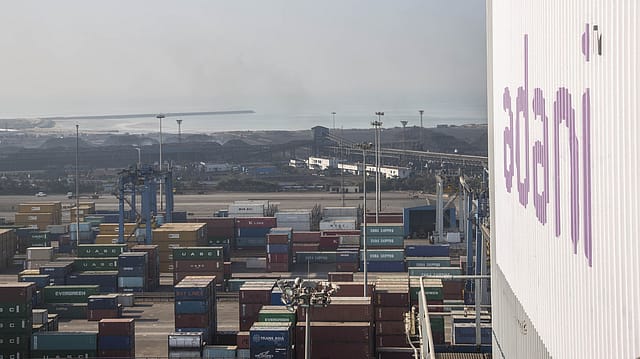
Adani Ports and Special Economic Zone Ltd. (APSEZ), India’s largest integrated transport utility and leading port developer and operator, on Wednesday announced that it has surpassed the landmark milestone of handling 500 million tonnes of cargo.
The achievement marks a key inflection point in the company’s growth and highlights the expanding strength of India’s infrastructure-led transformation. Beyond scale, the milestone reflects the emergence of a global logistics platform built on operational efficiency, long-term strategy, and a strong alignment with national priorities.
APSEZ has grown into a network spanning 19 ports and terminals
From a single port-led vision in 1998, APSEZ has grown into a network spanning 19 ports and terminals across India and overseas markets, playing a critical role in facilitating trade, industrial growth, and enhancing India’s global competitiveness.
Speaking on the occasion, Gautam Adani, Chairman, Adani Group, said “Ports are not merely gateways for trade, they are gateways to national confidence, competitiveness and destiny. I am grateful to our customers, partners, and every member of the APSEZ family whose dedication and belief have made this milestone possible. I also extend my sincere appreciation to the Central and State Governments whose policy and commitment to infrastructure have helped create the foundation on which APSEZ has grown.”
“APSEZ crossing 500 million tonnes is a signal of our decades-long confidence in the India growth story. Over the years, we have built not just ports, but an unparalleled interconnected transport and logistics platform spanning ports, rail, roads, trucking, warehouses, and cargo gateways. APSEZ's best is ahead of us. And the best of India is ahead of her,” he added.
The company’s growth trajectory has accelerated over time. While it took 16 years to handle its first 100 million tonnes of cargo, each subsequent 100 million tonnes have been added at a faster pace, underscoring improvements in scale, efficiency, and operational resilience.
Looking ahead, APSEZ remains on track to achieve its next milestone of handling 1 billion tonnes of cargo annually by 2030, as it continues to expand capacity and strengthen its position as a global logistics leader.