
Why it won’t be as easy for Reliance to pull off a Campa-Cola in ice-creams
ADVERTISEMENT
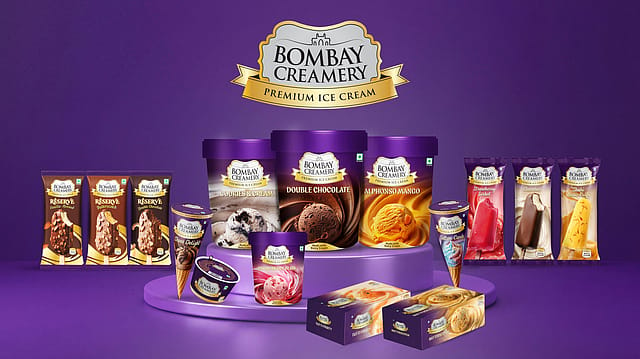
Reliance Consumer Products’ recent foray into ice-creams (Bombay Creamery), with starting price-points being as low as Rs 10, has triggered murmurs if the FMCG company would shake-up the Rs 37,000 crore ice-cream market the way it shook the soft drink market with a similar pricing strategy. Unlikely. To begin with, almost all ice-cream manufacturers offer a variety of ice-creams at the Rs 10 price-point. Most of them also use dairy fat and not vegetable fat.
Where Reliance is likely to have an edge, is supply chain. Ice-creams need a minus temperature supply chain – right from the point of manufacturing, all the way up to the retail store. It makes it capex intensive. An ice-cream manufacturer, says a FMCG veteran, needs around Rs 300-400 crore capex for every 100,000 freezers deployed, and that is an expensive proposition. This explains why most ice-cream brands (barring Amul) in India have a regional play. While the likes of Havmor and Vadilal are strong in the west, brands such as Arun and Ideal are dominant in south. Similarly, brands such as Gianis, Creambell and Mother Dairy are popular in the north.
The stumbling block for all these brands to expand has largely been the capital-intensive nature of the business. In fact, Reliance, with Bombay Creamery, has also stated that it would first be available in the West and gradually penetrate into the rest of the country.
When Korea’s Lotte acquired Havmor in 2017, the under-penetrated ice-cream market was an opportunity. Though the company has invested heavily on building a robust portfolio of ice-creams, it has taken a measured approach in terms of expansion. It first focused on its home market, Gujarat as well as Maharashtra. It has recently set up a manufacturing facility in Pune, through which it plans to aggressively enter the southern states.
“Ice-cream distribution costs are twice as much the cost of distributing a regular FMCG brand. There is a cost of cold chain storage, you are also manufacturing in a high-quality environment, then you are storing in the cold rooms. The entire distribution, (primary, secondary and tertiary), has to be kept at minus 18 degrees. We will expand, but we will align our resource allocation to the zone of maximum return,” explains Debabrata Mukherjee, MD, Havmor.
One of the newest entrants into ice-creams, is Erode-headquartered Milky Mist. According to chairman and MD, Sathish Kumar, the dairy company’s foray into ice-creams was led by demand from retailers. “Ice-cream is a tricky product in terms of distribution. From positive temperature we had to move to a minus cold chain,” says Kumar.
But the demand for ice-creams is at an all-time high. Thanks to the heat wave conditions in the last two years most ice-cream brands have seen growth in the region of 18%-25%. Though over 60% of ice-cream sales in India come from the summer months of March to June, ice-cream consumption has turned into a year-round phenomenon over the last few years. Havmor’s Mukherjee claims that Valentines Day (February 14) in the past years has seen a spurt in ice-cream consumption. Products such as ice-cream cakes are also sought after by the Gen-Zs.
Intense Competition
For ice-cream manufacturers it is kind of a chicken-and-egg situation. On one hand, there is high demand, but the capital-intensive nature of the business is stopping them from expansion. They prefer to operate in their home states but there too they have stiff competition from their regional counterparts. Milky Mist, says Sathish, had to consider doing business at scale from the day one of launch.
“There are prominent players in every region. So, you can’t launch with a 10-20 SKU portfolio. You need to have at least 70-80 SKUs at launch, give 20,000-30,000 freezers to the market as well as spend on marketing. Our good rapport with the retailers gave us a good start,” explains Kumar.
Havmor, says Mukherjee, doubled its focus on its home state Gujarat and launched a plethora of new products. “People of Gujarat are discerning ice-cream consumers. So, the creaminess, the dairy feel of Havmor was critical. We built on it. We have been maniacally focussed on driving that quality proposition, and also adding innovation. We tripled the number of outlets in Gujarat in the last 5 years, and we have launched multiple new SKUs too. About 20%-25% of our Gujarat revenue also comes from products launched in the last five years.”
Premium Play
Ahmedabad-headquartered Havmor has not just been building its premium portfolio by innovating in-house, it has also launched ice-creams from Lotte’s global portfolio – Krunch, World Cone and Zulu Bar – priced between Rs 55 and Rs 150. It has strengthened its cakes and cassata portfolio and has also launched premium kulfis. It is personalising ice-creams too. A consumer who buys a tub of Havmor’s guava chilli, for instance, gets a couple of sachets of the masala which he/she could add to the ice-cream as per their taste.
While most brands are shying away from national expansion, they made sure their premium products are available across the country through quick commerce platforms. And that’s not all. Quick commerce has led to the emergence of a lot of niche brands – Minus Thirty and Go Zero are some of the brands popular with younger consumers.
Coming back to whether Reliance will reduce other ice-cream brands into fringe players? Its distribution muscle may give it a slight advantage, but unless it innovates harder, it is unlikely to displace the other brands who have a strong loyalty base in their respective regions. As far as distribution is concerned, even Reliance will not be in a hurry. After all ice-cream is an expensive business.