
Adani Group: The art of braving ‘extraordinary scrutiny’ and growing with resilience
ADVERTISEMENT
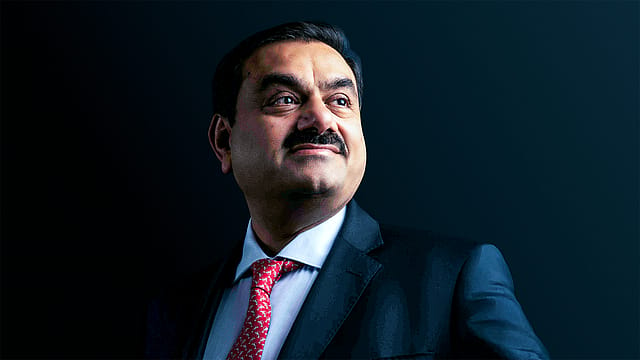
For the Adani Group, FY26 was a defining year—one that tested conviction, demonstrated the power of resilience, and revealed the difference between those who wait for clarity and those who continue building through volatility.
Addressing shareholders at the Annual General Meeting of Adani Enterprises on June 24, Gautam Adani, Chairman of the Adani Group, reflected on a period marked by unprecedented scrutiny and equally remarkable growth.
The Group’s successful ₹25,000-crore rights issue earlier this year—one of the largest in India Inc.‘s history—was, in Adani’s words, far more than a fundraising exercise.
“I saw it as a referendum on our credibility,” he said, alluding to the turbulent years the Group has navigated.
The turbulent years
The challenges began in 2023 when US-based short-seller Hindenburg Research published a report alleging stock manipulation and accounting irregularities involving a network of offshore entities. The report came just a day after Adani Enterprises had launched a $2.5-billion fundraising programme, then India’s largest-ever secondary share offering. The company subsequently withdrew the offering and returned investors’ money.
Within two weeks of the report’s release, Adani Group companies lost more than $108 billion in market value. Gautam Adani, then the world’s third-richest person, saw his personal wealth decline by over $48 billion, causing his global ranking to plunge.
A year later, fresh challenges emerged when US prosecutors charged Gautam Adani and his nephew, Sagar Adani, alleging bribery of Indian officials to secure solar-energy contracts and misleading American investors. In the aftermath, Adani Green Energy cancelled a planned $600-million bond issue.
The Group, however, weathered the storm. By May, the US Department of Justice had formally dropped all criminal charges against Gautam Adani and Sagar Adani. The Group reached settlements with the US Securities and Exchange Commission and the US Treasury on civil disclosure and sanctions-related matters. In September, the Securities and Exchange Board of India (Sebi) also cleared Gautam Adani, Rajesh Adani, and Adani Group entities of allegations linked to the Hindenburg report. Hindenburg Research itself ceased operations and was formally disbanded on January 15, 2025.
Focus continues despite scrutiny
“While others debated, your Group built—advancing its journey as the world’s most integrated infrastructure platform across energy, transport, logistics and industrial manufacturing,” Adani told shareholders in an emotionally charged address.
According to him, the Group’s strength lies in the interconnected nature of its businesses. From mining and power generation to transmission and distribution, from ports and logistics to data centres, fulfilment centres, roads and water infrastructure, the Group has created an ecosystem that spans every critical layer of nation-building.
“We saw early that the world was entering a new era—one where geopolitical fault lines would deepen, supply chains would fragment, and energy security would return as a strategic priority. We saw that the race for technological leadership and sovereignty would be constrained not by ambition, but by infrastructure,” he said.
Acting on that vision, the Group invested a record ₹1.5 lakh crore in infrastructure during FY26, accounting for more than 30% of India’s total new private-sector capital expenditure during the year.
A year of robust growth
The numbers reflected that momentum. Consolidated revenue rose 7.4% year-on-year to ₹2.92 lakh crore, while EBITDA reached ₹94,834 crore. Net debt-to-EBITDA stood at a healthy 3.3 times. Profit after tax increased 13.9% to ₹46,376 crore, while cash flow touched ₹67,995 crore.
“This progress did not come in calm conditions. It came in the middle of extraordinary scrutiny,” Adani said.
He added that these record financials provide the liquidity, confidence and financial strength required to support the Group’s ambitious expansion plans across India’s core infrastructure sectors.
The chairman concluded on a note that encapsulated the Group’s journey: “We built when it was hardest to build. We believed when it was hardest to believe. And we proved that resilience is a way of life for us.”
The achievements across businesses were equally noteworthy.
Adani Energy Solutions’ transmission order book rose to ₹72,000 crore, making it India’s only private-sector player with proven high-voltage direct current (HVDC) capabilities. Adani Power is executing India’s largest private-sector power expansion programme, involving investments of over ₹2 lakh crore, with a target of reaching 45 GW of installed capacity over the next five years.
In partnership with Bhutan’s Druk Green Power Corporation, the Group is developing 5,000 MW of hydropower projects in Bhutan. Adani Atomic Energy plans to establish 10 GW of nuclear power capacity, while Adani Total Gas has crossed 1.1 million piped natural gas household connections.
Adani Ports handled more than 500 million tonnes of cargo during FY26, setting a new benchmark and creating a pathway to achieve one billion tonnes by 2030. Vizhinjam International Seaport, strategically positioned on one of the world’s busiest maritime routes, crossed the milestone of one million TEUs in its first full year of operations.
The Group also inaugurated the Navi Mumbai International Airport and the new integrated terminal building at Guwahati Airport during the year.
In digital infrastructure, Adani’s data-centre business is progressing towards building a 3-GW platform by 2030. Its mining services division now operates at a record capacity of 145 million tonnes per annum, making it the largest private-sector mining-services player in the country.
Looking beyond traditional infrastructure, the Group is entering aerospace manufacturing through partnerships with Leonardo and Embraer. These collaborations aim to establish integrated helicopter and regional aircraft manufacturing ecosystems in India while creating a comprehensive aerospace platform encompassing manufacturing, maintenance, repair and overhaul (MRO), services and pilot training.
For a Group that has spent the past few years under intense public and regulatory scrutiny, FY26 may well be remembered as the year it transformed adversity into a renewed mandate for growth.