
Iran war impact: India stands to gain on GCC, data centre, Dubai to remain resilient despite disruptions: Anshuman Magazine
ADVERTISEMENT
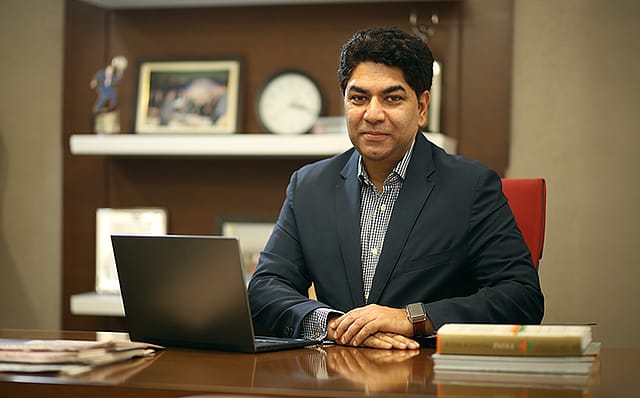
Commercial real estate services and investment firm CBRE said India stands to gain massively from the ongoing war in the Middle East as it will emerge as a neutral investment destination for data centres and GCCs amid the grim geopolitical environment with the raging war in the region.
The agency is of the view that India will remain on growth path for the next three decades. It is also of the view that the commercial property markets in the Middle East will exhibit resilience once the war stops.
Major opportunity: India needs to seize the moment
“There is no doubt that India’s strength will become more apparent. Geopolitics has changed and the investors have realised that there is no safe place. But India is relatively in a better position. We have a thriving democracy, and we have put so much money in infrastructure. And the number one strength is that India has its talent, which is unparalleled globally,” said Anshuman Magazine, Chairman and CEO, India, Southeast Asia, Middle east and Africa, CBRE.
“India is emerging as a Global Capability Centre hub. We are very strong in services, and I expect more manufacturing to come up. We are sitting on a massive opportunity and now it is upon us on how we really tap that. India really needs to seize the moment. We need to make sure that we need to achieve in the next decade double or triple of what we did in the last one decade,” Magazine told Fortune India.
Record capital flow in realty
In a recent report, CBRE South Asia said India's real estate sector attracted equity capital inflows of $8.5 billion during the first half of 2026 (January-June), the highest half-yearly investment on record, driven by sustained demand for land acquisitions and office assets.
The investments rose 32% year-on-year from $6.4 billion in the first half of 2025, the real estate services and investment firm's India Market Monitor said.
Middle East, Dubai to remain resilient
Magazine said he has an optimistic view on the resilience of the Middle east property market despite the war. “There is a conflict happening and it is real. It has affected the supply chain, and it has disrupted the economy and investments have slowed down. No doubt, but I would say I have a more optimistic view,” magazine told Fortune India.
“But the fact is the Middle east and places like Dubai, Saudi Arabia and the UAE, will be resilient. Lots of people who are talking about the doomsday. But I do not agree with that view,” he added.
“The reason is that with the kind of infrastructure which is already there - if you look at Dubai or Riyadh or the other cities - there is a whole plan for infrastructure which is being developed. It is not easy to build cities. It takes 30-40 years to build a city to a level where it starts really prospering,” Magazine said.
“So, if you look at the Middle east, there are very few parallels in the region where the infrastructure is world class, taxation is friendly and attractive, and there is a thriving banking and financial ecosystem. Despite the war, they are going to recover faster than anyone else. Unfortunately, it is very difficult to forecast when will the war end,” Magazine added.