
After a record 2025, India’s theatres look beyond tentpoles for growth, says Cinépolis MD Devang Sampat
ADVERTISEMENT
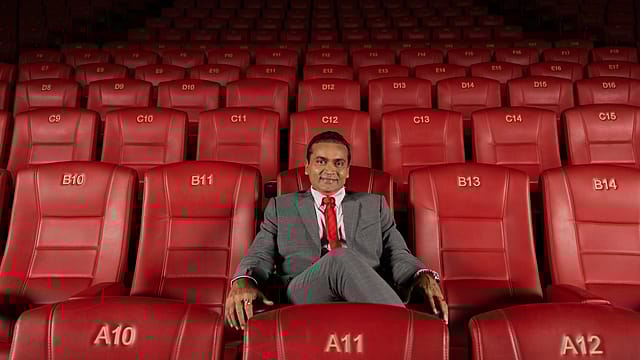
India’s cinema exhibition business is entering 2026 with renewed confidence after closing 2025 as its biggest-ever box office year, even as the industry continues to grapple with uneven content cycles and shifting audience habits. Devang Sampat, managing director of Cinépolis India, says the real story of the year was not just record collections of over ₹13,500 crore, but the growing depth of theatrical demand across languages, formats, and price points. In a conversation with Fortune India, Sampat outlines how regional cinema, premium experiences, and value-led pricing are reshaping the economics of moviegoing, while flagging India’s vast underpenetration as the sector’s biggest long-term opportunity. Excerpts from the interview:
2025 has been marked by significant swings between blockbusters and dry spells. What are your views on how the sector performed in 2025 and what are your key takeaways as you plan ahead for the next year?
2025 closed as the biggest year in Indian box office history, with collections exceeding ₹13,500 crore and surpassing the previous record of ₹12,226 crore set in 2023. That headline number matters, but what defined the year was not any single blockbuster. It was the depth and diversity across languages and genres that sustained performance through the calendar.
Yes, there were swings. The industry has always been content-driven, and what 2025 demonstrated is that when good films arrive, audiences show up. Films like Saiyaara, which opened at ₹21 crore and crossed ₹320 crore, or Mahavatar Narsimha, which grew from a ₹2 crore opening to cross ₹200 crore, proved that theatrical success can be earned over time through word of mouth.
The takeaway for 2026 is clear, you have to build for consistency rather than depend on tentpoles alone. Regional cinema, mid-budget films with strong storytelling, and a diversified content strategy will continue to anchor theatrical performance. The slate ahead looks promising, with large franchise titles across languages. Our focus is on ensuring we are ready to capitalise on that pipeline through experience differentiation and operational flexibility.
Regional cinema has consistently outperformed Hindi box office this year. Is this a structural shift in Indian exhibition economics, and how does it change the way regional cinema is positioned from a marketing standpoint going forward?
Regional cinema has undoubtedly become a critical pillar of the exhibition industry post-pandemic, but I would not frame it as regional outperforming Bollywood. The biggest films of 2025 were Saiyaara, Chhaava, and Dhurandhar, all Hindi productions. What has shifted is that the box office is no longer a Hindi versus regional conversation. It has become a unified Indian theatrical market where content travels across language barriers if the scale and quality justify the big-screen experience.
Post-COVID, Telugu and Tamil industries delivered landmark titles that redefined box office benchmarks: Pushpa 2, RRR, KGF Chapter 2, Kalki 2898 AD, Kantara, Salaar. These films proved that regional content can command pan-India theatrical releases. Hindi cinema has continued to anchor the market with successes like Pathaan, Jawan, Animal, Gadar 2, and Stree 2. The pattern is not one of displacement but of expansion. Regional has grown without diminishing Bollywood's centrality.
What is also noteworthy is the growth beyond the big four languages. Gujarati cinema had its highest-grossing film ever with Laalo at approximately ₹77 crore. Malayalam cinema is finding theatrical audiences in Mumbai and Bengaluru. At Cinépolis, titles like Laalo, Lokah Chapter 1, and Little Hearts drove consistent midweek footfalls beyond their home markets.
For marketing, this means release strategies are no longer language-siloed. Pan-India campaigns, multi-language dubbing, and simultaneous releases across markets are now standard for films with crossover potential. The audience is ready and the industry has caught up.
Average ticket prices have climbed significantly post-pandemic. At what point does pricing become a footfall barrier, especially when competing against OTT and home viewing?
Pricing has not climbed as dramatically as the perception suggests. At Cinépolis, average ticket prices grew around 3% in 2025, which is below inflation at approximately 4%. Post-pandemic, our ATP has moved at 4.4% year-on-year. Historically, we have kept ATP growth below inflation because we believe entry barriers should stay low. India's average ticket price remains significantly lower than most developed markets, and we see that as a strength, not a gap to close.
The real question is whether cinema is delivering value that justifies leaving home. OTT offers convenience and volume. Cinema offers something different, the collective experience, the immersive environment, the cultural moment. When content is compelling, audiences choose cinema. When it is not, they stay home. That dynamic existed before OTT, and it will continue.
What we have also demonstrated is that accessibility initiatives expand the market rather than cannibalise it. Tuesday admissions at Cinépolis have grown from 9-10% to 15-16% of weekly footfalls. That is genuine audience expansion, not displacement from weekends. Affordable entry points bring in viewers who build the habit of regular moviegoing, which benefits the entire ecosystem over time.
Premium large formats have been a key focus area for the sector. Even the F&B experience is now very important for profitability. But how deep is this market really? Beyond metros and tier-1 cities, is there genuine appetite for ₹800-plus tickets and ₹700 popcorn?
The appetite is real, but it is not uniform, and that is fine. Premium formats like IMAX and 4DX work best when positioned around the right content. Tentpole releases, visual spectacles, and franchise films command premium pricing because audiences recognise the differentiated experience. Avatar: Fire and Ash, for instance, saw near 100% occupancy across our premium screens in metros like Bengaluru, Mumbai, and Chennai.
Beyond metros, the opportunity lies in quality upgrades rather than ultra-premium pricing. Laser projection, better sound systems, comfortable seating, and consistent F&B quality can elevate the experience without requiring ₹800 tickets. Tier 2 and Tier 3 audiences are aspirational and discerning. They will pay more for a genuinely better experience, but the value proposition needs to be clear.
On F&B, India's spend ratio is 50-55% of ticket price compared to the global average of 100%. That is not a ceiling; it is headroom. Our F&B revenue share at 30% show progress. Here, innovation matters with new flavours, partnerships, bundled offers. The market is not saturated. We are just getting started.
Given current economics and content uncertainty, what is a realistic screen count target for you by 2026-2027?
We currently operate 491 screens across India. In 2025, we added 33 screens, and we have a pipeline of 150 screens signed. Our near-term target is to add approximately 50 screens in the coming year.
But screen count is only part of the story. The real opportunity lies in how underpenetrated India's cinema market remains. Only 5-7% of the population currently goes to cinemas. The highest-grossing film of any year draws roughly 3 to 3.5 crore footfalls in a country of 1.4 billion people. India's screen density stands at approximately 7.5 screens per million, compared to over 100 per million in North America. This is not a saturated market. It is a market that has barely been penetrated.
That context shapes our strategy for 2026, which we call Future Ready Cinema. It is built around four areas. First, experience; we are investing in technology and comfort through Macro XE, 4DX, laser projection, Dolby Atmos, VIP recliners, and formats like Junior for families. The screen is just the starting point; what surrounds it determines whether audiences return.
Second, F&B: we have built FOOVIES as a platform where food and movies come together, and it already contributes 30% of our revenue. Third, loyalty: Club Cinépolis has grown from 1.5 million to 2.6 million members in 2025, giving us a direct relationship with our most engaged audiences.
Fourth, accessibility. We have not given up on making cinema affordable. Our Tuesday data proves that premium experience and value pricing can coexist. Admissions on discount days grew from 9-10% to 15-16% of weekly footfalls, and spend per head still increased. That is market building, not discounting.
Screen count will grow, but the real unlock is expanding who comes to cinemas and how often.
Can you share specifics on footfalls, what drove growth in 2025, and what you expect from 2026?
In FY25, Cinépolis recorded approximately 3.9 crore admissions. Q3 FY25 delivered 1.19 crore admissions, our strongest quarter, which reinforces a point I made earlier, when compelling content arrives, audiences show up.
What drove this was not one blockbuster but a combination of factors. Regional cinema delivered consistently through the year. Word-of-mouth driven successes like Mahavatar Narsimha showed that films can build over time. Premium formats saw strong adoption around the right content. And Hollywood returned to double-digit market share for the first time since 2022. In Q3 alone, titles like Jurassic World: Rebirth and The Conjuring: Last Rites recorded over 5.6 lakh and 5.1 lakh admissions respectively at Cinépolis.
For 2026, we are targeting approximately 4 crore admissions. The content pipeline gives us confidence: titles like King, Ramayana, Dhurandhar 2, Jana Nayagan, and Jailer 2 are spread across the year, which helps with consistency rather than clustering.
But beyond the pipeline, what gives us conviction is the work we have done on experience, loyalty, and accessibility. We are not waiting for content to carry us. We are building an ecosystem where audiences have reasons to return, and where cinema remains accessible to a wider base. The opportunity in India is immense, and we believe we are well positioned to capture it.