
Electric mobility now central to India’s industrial and climate Strategy: H.D. Kumaraswamy
ADVERTISEMENT
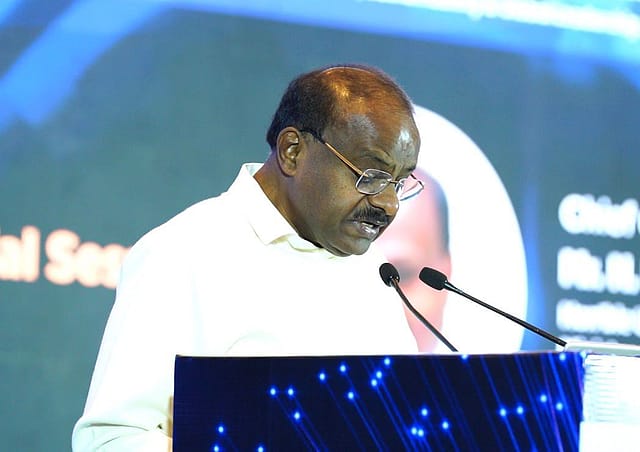
India’s push towards electric mobility has moved decisively beyond policy signalling, with electrification now positioned as a core pillar of the country’s industrial strategy, climate commitments and long-term growth roadmap, Union Minister for Heavy Industries H.D. Kumaraswamy said on Monday.
Addressing a ministerial session at an electric mobility industry summit, Kumaraswamy said India’s transition to electric mobility has entered a phase of large-scale execution, underpinned by improving manufacturing depth, clearer policy frameworks and growing industry participation.
EV push aligned with net zero 2070 goals
He linked electric mobility closely to India’s commitment to achieve net zero emissions by 2070, noting that the sector lies at the intersection of cleaner growth, energy security and industrial transformation. The pace and scale of adoption, he said, reflect rising confidence in India’s domestic manufacturing capabilities and policy stability.
Kumaraswamy highlighted the role of the Ministry of Heavy Industries in developing a comprehensive electric mobility value chain, spanning vehicle manufacturing, advanced battery production and charging infrastructure. The government’s objective, he said, is to strengthen ecosystem readiness so that India emerges as both a large EV market and a competitive global manufacturing hub.
Public transport and commercial vehicles in focus
The Minister identified commercial vehicles and public transport as priority segments for electrification, citing their disproportionate contribution to urban air pollution. Accelerated adoption in these segments could deliver immediate environmental and social benefits, particularly in densely populated urban centres.
In this context, Kumaraswamy launched the Society of Indian Automobile Manufacturers’ (SIAM) White Paper on the Roadmap for Accelerated Adoption of E-Buses in India. The document outlines policy alignment, financing structures and infrastructure planning required to scale electric bus deployment across cities, with an emphasis on demand aggregation and operational preparedness.
Electric mobility seen as a manufacturing opportunity
Beyond environmental outcomes, Kumaraswamy underscored the broader economic opportunity tied to electric mobility, describing it as a multi-billion-dollar growth segment. He said India’s manufacturing base and digital capabilities position the country well in emerging mobility technologies.
The summit brought together policymakers, automakers, technology providers and global stakeholders, reinforcing India’s ambition to move from adoption to leadership in the global electric mobility landscape as it advances towards its net zero target.