
Anup Bagchi to succeed Sashidhar Jagdishan as HDFC Bank MD & CEO
ADVERTISEMENT
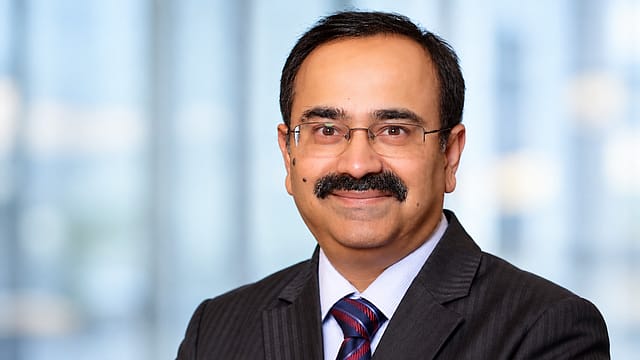
HDFC Bank, the country’s largest private sector lender by market capitalisation, is entering a new phase of its corporate journey as Anup Bagchi prepares to take charge as managing director and CEO.
The Reserve Bank of India (RBI) has approved Bagchi, currently the CEO of ICICI Prudential Life, to take charge as HDFC Bank’s new MD & CEO, succeeding Sashidhar Jagdishan.
Jagdishan’s second term ends on October 26. In late August, he communicated to the bank’s board that he would not seek reappointment for a third term. The development came amid heightened scrutiny around governance and leadership at the bank.
Bagchi’s name was reported as a frontrunner in late August by Fortune India, alongside HDFC Bank veteran Kaizad Bharucha, deputy managing director and the longest-serving executive board member at the lender.
Bagchi’s challenges
Bagchi will bring with him experience as an executive director at ICICI Bank, where he oversaw retail, corporate banking, treasury and digital transformation. Prior to that, he was MD & CEO of ICICI Securities.
One of the key challenges for Bagchi will be to address investor and stakeholder concerns around governance while maintaining the bank’s growth trajectory.
The focus for the bank will also remain on improving margins, current account savings account (CASA) levels and return on assets following the merger of HDFC Ltd with HDFC Bank in 2023.
The merger continues to remain an important factor for the bank’s balance sheet, with its loan-to-deposit ratio remaining elevated. The bank has been working to improve deposit growth and bring greater balance between loans and deposits following the merger.
Jagdishan’s leadership came under scrutiny after the board initiated a three-month legal review into governance concerns raised by former part-time chairman Atanu Chakraborty, who resigned on March 18.
The review, conducted by Wilson Sonsini Goodrich & Rosati and Wadia Ghandy, said that “contemporaneous evidence reviewed was inconsistent” with statements made by Chakraborty in his resignation letter. The law firms also concluded that Chakraborty’s statement and its implications were not substantiated by the material reviewed.
The concerns surrounding the bank and its leadership were also visible on August 5, when HDFC Bank’s board faced questions relating to expansion plans, corporate governance, succession planning, the financial impact of the HDFC merger and ways to improve margins and CASA.
Shareholders also sought details on the bank’s AI initiatives, CSR and sustainability projects, as well as the findings of the legal review into Chakraborty’s exit.
Another issue emerged in July when the HDFC Bank board imposed a ₹1 lakh penalty each and issued warning letters to Jagdishan, CFO Srinivasan Vaidyanathan and retail assets group head Arvind Vohra for “business overreach”.
The action followed the findings and recommendations of a special disciplinary committee of independent directors after an internal review into arrangements with the Maharashtra State Road Development Corporation (MSRDC) for garnering deposits in 2017 and 2021.
Recently, HDFC Bank appointed former finance secretary and former chief election commissioner Rajiv Kumar as its part-time chairman. The RBI had earlier indicated that the bank should first finalise the appointment of its new chairman, following which the CEO selection process would be undertaken.
“Bagchi will need to improve communication of the Bank to all its stakeholders and bring the bank back to its growth path. He need not be aggressive or radical in his approach,” a banking veteran told Fortune India, on condition of anonymity.
Important functions such as audit, risk management and compliance could gain greater importance under the new leadership.
RBI has also approved the appointment of Jimmy Tata as whole-time director, designated as executive director, for a three-year term at HDFC Bank. Tata has experience in corporate banking, credit management and financial risk.