
As IndiGo races ahead, Tata turns to former Air India boss Kharola to guide airline through leadership transition
ADVERTISEMENT
It’s been a rather surprising turn of events.
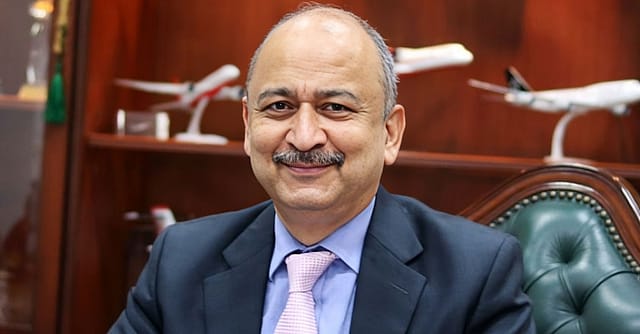
On June 22, amid all the ongoing turmoil at Air India, the Tata Group said that it would bring back Air India’s former chairman and managing director, Pradeep Singh Kharola, to its senior management team as the airline gears up for a leadership transition. Kharola served as Air India’s CEO while it was under government control, between 2017 and 2019, before becoming India’s aviation secretary.
Air India’s incumbent CEO, Campbell Wilson, is now in the final months of his tenure, having resigned from the company early this year. Kharola has been appointed as the executive advisor to Chairman N Chandrasekaran of the Tata Group and as a member of the airline's management committee.
“That’s no small position to hold as the executive advisor at the chairman’s office,” Jitendra Bhargava, the former executive director at Air India and the author of The Descent of Air India, says. “He brings with him years of credibility and a genuine concern for the airline. As the CMD of Air India, he didn’t shy away from taking decisions that put the organization ahead of everything else.”
Air India returned to the Tata Group amid much hype and hope. When it was under government ownership, the acquisition was cherished by many, given the conglomerate’s long-standing history with the airline. But the acquisition came with its own set of challenges. Air India had struggled for years with a lack of investment, poor service, overemployment, mismanagement, and a poorly timed merger with Indian Airlines, another government-owned airline. In effect, the airline was bleeding money.
The Tata Group sprang into action after spending over ₹18,000 crore to acquire the airline, and announced the appointment of Wilson, a Singapore Airlines veteran, to helm the turnaround. A few months later, in September 2022, the airline implemented a turnaround plan called Vihaan.ai.
According to the plan, the airline set clear milestones focused on growing its network and fleet, developing a completely revamped customer proposition, improving reliability and on-time performance, and taking a leadership position. The company set a target to increase its domestic market share to at least 30% while significantly expanding its international operations.
While the domestic market share now stands at about 26.2%, up from about 25% in 2023, the airline has seen its international market share slip, mopped up largely by IndiGo, particularly after the crash of the London-bound AI-171 in July 2025. As if that wasn’t enough, the airline has also made a staggering ₹22,000-crore loss in the last fiscal, the highest since the Tata Group took over, on the back of foreign exchange losses, higher fuel costs and airspace disruptions. Air India is currently the biggest loss-making entity within the Tata Group.
Kharola though is no stranger to Air India. He served as Air India's chairman and managing director between 2017 and 2019 before moving to the Ministry of Civil Aviation as secretary, where he played a key role in the government's efforts to privatize the airline. Kharola's return comes as Air India seeks to stabilize its leadership after months of speculation about Wilson’s exit.
“I think he will simply be a liaison and a showpiece to manage the government,” an aviation expert says on condition of anonymity. As for the top job, Air India executives Nipun Aggarwal and Vinod Kannan are in the running. Agggawal is the man tasked with transforming Air India since the Tatas took over; in many ways, he led the group’s acquisition of Air India. Kannan served as Vistara’s first Indian CEO.
If Air India does decide to go with an Indian CEO, it will be in contrast with that of IndiGo, India’s largest airline, which has roped in Willie Walsh, the current director-general of IATA, in place of Pieter Elbers, who left the airline a few months ago after a spate of flight cancellations last December.
Challenging times
Air India’s transformation and the uncertainty over the new leadership come at a time when its rival in the Indian skies, IndiGo, is busy charting a path to dominance. First and foremost, among those, in a presentation to analysts, IndiGo states is a plan to grow its international capacity to 40%, with mid- and long-haul operations increasing to 10-15% from about 4% currently. These will be operated by the airline’s Airbus A321 XLR and A350 aircraft.
Earlier this year, IndiGo had inducted the first of its 40 A321 XLR aircraft and has an order book of 60 A350-900 aircraft. The Airbus A321 XLR can fly up to 4,700 NM (8,000 miles) with a maximum seating capacity of 244 passengers, helping IndiGo expand its operations from nearby South Asia to longer routes, including the UK and Europe.
The Airbus A350-900 has a maximum flight range of 8,500 nautical miles (over 15,750 miles), carries over 400 passengers, and enables the airline to even fly as far as the US. That’s a significant leap considering how IndiGo’s international available seat kilometers (ASKM), which is a measure of an airline's total passenger-carrying capacity, has increased from 16% in FY16 to 32% in FY26.
IndiGo is also planning to offer its Stretch seats to 105 aircraft by FY27-end, up from 53 aircraft at present. That means the airline will quickly ramp up from about 2,700 business-class seats per day to 4,300 by the end of the current fiscal year. Already, the airline’s loyalty programme, BluChip, has crossed 11 million members within 20 months of launch, with IndiGo now expanding it through partnerships across financial services, retail and lifestyle categories. The airline reckons that its loyalty programme users are 20% more likely to upgrade seats, reinforcing its premiumisation strategy.
The move to premiumise and offer a hybrid model puts it in direct competition with Air India in India’s duopolistic airline market. Together, Air India and IndiGo have as many as 1,000 aircraft on order to cater to the growing demand in the world’s third-largest aviation market.