
BII, EAAIF partner on $75 million Blueleaf Energy financing to back 850 MW renewable capacity in India
ADVERTISEMENT
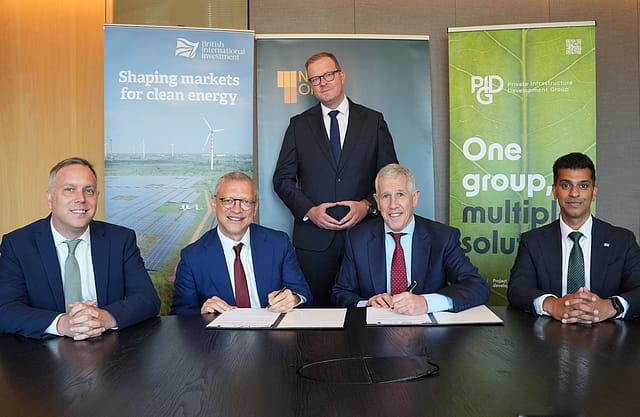
British International Investment (BII), the UK's development finance institution and impact investor, has syndicated half of its $75 million mezzanine debt investment in Blueleaf Energy to the Emerging Africa & Asia Infrastructure Fund (EAAIF), marking a fresh push to mobilise private capital for India's renewable energy sector.
The transaction will see EAAIF participate in 50% of the facility, while BII retains the remaining $37.5 million stake, supporting the development of 850 MW of new renewable energy capacity in the country.
Blueleaf Energy, a pan-Asian renewable energy platform owned by Macquarie Asset Management, is targeting a renewable energy portfolio of around 5 GW in India by 2030. The latest financing arrangement builds on BII's original investment in the company and reflects a broader strategy of bringing institutional investors into climate infrastructure projects where financing gaps continue to exist.
Shared financing to scale climate investments
The transaction marks EAAIF's third renewable energy financing in India and expands the fund's climate infrastructure investments across Asia. According to the organisations, the partnership demonstrates how development finance institutions and institutional investors can jointly accelerate clean energy deployment by sharing project risks while attracting additional private capital.
Leslie Maasdorp, Chief Executive of BII, said the transaction illustrates the institution's "originate-to-share" investment model under British Climate Partners.
"This transaction is a strong example of our originate-to-share approach under British Climate Partners, where we deploy our capital to unlock projects and then bring in institutional investors to scale them."
He added, "By recycling our capital and partnering with impact investors like EAAIF, which is managed by Ninety One, we can accelerate the build-out of clean energy infrastructure while maximising our impact."
Supporting India's clean energy transition
Blueleaf Energy's planned utility-scale solar, wind and energy storage projects are expected to generate more than 3.2 GWh of renewable electricity annually while avoiding over 3.1 million tonnes of carbon dioxide emissions each year. The investment comes as India aims to reduce emissions intensity by 47% relative to its economic output by 2035, underscoring the country's growing focus on expanding renewable energy infrastructure.
Hendrik du Toit, Founder and Chief Executive of Ninety One, said large-scale capital mobilisation remains essential for emerging markets.
"Mobilising capital at scale is essential to accelerating the energy transition in emerging markets. This transaction demonstrates how development finance institutions and private investors can work together to expand access to renewable energy infrastructure by bringing additional capital to projects with strong long-term fundamentals."
He added that the deal also represents "an important step in growing EAAIF's climate infrastructure investments in Asia, while supporting India's ambitions to build a more resilient, low-carbon economy."