
Bridging past and future: When AI complements the museum curator
ADVERTISEMENT
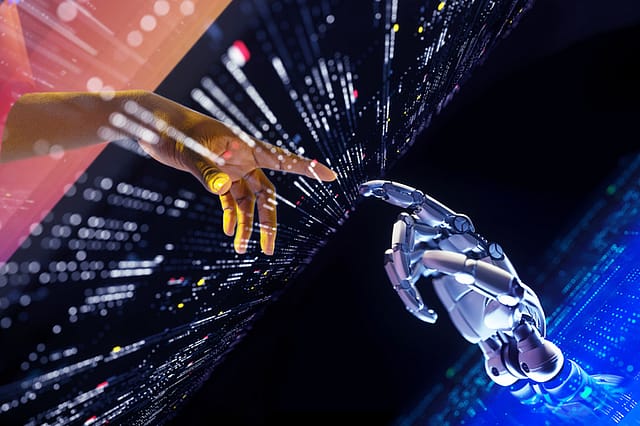
From conversational AI guides in museums and QR-enabled interfaces to immersive recreations of ancient worlds, AI can emerge less as a substitute and more as a powerful complement to curators, historians, and artists: this was the major takeaway from an 'OpenAI Forum’ held on the sidelines of India AI Impact Summit 2026 in New Delhi. The session, moderated by OpenAI’s chief economist Ronnie Chatterji, explored the rapid impact of AI on the preservation, presentation, and participation of global cultural heritage, all while keeping the essential human storyteller central to the process.
For instance, the AI-powered interface “Ask Mona”, developed by a Paris-headquartered company that goes by the same name. Ask Mona has partnered with over 200 cultural institutions and brands across more than 15 countries, including the Louvre, the Orsay Museum, the Eiffel Tower, the Palace of Versailles, the Colosseum in Rome, and the National Fine Arts Museum of Quebec. It enables visitors to access an interactive guide trained on museum-validated information via a QR code. The system is intentionally restrictive: it answers questions only within the verified knowledge base of the institution, preventing speculative or misleading responses.
‘AI must elevate the object, not distract’
The goal, according to Marion Carré, the co-founder and president of Ask Mona, is to ensure that technology enhances trust rather than dilutes authenticity. For Carré, the intent is clear: “AI must enhance the museum experience, not distract from the object.” By allowing visitors to ask contextual questions in real time, conversational interfaces can democratise access—particularly for first-time visitors or those unfamiliar with art-historical vocabulary. Instead of passively reading placards, audiences engage in dialogue. Notably, Ask Mona uses the OpenAI API as part of its core technology stack, though it is not restricted to it.
Varun Jain, managing trustee on the board of Sanskriti Foundation, sees AI as a bridge between “yesterday and tomorrow”. According to him, the conversational element of AI lowers barriers, making culture more inclusive while potentially refining aesthetic sensibilities. “If you’re standing before an object and can ask questions freely, your engagement deepens,” he notes.
AI’s expanding role beyond museums
The implications of AI extend beyond museums to tourism, education, and the performing arts. Jain suggests that AI could catalyse creativity in dance and music, helping artists experiment while retaining classical foundations. The technology could also unlock tourism potential by offering layered, multilingual narratives tailored to different audiences.
Author Amish Tripathi frames AI as both a disruptor and a storyteller, but not a replacement for human creativity. “It doesn’t appear that AI can replace the writer,” he argues. Instead, it can assist in breaking down complex historical contexts, synthesising research, and offering deeper situational understanding. For a civilisation that, he notes, produced vast volumes of ancient literature—arguably more than much of the world combined—AI offers a chance to decode and disseminate these texts to global audiences. It also presents an opportunity for the Global South to tell its own stories more assertively and at a fraction of the cost.
The immersive frontier is another untapped opportunity. Tripathi envisions museums recreating ancient experiences through virtual reality—allowing visitors to witness, say, a moonrise as luminous as sunrise in a long-lost city. Such experiential storytelling could move cultural engagement from observation to participation.
Yet the rise of AI inevitably raises concerns about jobs. But the unanimous call is for adaptation over alarm. “Disruptive technology always shakes things up,” says Tripathi, suggesting that a museum guide could evolve into a digital creator or educator with a broader reach. Marion sees AI as complementing and supplementing the curator’s expertise, not replacing it. Jain calls for reskilling initiatives and policy interventions to ensure “intentional complementarity”.
The panellists agree on cautious optimism: incorporate technology responsibly, anchor it in verified knowledge, and keep human judgment central. If done right, AI may not just change how Indians consume culture, it may transform how they converse with their past.