
Budget 2026: Renewable energy sector seeks stronger support for energy transition
ADVERTISEMENT
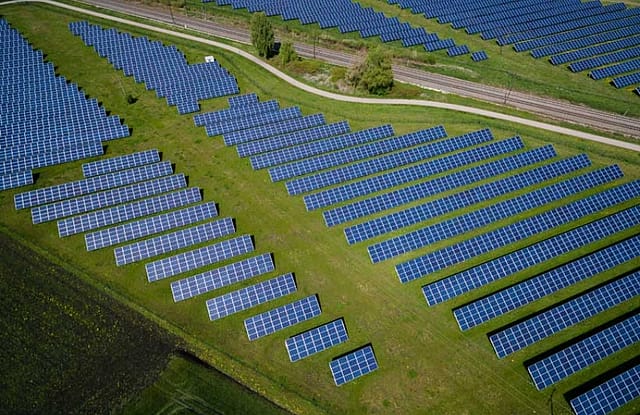
As India advances towards its target of 500 gigawatts (GW) of renewable energy capacity, industry experts have called on the Union Budget 2026–27 to significantly boost support for transmission infrastructure, energy storage, green finance, domestic manufacturing and emerging clean fuels.
India added nearly 48–50 GW of renewable capacity in 2025, supported by investments of about ₹2 lakh crore, taking the country’s total non-fossil fuel capacity to around 263 GW. However, experts say the next phase of growth will hinge less on generation and more on grid readiness, flexibility and resilience.
Focus on storage, grids and supply chains
“To support a resilient, low-carbon and technologically advanced energy future, Budget 2026 must address critical areas such as energy storage and grid flexibility, supply-chain localisation, demand-side digitalisation and export competitiveness,” said Gyanesh Chaudhary, Chairman and Managing Director, Vikram Solar.
Citing Central Electricity Authority (CEA) projections, Chaudhary noted that India’s energy storage requirement is expected to rise five-fold—from about 82 GWh in 2026–27 to over 411 GWh by 2031–32. “Policy and capital allocation remain nascent compared to the scale required. India’s journey towards energy independence is constrained by import dependence in advanced battery chemistries, green hydrogen and key ancillary products,” he said.
Industry stakeholders have sought stronger Energy Storage Obligations, fiscal incentives for storage deployment, extension of Production Linked Incentive (PLI) schemes to future-ready technologies and critical minerals, and support for digital energy platforms to manage grid stress and demand efficiently.
“Policy measures are required to move India from clean-energy deployment to clean-tech leadership and position the country as a global clean-energy manufacturing hub,” said Vineet Mittal, Chairman, Avaada Group.
According to Saurabh Kumar, Vice President – India, Global Energy Alliance for People and Planet (GEAPP), fast-tracking investments in grid modernisation is essential as renewables form a larger share of the energy mix. “Higher budgetary support for renewables and tax and GST rationalisation for Battery Energy Storage Systems (BESS) are critical to improve project viability and attract private investment,” he said.
BESS, R&D and GST relief
The India Energy Storage Alliance (IESA) has proposed a ₹300 crore allocation for National BESS Testing and Safety Centres, ₹200 crore for pack-level testing facilities, and expanded R&D funding for next-generation battery chemistries such as sodium-ion and solid-state batteries.
“We strongly advocate GST reduction from 18% to 5% on batteries, motors, controllers and battery scrap, along with lower customs duties on cell-active materials and recycling equipment,” said Debmalya Sen, President, IESA. The industry has also sought a ₹1,000 crore Battery Pack Manufacturing and System Integration Support Scheme, and up to 50% fiscal support for critical mineral refining to reduce import dependence.
Transmission and HVDC in focus
“As we enter 2026, the discourse has shifted from adding generation capacity to ensuring grid readiness and resilience,” said N Venu, MD & CEO – India & South Asia, Hitachi Energy. “High-Voltage Direct Current (HVDC) technology is no longer optional; it is essential for moving clean power over long distances with minimal losses.”
Echoing this, Chandra Kishore Thakur, Global CEO, Sterling and Wilson Renewable Energy Group, said enhanced budgetary support for transmission and evacuation infrastructure, single-window clearances and dedicated funding would be crucial to meet the Ministry of New and Renewable Energy’s (MNRE) 500 GW target by 2030.
Manufacturing, hydrogen and solar push
Calling for stronger support for hybrid energy systems, green hydrogen value chains and domestic manufacturing, Faruk G. Patel, Founder, Chairman and Managing Director, KPI Green Energy, said tax clarity for new technologies and capital support mechanisms such as viability gap funding would sustain investor confidence.
Solar manufacturers have also sought an expansion of incentives. “Extending the PLI scheme across the entire solar value chain will promote import substitution,” said Gautam Mohanka, Director, Gautam Solar. He also advocated expanding schemes such as PM Surya Ghar Muft Bijli Yojana and PM-KUSUM, along with new green finance instruments, to strengthen India’s self-reliant clean-energy ecosystem.
Manufacturing, hydrogen and solar push
Calling for stronger support for hybrid energy systems, green hydrogen value chains and domestic manufacturing, Faruk G. Patel, Founder, Chairman and Managing Director, KPI Green Energy, said tax clarity for new technologies and capital support mechanisms such as viability gap funding would sustain investor confidence.
Solar manufacturers have also sought an expansion of incentives. “Extending the PLI scheme across the entire solar value chain will promote import substitution,” said Gautam Mohanka, Director, Gautam Solar. He also advocated expanding schemes such as PM Surya Ghar Muft Bijli Yojana and PM-KUSUM, along with new green finance instruments, to strengthen India’s self-reliant clean-energy ecosystem.