
Crude oil price surge post-Iran tensions nudges buyers towards BEVs, hybrids
ADVERTISEMENT
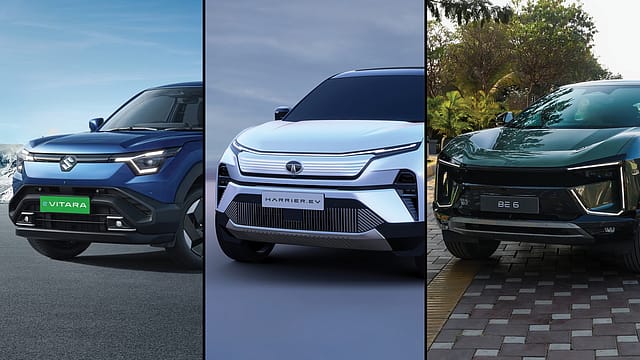
Rising global crude oil prices following escalating tensions involving Iran are beginning to influence consumer sentiment in India’s domestic Passenger Vehicle (PV) market, with early signs of a shift towards Battery Electric Vehicles (BEVs) and strong hybrids, according to industry stakeholders.
Currently, India imports about 85% of its crude oil and 45–50% of its natural gas, with the oil import bill exceeding $150 billion annually. Compressed Natural Gas (CNG) prices in major cities are ₹75–90 per kg and could rise further if supply tightens, weakening its cost advantage, as per industry trackers.
Upgrade buyers pause, OEMs see EV momentum building
A senior executive at a top-selling carmaker said the shift is becoming visible, particularly among existing vehicle owners. “Customers with existing bookings are largely holding on, but we are seeing a shift in fresh enquiries,” the executive said, requesting anonymity.
According to the executive, first-time buyers of internal combustion engine (ICE) vehicles are still visiting showrooms, but those planning upgrades to higher segments are beginning to defer purchases.
“Customers looking to add another vehicle are increasingly considering BEVs as a more future-proof option,” the executive said.
The uncertainty is also evident in the compressed natural gas (CNG) segment. “Some prospective CNG buyers are holding back, while others are evaluating EVs, including BaaS options,” the executive noted.
Another industry executive pointed to rising enquiries for strong hybrids as a transitional choice, with dealers reporting higher EV and hybrid enquiries amid fuel price volatility.
India’s largest electric passenger vehicle maker, Tata Motors Passenger Vehicles, said it is witnessing higher traction for electric variants amid the current uncertainty.
The company sold over 73,000 electric cars in FY25 and expects 15–20% growth going forward.
A spokesperson for Tata Motors said, “We are seeing increased consumer interest in EVs, with dealers reporting higher enquiry volumes in recent weeks.”
“EV adoption remains on a steady upward trajectory, supported by our product portfolio and expanding charging ecosystem,” the spokesperson added.
This comes amid uncertainty in the gas ecosystem. CNG, mainly methane sourced from domestic fields or imported as Liquefied Natural Gas (LNG), has traditionally been a cheaper fuel. However, unlike crude oil, it is difficult to store in large quantities, limiting reserve buffers and leaving supplies more exposed to disruptions.
Brent crude, the global benchmark for oil prices, is currently trading in the range of around $85–95 per barrel amid concerns over supply disruptions through the Strait of Hormuz, which carries nearly a fifth of global oil flows. While petrol and diesel prices in India have not been hiked yet, expectations of an increase are prompting buyers to reassess ownership costs.
Ground signals reinforce trend
Vinkesh Gulati, former President of Federation of Automobile Dealers Associations (FADA) and a dealer for Mahindra & Mahindra (M&M), Kia India and Bajaj Auto, said buying patterns are shifting.
“While we are delivering booked models, buying patterns among new customers are changing. Enquiries for EVs have doubled in the last 20–25 days,” he said.
“Customers are more watchful amid fuel price and supply uncertainty, prompting them to actively evaluate EVs,” he added.
Supply risks persist; transition gradual
Analysts at CRISIL said the near-term impact is more supply-side than demand-led.
Poonam Upadhyay, Director, Crisil Ratings, said gas supply constraints could affect auto component output and margins. “For OEMs, the risk looks manageable for now,” she said, though disruptions could affect production schedules.
Echoing this, Rohan Kanwar Gupta of ICRA said fuel prices do influence preferences, especially in urban markets, but purchase decisions remain driven by affordability, financing, and infrastructure.
“This leads to a gradual transition towards alternative powertrains such as CNG, EVs and hybrids,” he said.
Growth tailwinds intact
EV penetration, however, remains modest but is steadily rising. Electric vehicles accounted for nearly 8% of total new vehicle registrations in 2025, with overall sales touching about 23 lakh units, according to Vahan data. Within this, electric passenger vehicle sales crossed around 1.7 lakh units, reflecting strong growth from a low base.
Despite the emerging interest, India’s transition to EVs remains gradual, constrained by charging infrastructure gaps, range concerns, and higher upfront costs, especially beyond metros. Automakers are closely tracking the situation as prolonged geopolitical tensions could keep oil prices elevated, potentially accelerating the shift towards electrified powertrains, including hybrids.