
Downstream petrochem strain persists despite swift govt interventions
ADVERTISEMENT
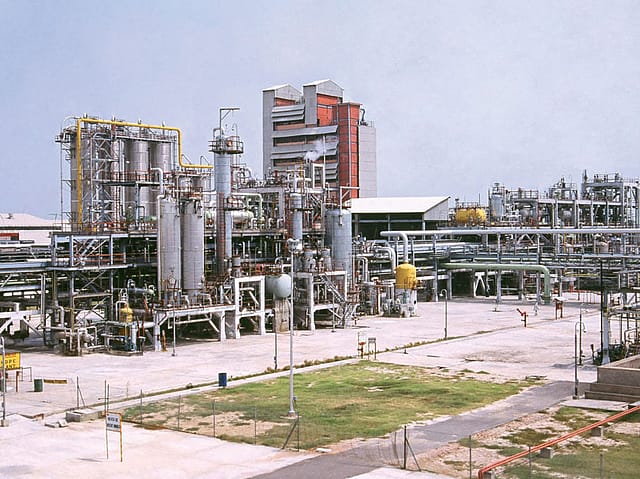
Despite swift government interventions to cushion the impact of oil and gas disruptions triggered by the West Asia conflict, stress in India’s petrochemical value chain is far from easing.
While early signs of demand moderation are emerging, supply-side uncertainties and logistical bottlenecks continue to keep import costs elevated. Higher risk premia and longer shipping routes—necessitated by India’s ongoing diversification of sourcing—are adding to the pressure, industry experts say.
In March, Brent crude surged to $110–120 per barrel, while spot Asian LNG prices nearly doubled to $20–25 per MMBtu. “We expect both commodities to remain elevated and volatile through April as well. The situation remains uncertain and evolving,” says Sehul Bhatt, Director, Crisil Intelligence.
According to Crisil, global oil supply chains may take several weeks to normalise even after the conflict subsides, while gas markets could take longer due to operational complexities. As a result, price pressures are likely to persist into the first quarter of FY27.
Crisil has accordingly revised its FY27 assumptions upward, pegging Brent crude at $82–87 per barrel and LNG at $14–17 per MMBtu, reflecting tighter balances and sustained geopolitical risks. Any escalation could push prices higher, while a near-term easing in supply constraints may trigger limited correction.
Production across petrochemical value chain
The impact on the domestic industry has been severe. Production across large parts of the petrochemical value chain has dropped to 20–40% of normal levels, according to Ramya Bharathram, President, Indian Chemical Council. Units dependent on natural gas remain the worst affected.
There has, however, been some relief on the fertiliser front. Gas supply to urea plants—initially cut to around 60%—has been progressively restored to 75–80% through alternative arrangements, boosting urea output by 12,000–15,000 tonnes per day.
The government has also stepped up efforts to stabilise supplies of critical inputs such as LNG and sulphur, diversifying sourcing across countries including Russia, Morocco, Australia, Indonesia, Malaysia, Jordan, Canada, Algeria, Egypt, Finland, and Togo. Gas supply to industrial and commercial users has now been restored to about 80% of average consumption.
Diversion of C3 and C4 streams
In a key policy move, the government permitted the diversion of C3 and C4 streams—core petrochemical intermediates—to critical sectors such as pharmaceuticals, food distribution, and chemicals. C3 derivatives like propylene are essential for products such as polypropylene, propylene oxide and isopropanol, while C4 streams including butadiene are vital for synthetic rubber and other industrial chemicals.
However, a March 9 directive prioritising these streams for domestic LPG production, amid reduced imports, has exacerbated shortages for petrochemical manufacturers.
To ease cost pressures, the government has granted full customs duty exemption on key petrochemical inputs, benefiting downstream sectors such as plastics, packaging, textiles, pharmaceuticals, automotive components and other manufacturing industries.
Additionally, excise duty on petrol and diesel has been reduced by ₹10 per litre to shield consumers, while export levies of ₹21.5 per litre on diesel and ₹29.5 per litre on aviation turbine fuel (ATF) have been imposed to ensure adequate domestic availability.
The government maintains that refineries are operating at high utilisation levels, supported by adequate crude inventories, and that supplies of petrol, diesel and LPG remain stable.
Yet, with feedstock volatility, supply disruptions, and policy trade-offs continuing to reshape the landscape, the downstream petrochemical sector is likely to remain under strain in the near term.