
Maruti Suzuki earmarks record ₹14,000 cr capex for FY27 as capacity utilisation hits 100%; adds 5 lakh units via new plants
ADVERTISEMENT
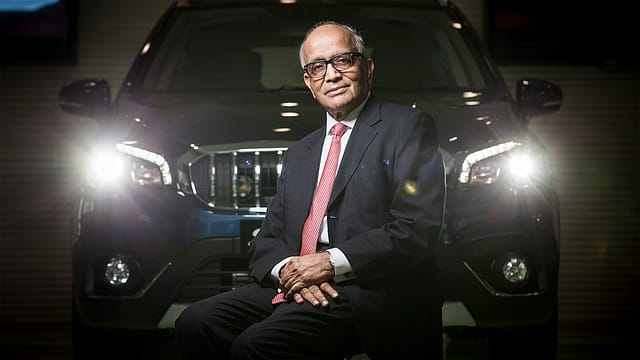
Car market leader Maruti Suzuki India Limited has announced a record capital expenditure plan of ₹14,000 crore for FY27, as it moves to aggressively expand manufacturing capacity after operating at near full utilisation across its existing facilities.
During its post earnings call with the media, MSIL Chairman R.C. Bhargava said the higher capex reflects ongoing investments in new production lines at Kharkhoda (Haryana) and Hansalpur (Gujarat), along with work beginning at a new greenfield site in Gujarat. Together, these projects are aimed at easing capacity constraints amid sustained demand.
Capacity crunch drives record investment
Bhargava noted that the company is currently operating at nearly 100% utilisation, with annual sales running close to 2.4 million units and inventories at historically low levels. FY26 also saw about 1.9 lakh pending customer orders, including nearly 1.3 lakh in the small car segment, highlighting demand outpacing supply.
The new lines at Kharkhoda and Hansalpur will add a combined 5 lakh units of annual capacity. Of this, around 2.5 lakh units are expected to come online during FY27, directly supporting production and sales growth.
Expansion across Haryana and Gujarat
Maruti Suzuki currently operates four manufacturing plants in Gurugram, Manesar, Kharkhoda and Hansalpur, with a combined installed capacity of 24 lakh units annually. In addition, the company has identified land in Sanand, Gujarat, for its fifth facility, which is expected to eventually scale up to 10 lakh units per year.
The company had earlier indicated an investment of ₹10,189 crore for the first phase of 2.5 lakh units at the new Gujarat plant, reinforcing its long-term capacity buildout strategy.
Small cars remain central to growth strategy
Bhargava reiterated that small cars will continue to play a critical role in India’s mobility landscape, driven by affordability and large demand from price-sensitive consumers. He also said recent GST reforms have supported demand recovery across the auto sector.
On external risks, he noted that geopolitical tensions in West Asia have had minimal impact on domestic demand so far, though commodity price pressures and potential fuel cost fluctuations remain areas of watch.
Bhargava added that growth in the car industry is expected to continue in the coming years, largely driven by capacity additions and steady demand revival, while pricing decisions will depend on input cost trends.
Financials at a glance
Alongside the capex announcement, Maruti Suzuki reported a 6.45% year-on-year decline in consolidated net profit to ₹3,659 crore for Q4 FY26, impacted by mark-to-market losses and lower non-operating income, including bond yield-related adjustments. Revenue, however, rose 28.2% year-on-year to ₹52,462.5 crore, supported by record sales of 676,209 units and strong export growth.