
El Niño clouds India’s monsoon outlook, raising risks to crops, inflation, and economic growth
ADVERTISEMENT
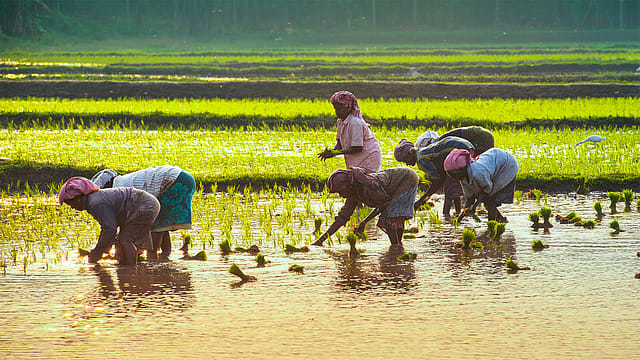
India’s southwest monsoon has begun on a weak note, raising concerns over agricultural output, rural demand, and inflation as the El Niño weather phenomenon gathers strength and threatens to prolong dry conditions through the peak rainfall months.
Nationwide monsoon rainfall was nearly 40% below normal as of Wednesday, according to data from the India Meteorological Department (IMD). The June–September monsoon season accounts for the majority of India’s annual rainfall and remains critical for agriculture, water availability, and economic activity.
The delayed and uneven onset has already started affecting sowing activity for key kharif crops, including rice and soybeans while sectors such as construction are also feeling the impact of lower rainfall.
Earliest signs of El Niño
The weak monsoon marks one of the earliest signs of El Niño’s influence on global weather patterns this year. Historically associated with drier conditions across South Asia, El Niño is expected by global forecasters to emerge as one of the stronger episodes in recent years.
The IMD, in its latest long-range forecast, has projected rainfall at 90% of the Long Period Average (LPA) for the June–September season, lower than its earlier estimate of 92%, indicating a below-normal monsoon.
More significantly, the probability distribution suggests an 84% likelihood of sub-normal rainfall — sharply higher than the 66% probability projected in April.
Rainfall is expected to remain below normal across large parts of India’s monsoon core zone, which includes many of the country’s rainfed agricultural regions. Weather models suggest dryness may persist through July and August, particularly across northwest and central India.
The IMD also noted that sea surface temperatures are consistent with the development of El Niño conditions during the monsoon period while the Indian Ocean Dipole remains neutral. Forecasts by the US National Oceanic and Atmospheric Administration (NOAA) indicate a high probability of at least a moderate El Niño emerging during the season.
Historical data shows that while El Niño does not automatically lead to weak monsoons, stronger episodes significantly increase that risk. Since 1951–52, India has witnessed 25 El Niño years, with 12 of the 16 moderate-to-strong events coinciding with below-normal or deficient rainfall.
Agriculture remains vulnerable while economic sensitivity has reduced
A deficient monsoon continues to pose risks to agriculture and rural incomes, although the Indian economy today is less dependent on rainfall than in earlier decades.
Since 1951–52, India has recorded 23 years of contraction in agricultural gross value added (GVA), with nearly 57% occurring during El Niño years. However, the relationship between rainfall and economic growth has weakened over time.
Agriculture’s share in India’s GVA has fallen sharply from 53.2% in FY51 to 16.8% in FY26 while services now account for more than half of the economy.
Expansion in irrigation infrastructure has also improved resilience. Gross irrigated area as a share of total sown area has increased from 17.1% in FY51 to nearly 60% in FY24, reducing dependence on rainfall.
Government efforts to promote climate-resilient agriculture, including drought-resistant crop varieties and water-efficient crops such as millets and pulses, have also strengthened the sector’s ability to absorb weather shocks. Still, agriculture remains India’s largest source of employment, accounting for 43% of total jobs in 2025, according to PLFS data, making rainfall disruptions economically and socially significant.
Inflation risks remain, but buffers offer support
A weak monsoon could also affect food inflation through lower crop output and supply disruptions.
Perishable food categories such as tomatoes, onions and potatoes remain particularly vulnerable during El Niño years due to heatwaves and erratic weather.
Pulses are another concern, with historical evidence showing repeated declines in acreage and yields during El Niño episodes.
Imported food inflation may also emerge as a risk, especially for edible oils. India’s dependence on imports from countries such as Malaysia and Indonesia — both vulnerable to El Niño-related weather disruptions — could place upward pressure on domestic palm oil prices. However, India appears better positioned than during previous El Niño episodes.
Reservoir storage levels stood at 30.4% of full reservoir capacity as of May 2026, above the average seen during recent El Niño years. Wheat and rice buffer stocks were also at record levels at the end of April, offering a cushion against supply shocks and food inflation.
The government has additionally identified 197 vulnerable districts and prepared state-wise contingency plans to minimise disruption.
Analysts note that while aggregate macroeconomic risks remain manageable, the impact is likely to vary sharply across states depending on factors such as irrigation coverage, crop mix, reservoir levels, and dependence on agriculture.