
EV motorcycle maker MATTER to invest $100-150 mn over next three years
ADVERTISEMENT
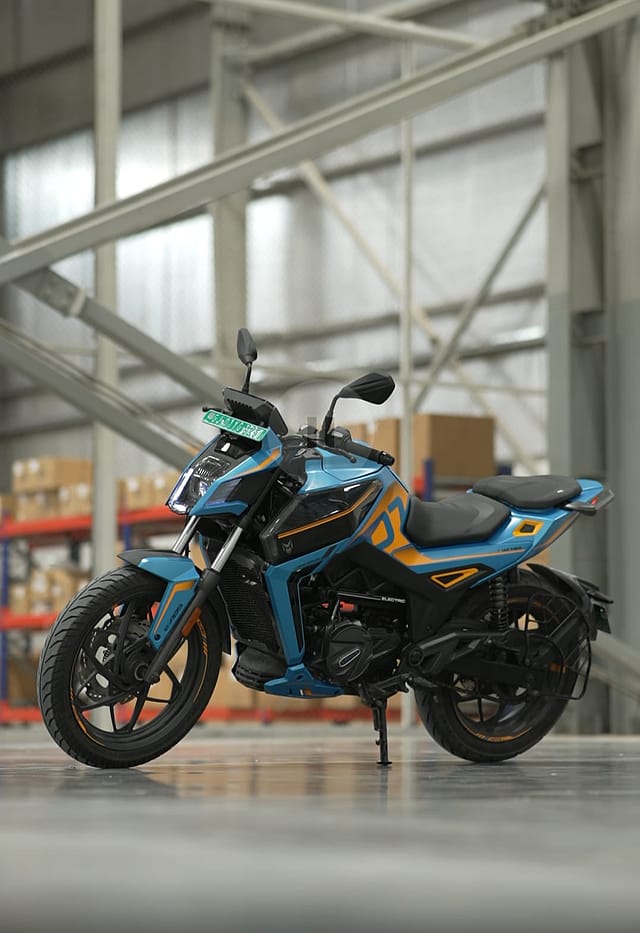
Ahmedabad-based electric motorcycle startup MATTER Motor Works plans to invest $100-150 million over the next three years to scale manufacturing capacity, deepen research and development, and strengthen its brand presence, as it steps up its push into India’s largely untapped electric motorcycle segment.
In an exclusive interaction with Fortune India, Mohal Lalbhai, Founder and Group CEO of MATTER, said the fresh capital deployment will build on the nearly $100 million already invested since the company’s inception in 2019, with a sharp focus on product development, R&D, marketing, and capacity expansion.
“We have invested close to $100 million since inception, and over the next three years we plan to invest another $100-150 million. This capital will primarily be deployed towards product development, research and development, brand promotion, and expansion of our manufacturing capacity,” Lalbhai said on the sidelines of MATTER’s Technology Day 3.0 in New Delhi on Tuesday.
At the event, MATTER unveiled India’s first AI-Defined Vehicle (AIDV) platform, marking what the company described as a decisive inflection point in the evolution of electric two-wheelers. The platform positions intelligence—rather than hardware alone—as the defining layer of next-generation vehicles and establishes a scalable roadmap spanning multiple products over the next 36–48 months. MATTER said the AIDV architecture will support improvements in performance, efficiency, safety, and lifecycle value, while complementary initiatives such as alternate material technologies will underpin its sustainability agenda.
Bets on iron-nitrogen motors to bypass magnet crunch
On supply-chain challenges, Lalbhai said while semiconductor shortages have eased, magnets have emerged as a key constraint for the EV industry. MATTER claims to have developed an indigenous motor technology using iron and nitrogen, significantly reducing dependence on rare-earth materials.
“The real challenge today is magnets, not chips. We’ve already developed an alternative to rare-earth magnets using iron and nitrogen, which delivers comparable performance without China dependency,” he said.
Apart from battery cells, magnets and semiconductor chips, MATTER said its motorcycles are largely localised, with even electronic assemblies manufactured close to its plant.
Backed by a diverse global investor base, including Capital2B (linked to Info Edge), Helena Special Investments (US), Japan Airlines, TransLink, the Saad Bhawan Group of Oman, and the Dholakia Group of Surat, MATTER is positioning itself as a long-term, manufacturing-led EV company, rather than a pure venture-backed startup.
MATTER commenced commercial operations in July 2025 from Ahmedabad and has since expanded to 15 cities through more than 20 dealerships. The company has shipped around 1,000 electric motorcycles, with nearly 700 units already in customers’ hands, and says early feedback has been encouraging.
“Whenever I speak to customers, they end up selling the bike to me more than I sell it to them. The feedback so far has been fantastic,” Lalbhai said.
Product roadmap
Currently, MATTER offers a single electric motorcycle positioned as a 200cc-equivalent, priced at around ₹2 lakh on-road. The company is preparing to roll out a broader product portfolio, starting with 150cc and 125cc-equivalent platforms, followed by new form factors over the next few years.
“Our play is between 125cc and 200cc. We are starting with a 200cc-equivalent product and will soon bring in 150cc and 125cc platforms, followed by new form factors over the next few years,” Lalbhai said.
MATTER’s Ahmedabad manufacturing facility, which has an annual capacity of 1.2 lakh units, is expected to meet demand over the next 18–24 months. Capacity expansion is planned for 2027–28, aligned with upcoming product launches.
Limited competition in electric motorcycles
Lalbhai said competition in electric motorcycles remains limited compared to scooters, which dominate EV two-wheeler sales in India, and welcomed the entry of large OEMs.
“In scooters, almost all EV sales are already electric. In motorcycles, customers barely have choices. India will build this technology itself—there is no other option,” he said.
On after-sales service, MATTER said it has adopted a dealership-plus-service-centre model, ensuring service readiness alongside sales.
“Servicing has to be part of the DNA. Every dealership we open also has a service centre—trust is critical when you are a new brand,” Lalbhai added.
Speaking at the event, Kumar Prasad Tellikepalli, Founder and Group CTO of MATTER, said intelligence will be central to scaling complexity without compromising innovation.
“AIDVs enable us to compress development cycles, improve first-time-right outcomes, and build vehicles that learn from every kilometre ridden. They also introduce a new approach to materials, where intelligence governs how materials behave, age, and perform under real-world conditions. This is how deep engineering translates into a sustainable, compounding advantage,” Tellikepalli said.