
Experts call for risk-benefit analysis to recalibrate India's E20 blending policy
ADVERTISEMENT
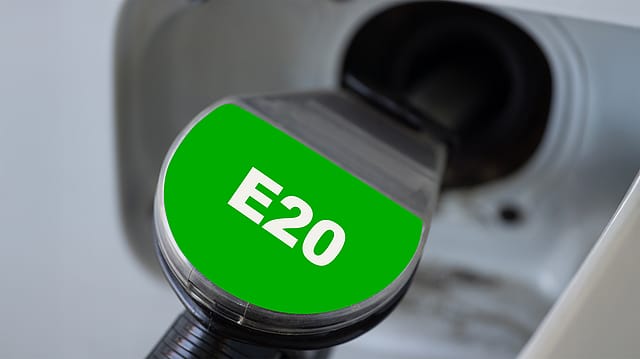
India needs to do a comprehensive risk-benefit analysis to understand whether the benefits of replacing petrol with ethanol justify the economic, energy and environmental costs of producing the agricultural feed stocks required for E20, says renowned agriculture economist Ashok Gulati. The country should recalibrate its ethanol blending strategy on the basis such an assessment, he argues.
In a policy brief published by Delhi based think tank ICRIER recently, Gulati and co-author Tamoy Adhikary called for a study that incorporates the full energy, environmental and economic costs, including implicit subsidies, that goes behind the production of agricultural feed stock that fuels India’s ethanol production.
The authors argue that such an analysis has become essential because the widening gap in growth of ethanol demand for blending and the supply of feedstock to meet that demand is creating a growing food-versus-fuel trade-off in India. The brief points out that during 2019–20 to 2025–26, ethanol supplied to oil marketing companies increased from 173.03 crore litres to a projected 1,200 crore litres.
“This represents a CAGR of about 38% over six years. In contrast, production of the agricultural commodities like sugarcane, maize, and rice, used to produce ethanol grew much slowly. During the same period maize production grew at 11.4% CAGR, rice at 4.4% and sugarcane at 5.1%," the brief notes. Stating that the trade-off is already evident in the sugar market, it points out that low opening stocks and lower production have coincided with a 44% rise in modal retail sugar prices, from ₹45 per kg in July to ₹65 per kg by August 29.
The brief argues for a more adaptive and market-oriented approach to the ethanol blending policy. It recommends using sugar imports as an immediate buffer during shortages; limiting FCI rice largely to genuine surplus stocks while moving its pricing closer to at least the acquisition cost; making feedstock allocation responsive to agricultural conditions; greater openness to feedstock and ethanol imports. It also calls for an India-specific well-to-tank assessment of sugarcane, maize, and rice.
“Reforming distortionary input subsidies and allowing ethanol producers greater flexibility to choose feedstocks based on their true market costs could improve efficiency. In the longer term, second-generation ethanol from agricultural residues and other non-food biomass offers a way to expand ethanol use without intensifying the competition between food and fuel," the brief notes.