
Foodstories enters Mumbai, bets on experience-led retail to build a ₹1,500-crore food business
ADVERTISEMENT
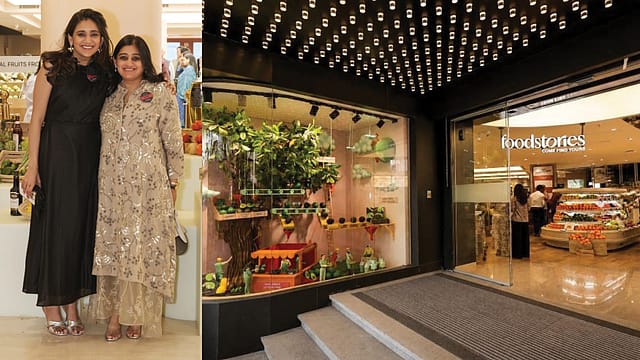
India’s premium food retail market is entering a new phase. After years of competing on assortment, convenience and speed, a new generation of brands is attempting to redefine the category around experience, discovery and community. Foodstories, founded by Avni and Ashni Biyani, believes the next chapter of grocery will look less like retail and more like a cultural destination.
Foodstories has entered Mumbai with stores in Bandra and Lokhandwala, expanding its presence across Delhi NCR, Bengaluru and Hyderabad. The launch also includes its app and local fulfilment network, enabling customers to shop across physical and digital channels, with stores operating from 9 am to 10 pm. Targeting consumers who increasingly view food through the lens of lifestyle and wellbeing, the company says its strategy extends beyond retail expansion to building a broader “food lifestyle platform”.
The move reflects a larger shift underway in urban consumption patterns as affluent consumers increasingly spend on food experiences, wellness and premium everyday living.
“The customer has fundamentally changed,” Avni Biyani tells Fortune India. “Post-Covid, we realised there is a digital-first audience. Consumers discover brands digitally irrespective of where they buy them. That changes the meaning of physical spaces.”
For Foodstories, that insight became the foundation of a business model that combines retail, hospitality and digital engagement.
Inside the stores, Foodstories combines grocery with experiential formats such as That Grocery Café, That Bev Bar and That Bake Shop led by Chef Dean Rodrigues, alongside a fresh pasta bar by Chef Aabhas Mehrotra, live food stations and The Tea Library—positioning the format as a food discovery destination rather than a conventional grocery store.
The founders believe traditional retail is increasingly inadequate for younger consumers.
“When people step out today, they want much more than a flat retail interaction. They want to taste, smell, touch and discover,” says Ashni Biyani.
The company’s proposition is rooted in the idea that food is increasingly becoming a reflection of identity, wellbeing and self-expression rather than pure consumption.
Building for a post-quick-commerce consumer
Foodstories’ timing is notable. The company is expanding at a moment when India’s quick-commerce ecosystem is conditioning consumers to expect near-instant deliveries.
Instead of competing directly on speed, Foodstories is making a different wager.
The company’s fulfilment network currently enables deliveries across Mumbai in roughly 60–90 minutes. The founders say digital has become a critical layer of repeat engagement and frequency-led consumption while preserving the relationship-led nature of the business.
Yet they argue their consumer is not optimising for speed alone.
“We are not a packaged-food business. We are increasingly becoming a fresh-food business,” says Ashni. “Good things take time. If you’re delivering chef-crafted grazing boxes, cheese platters or curated fresh produce, the model cannot always be built around minutes.”
The operating model combines digital ordering with concierge-style engagement. Select customers have dedicated relationship managers who curate menus, recommend products and coordinate food planning.
That relationship-led approach, Foodstories argues, becomes an advantage in a market increasingly dominated by transactional platforms.
From premium grocery to food culture platform
Foodstories avoids positioning itself as a premium retailer. Instead, the company frames itself around sourcing, provenance and storytelling.
Its teams work with growers and producers across India and global markets, following harvest cycles and focusing on food origins rather than simply importing premium labels. The company says it works closely with farmers, makers, bakers and emerging food entrepreneurs while creating platforms for discovery inside stores.
“We don’t think of it as premium. We think of it as produce we would want to take home ourselves,” Avni says.
The founders also see localisation as critical to scaling. Product assortments and concepts vary city by city—from region-specific produce and bakery formats to locally inspired recipes and partnerships.
Foodstories currently operates across Delhi NCR, Bengaluru, Hyderabad and Mumbai, while future expansion will depend on where food-conscious consumers emerge.
The company is evaluating markets including Ahmedabad and Pune but says entering new cities requires building entire ecosystems around farmers, chefs, vendors and local supply chains.
A ₹1,500-crore ambition
Foodstories’ ambitions extend well beyond boutique retail.
The founders believe the business can scale into a ₹1,000–1,500 crore opportunity over the next five years, driven by the combination of physical destinations, digital channels and curated food ecosystems.
But unlike conventional retail metrics, the company says its primary measure of success will be customer affinity.
“For us, success is not just sales per square foot,” says Ashni. “It’s the depth of relationships we build, repeat baskets, engagement and how customers choose to make us part of their lifestyle.”
As India’s food economy evolves from utility-led consumption toward identity-led spending, Foodstories is betting that the next grocery winner may not look like a grocery store at all—but a platform where food, culture, community and discovery come together under one roof.