
From machinery to wine: Imports set to get cheaper under India–EU FTA, says Franklin Templeton report
ADVERTISEMENT
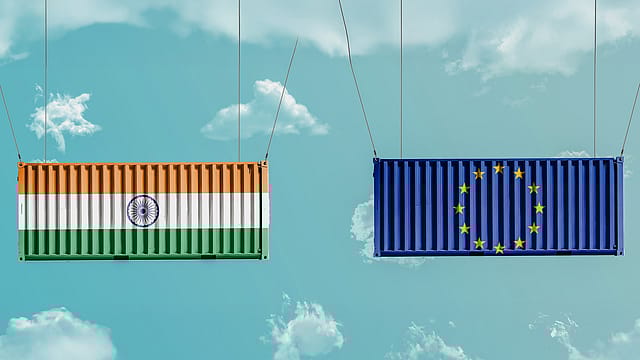
India and the European Union (EU) have concluded negotiations for a comprehensive Free Trade Agreement (FTA), alongside a new Security and Defence Partnership, a move that could significantly reshape India’s trade and growth outlook, according to a Franklin Templeton report. The announcement was made in New Delhi on Tuesday, with formal legal scrubbing and ratification expected to take several months. The agreement is likely to come into force in early 2027.
What becomes cheaper for India
The report notes that the agreement will make several imports cheaper for India, including machinery and electrical equipment, chemicals, pharmaceuticals, optical and medical devices, aircraft and spacecraft parts, premium automobiles, and select food and beverage products such as wine, beer, olive oil and processed foods.
The report highlights the EU’s position as one of India’s most important economic partners. Combined goods and services trade between India and the EU is estimated at $180–219 billion in FY25 while more than 6,000 European companies operate in India. India’s merchandise trade with the EU, valued at around $130 billion annually, is comparable to its trade volumes with the United States and China. Exports to the EU account for roughly $75 billion, or 17% of India’s total exports.
Reducing tariffs on 96.6% of EU exports
Under the FTA, India will reduce or eliminate tariffs on 96.6% of EU exports, generating an estimated €4 billion ($4.3 billion) in annual duty savings for European firms. In return, the EU will grant zero-duty access on about 90% of Indian goods at entry into force, with coverage eventually expanding to over 99% of India’s export value as tariff phase-outs are completed.
India’s trade dynamics with the EU
India’s trade dynamics with the EU have also shifted in recent years. While India traditionally ran a modest surplus in goods trade, this has widened to around $10–15 billion since 2022, supported by increased petroleum product exports following the Russia–Ukraine conflict and a surge in electronics shipments, particularly smartphones. Services trade stands at $72 billion, with India recording a $9 billion surplus in CY24, underlining the strength of its services sector.
Franklin Templeton described the FTA as a pivotal milestone in India’s global trade strategy, noting that India, the world’s fourth-largest economy, and the EU, the second-largest, together account for nearly 25% of global GDP. The agreement is expected to create a stable, rules-based trade framework, strengthen supply chains, support domestic manufacturing and deepen India’s integration into global value chains.
The pact also aligns with broader India–EU cooperation in clean energy, climate action, digital transformation, technology and security, reinforcing an increasingly comprehensive strategic partnership.
As the agreement moves through legal vetting and ratification, the next 12–18 months will be crucial for regulatory alignment and the drafting of implementation guidelines, including new rules of origin and compliance requirements. Once operational, the report says, the India–EU FTA could act as a key external catalyst for India’s growth cycle by lowering input costs, expanding access to European markets and improving competitiveness across labour-intensive and high-value sectors.
Against a backdrop of supportive monetary conditions, improving rural demand and a recovery in investment activity expected into FY27, Franklin Templeton maintains a positive long-term macroeconomic outlook for India, with the India–EU FTA seen as a potential driver of new growth opportunities.