
GFF 2026: Speed, concentration, and opacity are key concerns in emerging tech, says RBI Dy Governor Jain
ADVERTISEMENT
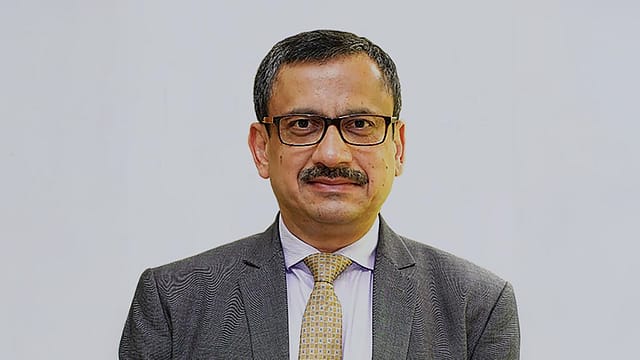
Deputy Governor of the Reserve Bank of India Rohit Jain on Wednesday said speed, concentration, and opacity are three concerns in emerging technologies as they become more deeply embedded in finance.
"Automated systems can analyse information and initiate actions far faster than human beings can respond. At machine speed, resilience cannot depend only on preventing every error. Institutions must also be able to detect problems early, contain their effects, and intervene before a small mistake becomes a much larger one," he said, talking about emerging technologies in finance at the Global Fintech Fest 2026.
"The second concern is that of concentration. Financial institutions may increasingly depend on a relatively small number of cloud providers, technology vendors and portal providers, often using overlapping data sets and similar technology infrastructure. The concern is therefore not simply the failure of one institution, but the possibility that a common dependency could transmit disruption or error across many institutions at the same time," he added.
The third concern, he said, was opacity. Advanced models can identify relationships and drive decisions in ways that may be difficult to explain, he said.
Not just faster, technology should make finance more useful
Jain said that people's confidence in technology will ultimately depend not on how sophisticated it is, but on whether it works for them reliably, and safely. "Purpose, prudence and policy therefore have to move together. Purpose without prudence can become recklessness. Prudence without purpose can become stagnation. Policy is what binds the two together at scale," he said.
"The objective should not merely be to make finance faster or smarter, but to ensure that technological progress makes finance more useful, resilient, and responsive to those it serves. Amid discussion about algorithm, tokens, platforms, cloud infrastructure, and quantum computing, let us not forget that there is always someone at the other end of the technology," he said in his speech.
"There is a saver, investing in institutions with hard-earned money, a borrower seeking an opportunity, a merchant awaiting a payment, or a family depending on the financial system when it matters most. That is ultimately where our responsibility lies," he said.
The more important question is whether they solve a genuine financial problem better, who benefits from this improvement, and what new costs or risks may arise in the process. These questions need to be considered at the design stage itself. Technology may lower costs and improve friction, yet those gains will not necessarily reach everyone," Jain said.
"Technology may move faster than our ability to foresee all its consequences. When should policy intervene, and how can it do so without closing off useful innovation? Regulate too early, and we risk writing detailed rules for a technology we do not yet fully understand, or for an architecture that may change before the rules take effect. Regulate too late, and the technology may already be deeply embedded before its risks are fully understood and addressed. There is no perfect point between these two outcomes. Policy therefore needs both conviction and humility," Jain said.
"In a rapidly changing environment, regulators cannot understand emerging technologies through returns and supervisory observations alone. And therefore, calls for network-level intelligence and near-real-time information sharing. The objective of policy, therefore, is to create the conditions in which useful innovation can develop responsibly. This requires clear guardrails, where the risks are understood, room for experimentation, where we are still emerging, and the ability to adapt the framework as technology and its uses evolve.