
Global refinery disruptions could keep fuel margins high, lifting Indian refiners; standalone players to gain most: YES Securities
ADVERTISEMENT
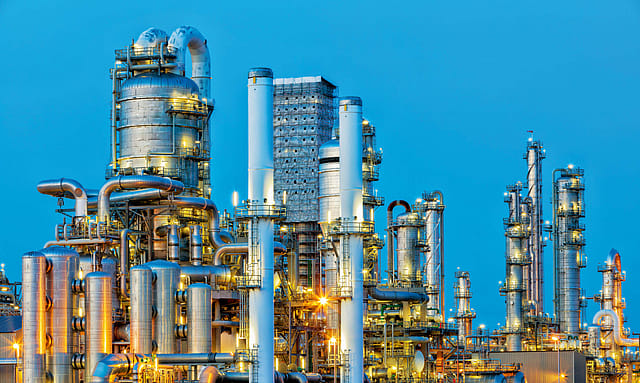
A combination of global refinery outages, geopolitical disruptions and resilient demand for transportation fuels could keep refining margins elevated well above historical averages, creating a favourable earnings backdrop for Indian refiners, according to a report by YES Securities.
The brokerage said the global refining cycle is being supported by a rare convergence of factors—lower refinery runs in China, disruptions to Russian diesel exports, planned maintenance at major refineries, tight inventories of middle distillates and limited additions to global refining capacity. Together, these factors are expected to support stronger gross refining margins (GRMs), the key profitability metric for refiners.
"We expect the global refining sector to remain in one of the most constructive operating environments over the near to medium term," the report said, citing "healthy product crack spreads", "structurally constrained global refining capacity" and "adequate crude availability" that continues to preserve attractive crude-to-product spreads.
Why India stands to benefit
Unlike many overseas refiners, Indian companies operate highly complex refineries capable of processing discounted heavy and high-sulphur crude into premium fuels such as diesel, petrol and aviation turbine fuel (ATF).
YES Securities said this operational flexibility allows Indian refiners to extract greater value from every barrel of crude they process.
"Indian refiners are uniquely engineered to extract greater incremental margin value per processed barrel than their international peers," the report said. It added that high refinery utilisation, stable crude procurement and the ability to serve both domestic and export markets position Indian companies to outperform global peers during the current refining cycle.
The brokerage believes the market is underestimating the simultaneous improvement in transportation fuel margins, secondary products such as naphtha and fuel oil, and the persistence of tight middle-distillate inventories.
"We therefore believe the sector is positioned not merely to sustain current profitability but to deliver earnings above prevailing market expectations," it said, adding that stronger earnings could trigger further upgrades and sector-wide valuation re-rating.
Why CPCL and MRPL stand out
Among the listed refiners, YES Securities believes Chennai Petroleum Corporation Ltd (CPCL) and Mangalore Refinery and Petrochemicals Ltd (MRPL) offer the clearest exposure to the refining upcycle because their earnings are majorly driven by refining operations.
Unlike oil marketing companies, these standalone refiners have limited exposure to fuel retailing, allowing a larger share of higher refining margins to flow directly into earnings.
According to the brokerage, improving diesel, gasoline and ATF cracks, coupled with recovering margins in secondary products, should translate into stronger operating leverage, higher cash generation and faster earnings growth for standalone refiners than their integrated peers.
BPCL preferred among oil marketing companies
The report also identifies Bharat Petroleum Corporation Ltd (BPCL) as the best-positioned oil marketing company (OMC) to benefit from the refining cycle.
YES Securities said BPCL has consistently reported superior refining margins compared with its state-owned peers and has a more favourable refining-to-marketing mix.
Among the OMCs, "BPCL is best positioned to benefit from the current refining cycle," the brokerage said, adding that its higher contribution from refining and lower dependence on fuel marketing allows it to capture a greater share of elevated refining margins while limiting the earnings drag associated with downstream retail operations.
By comparison, Indian Oil Corporation Ltd (IOCL) and Hindustan Petroleum Corporation Ltd (HPCL) are expected to benefit from stronger refining margins as well, but the impact on overall earnings is likely to be moderated by their larger fuel marketing businesses. Their extensive retail fuel networks mean gains from refining are partly offset by fluctuations in marketing profitability, the report noted.
Reliance seen as a structural winner too
The brokerage is also constructive on Reliance Industries Ltd that has one of the world's most sophisticated refining systems in Jamnagar.
Reliance's highly complex refinery configuration enables it to process a wide range of crude grades while maximising production of premium transportation fuels. However, unlike standalone refiners, refining contributes only a part of Reliance's overall earnings alongside telecom, retail, petrochemicals and new energy businesses, making it a less direct play on the refining cycle.
Overall, YES Securities believes Indian refiners are entering a prolonged period of above-cycle profitability.
"The combination of resilient demand, constrained product supply, recovering secondary products and high refinery utilisation creates a powerful operating backdrop for complex refiners," the report said. It expects companies with favourable product slates, efficient operations and consistently high utilisation levels to report premium refining margins and earnings above current market expectations.
(DISCLAIMER: The views and opinions expressed by investment experts on fortuneindia.com are either their own or of their organisations, but not necessarily that of fortuneindia.com and its editorial team. Readers are advised to consult certified experts before taking investment decisions.)