
HCLTech flags softness in life sciences, doubles down on AI-led growth
ADVERTISEMENT
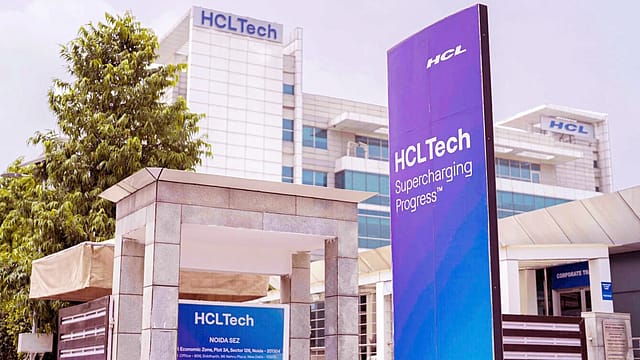
HCLTech CEO and managing director C Vijayakumar acknowledged continued weakness in the life sciences and healthcare vertical, particularly in the US, but said the slowdown is likely to stabilise over the next couple of quarters. The sector, which saw strong post-Covid growth, is now moderating amid pressure on healthcare spending in the US, he added.
Even as some traditional verticals face near-term headwinds and global tech spending remains uneven, HCLTech, the IT services firm, is leaning hard into what it sees as the next structural growth drivers - advanced AI, engineering-led services, and large-scale digital transformation, rather than waiting for traditional discretionary budgets to return.
Vijayakumar said the company had delivered “another standout quarter on all fronts,” driven by what he described as its “AA vision” (AI and automation-led strategy), an approach anchored in deep engineering capabilities and AI-first offerings. He pointed to rising traction in areas such as physical AI, robotics, AI factory solutions, and custom silicon engineering for edge inferencing.
HCLTech’s revenue for the quarter came in at $3.79 billion, taking its annualised revenue past the $15-billion milestone, a scale Vijayakumar said reflected the “durability of our growth model”. In constant currency terms, revenue grew 4.2% sequentially and 4.6% year-on-year, with engineering and R&D services leading the pack at 10.8% year-on-year growth.
Meanwhile, the company reported consolidated revenue of ₹33,872 crore, up 6% sequentially and 13.3% year-on-year. Services revenue stood at ₹30,184 crore, while software revenue jumped nearly 30% quarter-on-quarter to ₹3,791 crore.
Operating margin came in at 18.6%, excluding the one-time impact of the new labour code (which the government is still notifying), while net income was ₹4,795 crore. The company also reported strong cash generation, with operating cash flow of ₹21,869 crore over the past 12 months and free cash flow of ₹20,520 crore.
On the back of strong execution and bookings, HCLTech raised its full-year services growth guidance to 4.75–5.25% in constant currency, while maintaining its EBIT margin band of 17–18% .
“HCLTech delivered a standout quarter, with revenue climbing to ₹33,872 crore and EBIT margins improving to 18.6%, demonstrating resilience and disciplined management,” said Shubham Rathore, principal analyst at Gartner.
He added that the company’s trajectory mirrors broader enterprise spending trends. “This performance aligns with Gartner’s view that enterprise IT spending will continue to grow, especially in AI and cloud services. HCLTech’s strong bookings, healthy cash conversion, and expanding capabilities in digital and engineering services underscore its ability to deliver value amid ongoing macroeconomic pressures.”
Advanced AI emerges as a distinct growth engine
A key takeaway from the briefing was the company’s attempt to carve out “advanced AI” as a separate and measurable revenue stream. Vijayakumar said advanced AI revenue rose nearly 20% sequentially to about $148 million during the quarter, driven by agentic AI, physical AI, and AI factory programmes.
“This is not just AI embedded within our services,” he clarified. “This is pure advanced AI services—physical AI, robotics, agentic AI, and all the work we do in AI factory”.
He added that AI is now embedded across virtually every major engagement, whether through service transformation, classical AI, or advanced AI deployments. The company sees AI factory as a major growth vector for its digital foundation business, while physical AI and custom silicon are powering momentum in engineering services.
Deal wins, bookings signal momentum
HCLTech reported net new bookings of $3 billion during the quarter, which it described as broad-based across verticals and geographies. Vijayakumar highlighted a five-year strategic engagement worth $475 million, where the company will act as a long-term AI-led technology partner, modernising the client’s application and data landscape using its AIForce 2.0 platform.
Another large win came from a US-based insurance firm that consolidated multiple vendors into HCLTech, again using its GenAI-led service transformation platform.
Despite persistent macro uncertainty, Vijayakumar said the company is not waiting for old spending patterns to return. “There is little value in waiting for either historical or anticipated discretionary spending to resume,” he said. Instead, HCLTech is targeting areas where money is already moving that is data centres, robotics, and AI-enabling infrastructure.
On acquisitions, Vijayakumar said the company remains focused on capability-led buys, particularly in AI, data intelligence, and frontier geographies, while reiterating that organic growth remains the core strategy.
He also linked the company’s recent acquisition of HPE's Telco Solutions business to this broader engineering-led strategy. The deal, which is yet to close, will strengthen HCLTech’s presence in telecom engineering services and expand its footprint across newer client segments.
“The total spend in telecom service providers is a very large market, it’s a $300-billion market,” he said, adding that the acquisition brings in new clients and exposure to new areas.
HCLTech expects meaningful synergies once the deal closes, and a similar telecom-focused acquisition of HPE's Communications Technology Group completed last year is already growing faster than the company’s overall growth rate. The telco play also aligns with rising investments in AI-enabling infrastructure such as networks, edge computing, and data centres.
According to Rathore, as organisations prioritise scalable technology platforms, HCLTech’s investments in innovation and operational efficiency “provide a solid foundation for future growth and continued leadership in the IT services sector.”
Hiring, attrition and talent bets
Chief People Officer Ramachandran Sundararajan said the company’s total headcount stood at 226,379, broadly flat sequentially. However, HCLTech added 2,852 freshers during the quarter, taking total fresher additions this fiscal to over 10,000, almost two-thirds higher than last year.
Attrition in IT services improved to 12.4%, down both sequentially and year-on-year, which he called a “good story” for the company.
The company also flagged a growing focus on what it calls “elite engineers,” with around 15% of new hires now coming from this specialised talent pool.
Addressing concerns around global capability centres (GCCs) potentially cannibalising outsourcing, he said HCLTech views them as a collaboration opportunity rather than a threat. The company is already working with about 200 GCCs worldwide.