
India-EU, U.S. trade deals to boost packaging sector: UFlex’s Jeevaraj Gopal Pillai
ADVERTISEMENT
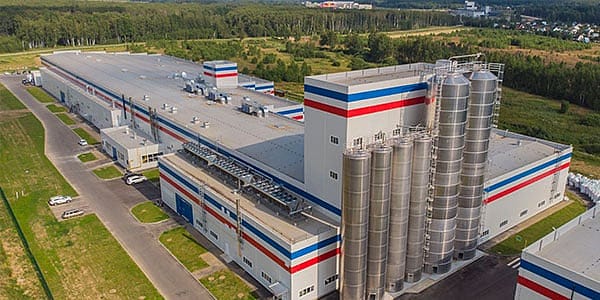
India’s recent trade engagements with the European Union and the United States are expected to provide a strong boost to the domestic packaging industry by lowering capital costs, improving export competitiveness and accelerating technology adoption, says Jeevaraj Gopal Pillai, President – Flexible Packaging and New Product Development and Director – Sustainability at UFlex .
“India’s recent trade engagements with the EU and the US are fundamentally positive for the packaging industry and its entire value chain,” Pillai said in an interaction with Fortune India.
He noted that India has traditionally been highly dependent on importing converting machinery and advanced packaging equipment from Europe, where high import duties and volatile exchange rates have significantly increased capital expenditure.
“The India–EU trade agreement is a welcome step, as it improves access to advanced European packaging and processing machinery at more competitive prices,” Pillai said. This would support faster technology upgrades and improve efficiency across Indian converting operations, he added.
He also pointed to opportunities on the export side. “Lower or zero duties could make packaging machinery exports from India to the EU more competitive, opening up new opportunities for Indian machine manufacturers in European markets,” Pillai said.
According to him, reduced tariff barriers are likely to strengthen collaboration between Indian and European packaging technology players. “With tariffs coming down, we expect greater collaboration through joint ventures, design partnerships and technology transfers,” Pillai said. He added that European companies with advanced capabilities in automation, robotics and artificial intelligence are likely to explore deeper investments in India as part of their global supply chain strategies.
Pillai also highlighted the role of sustainability in driving demand. “Packaging formats that meet EU regulatory and sustainability norms are likely to command premium pricing and generate sustained demand,” he said.
On the U.S. front, Pillai said the bilateral trade framework is expected to significantly enhance export prospects for Indian packaging players. “The trade framework with the US should deliver a major boost to the packaging sector, particularly for packaging laminates and value-added flexible packaging,” he said.
“Lower tariffs will significantly enhance export viability, restoring competitiveness closer to pre-uncertainty levels,” Pillai added. He said this would enable Indian packaging converters to compete more effectively in the US market on both price and volume, while strengthening India’s integration with US supply chains for films, labels and specialty packaging.
Improved access to both EU and US markets could also drive exports of packaged food, beverages, pharmaceuticals, cosmetics and industrial goods. “As global trade increasingly aligns with sustainability priorities, companies with integrated capabilities will benefit the most,” Pillai said.
Pillai said that UFlex has strong in-house recycling capabilities across India, Mexico, Egypt and Poland, with a cumulative capacity of over 75,000 tonnes per annum. The company has also announced an investment of ₹317 crore to set up a new recycling plant in Noida with a capacity of around 40,000 tonnes per annum.
“This positions us well to support global brands as they meet evolving regulatory, environmental and circular economy requirements, especially in EU markets,” he added.
The Uflex Group is among the largest players in the flexible packaging industry, with a strong presence in both domestic and international markets through its subsidiaries in Egypt, Dubai, Mexico, the United States, Russia, Poland, Hungary, and Nigeria. The company operates with a cumulative installed capacity of 10,74,110 tonnes per annum and has diversified operations beyond packaging films into value-added segments such as coated films, metallised films, inks, and adhesives, strengthening its integrated business model.
The group reported revenue of ₹11,222 crore during the first nine months of FY25, compared with ₹9,936 crore in the corresponding period of FY24, supported primarily by improved demand in export markets and better realisations. For the full year FY25, the company is expected to report revenue in the range of ₹14,800–15,000 crore, compared with ₹13,414 crore in FY24.